Archives

Effects of sublethal doses of glyphosate on honeybee navigation

I thought I had posted this link to research – however I’m not finding it at the moment – so I will post it again – in light of this winters’ reported massive honeybee losses by commercial beekeepers. (as noted in my last post).   While the symptoms and possible causes are being investigated – I would like to remind folks that we’ve known for a while that poisons affect honeybees negatively.

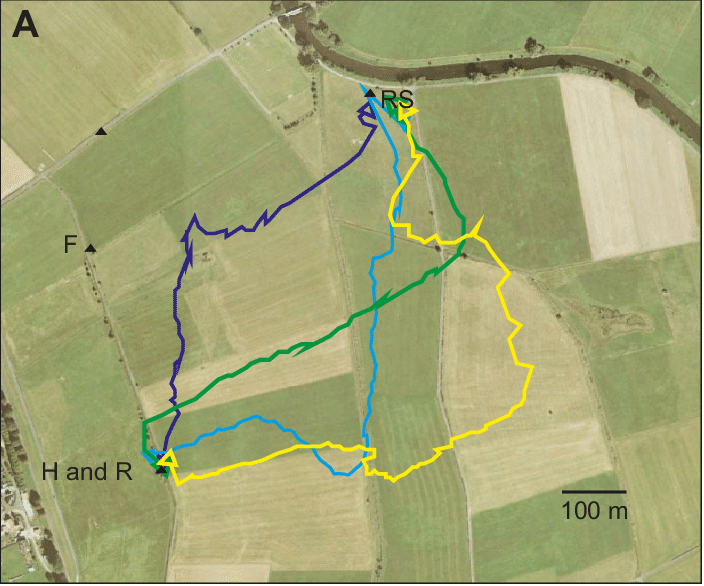
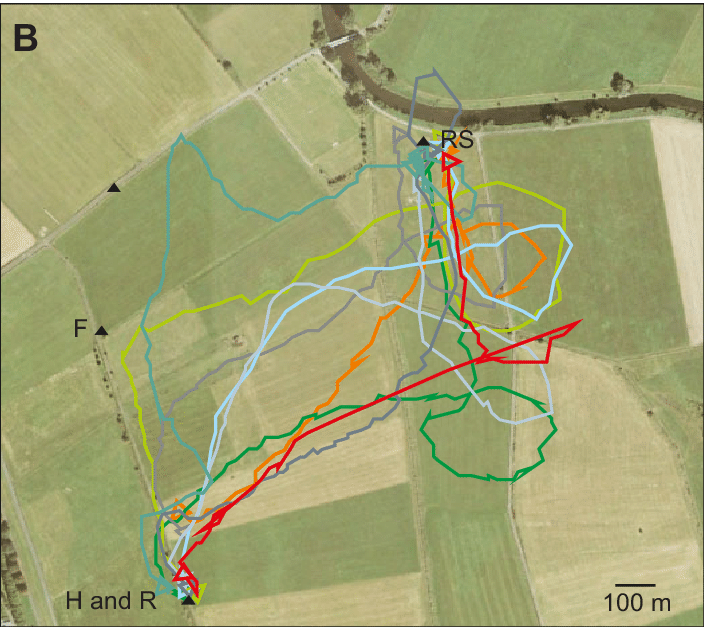
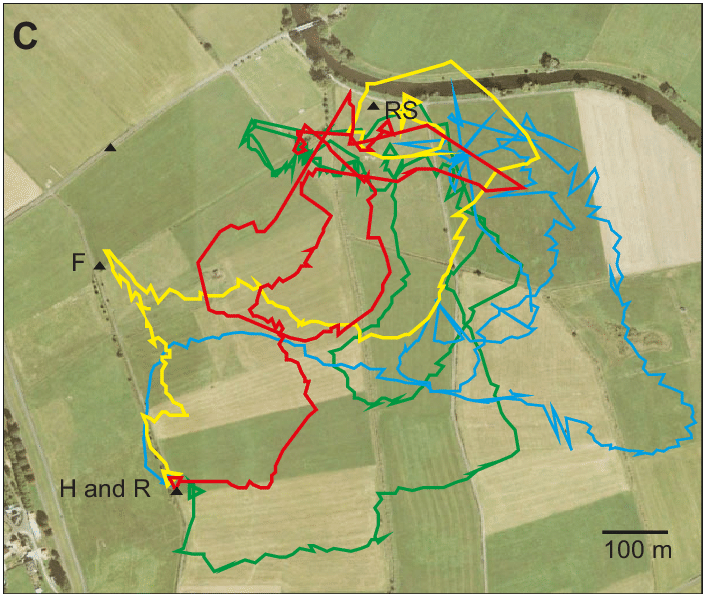
In 2015, a research article was published in the Journal of Experimental Biology – that plotted the flight paths of honeybees foraging – before and after “sublethal” doses of glyphosate ( aka Roundup).   The published work of María Sol Balbuena, Léa Tison, Marie-Luise Hahn, Uwe Greggers, Randolf Menzel, and Walter M. Farina is available at the link below – it is an interesting read – and is eye-opening to the measured effects of poisons on the neurological system of honeybees as related to flight navigation.     With no exposure, the bees’ flight paths are very direct.   With low exposures (ingested) the flight paths become erratic… and with higher doses (but still “sublethal”) – their flight paths are all over – and the bees had a hard time making it back to the hives.

https://journals.biologists.com/jeb/article/218/17/2799/14136/Effects-of-sublethal-doses-of-glyphosate-on

From the abstract:

We performed an experiment in which forager honeybees were trained to an artificial feeder, and then captured, fed with sugar solution containing traces of GLY and released from a novel site either once or twice. Their homeward trajectories were tracked using harmonic radar technology. We found that honeybees that had been fed with solution containing 10 mg l−1 GLY spent more time performing homeward flights than control bees or bees treated with lower concentrations. They also performed more indirect homing flights. Moreover, the proportion of direct homeward flights performed after a second release from the same site increased in control bees but not in treated bees. These results suggest that, in honeybees, exposure to levels of GLY commonly found in agricultural settings impairs the cognitive capacities needed to retrieve and integrate spatial information for a successful return to the hive. Therefore, honeybee navigation is affected by ingesting traces of the most widely used herbicide worldwide, with potential long-term negative consequences for colony foraging success.


The images below are from their research – and show:

Examples of homeward flights made by honeybees during the first release after treatment. Flight paths were categorized as direct (A), single-loop (B) or indirect (C). Colors: light blue and red for control bees, blue and orange for bees treated with 2.5 mg l−1 glyphosate (GLY), yellow and lilac for bees treated with 5 mg l−1 GLY, and green and gray for bees treated with 10 mg l−1 GLY. H, hive; R, radar; F, feeder; RS, release site.


Urgent: Nationwide Bee Losses in Winter of 2024-2025 Varroa

2-7-2025   10pm

If you have not heard – over the last month – as many beekeepers prepare to send bees to California for Almond pollination – it’s being found that the normal approximate annual attrition rate of honeybee colonies of 40% – is this year – being seen in the range of 50%-80% and in some cases – 100% losses.     Currently, the cause is unknown – as to whether it is a new pathogen, or maybe stresses that have pushed bees beyond their healthy breaking point…   At a glance – this looks as (or more) devastating as the Colony Collapse Disorder phenomenon that was seen in the early 2000-2007 time-frame.

It’s also not seeming to be confined to any particular line of bees (i.e. Italian, Carniolan, etc), and continued testing will be done as the folks are able to do so from the top down in our industry to see what the vector is for these losses.

What does that mean for Harmony Hollow Apiaries and Birds and the Bees Apiary – and managing of bees on your land?

All the hives we manage will be closely monitored this next 2 month period to watch for additional losses and will be documenting our management of hives on your land – with the nutrition fed to them, mite treatments, and any hive manipulations made.    Some losses of weaker (smaller) hives are expected every year – and are typically easily made-up with strong colonies in the spring when conditions are right for queens to be made and to make effective mating flights with mature drones.

Availability of commercially made queens will be affected by the southern snow storm that happened just a few weeks ago.   Areas on the southern coast were hit with freezes and up to 8″-12″ of snow – at a time when they would normally be making splits and raising queens to provide to the rest of the nation.

When timing and environmental factors are right – Rex and Laura are rearing our own queens this year – first to fulfill our client’s needs and making splits to replace hives that perished over the winter, and secondarily – to provide queens to local beekeepers.

Below are the communications sent from TAIS, Project Apis M., and the webinar from The Bee Supply.

——

The Texas Apiary Inspection Service ( TAIS ) sent the following email earlier today:

I am forwarding this information on behalf of Project Apis m.:

Urgent: Widespread Colony Losses Reported 
 
Dear Beekeeping Community, 

Severe and sudden honey bee colony losses are being reported across the U.S. as beekeepers prepare for almond 
pollination. Surveys indicate losses exceeding 50% on average, with some operations experiencing up 
to 100% losses in the past year. These alarming trends resemble past Colony Collapse Disorder (CCD) 
events and may impact pollination services and food security. 

Project Apis m., alongside our partners and leading researchers, are working to understand the scope and 
causes of these losses. We are gathering data, analyzing samples, and mobilizing resources to support the 
beekeeping industry. 

📥 Download the PDF for more details on what is being done, what we know so far, and next steps for beekeepers. 
https://static1.squarespace.com/static/650342507631075013d25a2c/t/67a505a93e1b5b1ba7a4e145/1738868137561/Jan+2025+Colony+Losses+Communication+Final.pdf

 
If you are a commercial beekeeper, please complete the survey by Feb. 10 to help us assess the situation:
 https://forms.office.com/r/YKNpRBGkir 

For those experiencing losses, we encourage you to submit an ELAP claim as soon as possible Link:
https://www.fsa.usda.gov/resources/programs/emergency-assistance-livestock-honeybees-farm-raised-fish-elap  

Thank you for sharing your experiences. By working together, we can gather critical information and push for 
solutions to safeguard honey bee health. 

Project Apis m. 

In collaboration with: American Beekeeping Federation, American Honey Producers Association and Adee Honey Farms 

If you have any questions, please don’t hesitate to contact me.

Regards,
Angela 

Angela Steinhauer

Chief Apiary Inspector
Texas Apiary Inspection Service
2475 TAMU
College Station, TX 77843-2475
Tel. (979)845-9714, Fax: (979)845-0983
angela.steinhauer@ag.tamu.edu
http://txbeeinspection.tamu.edu

——

Here’s a video from Blake Shook of The Bee Supply (start the video at 11:45 for the current state of things in the commercial side of beekeeping – especially as related to the losses and this year’s almond pollination.   Watch the whole video for good “this time of year in teh hive” info as well.


And the first messages from Project Apis M. (click for full size)


Simple Hive Stands

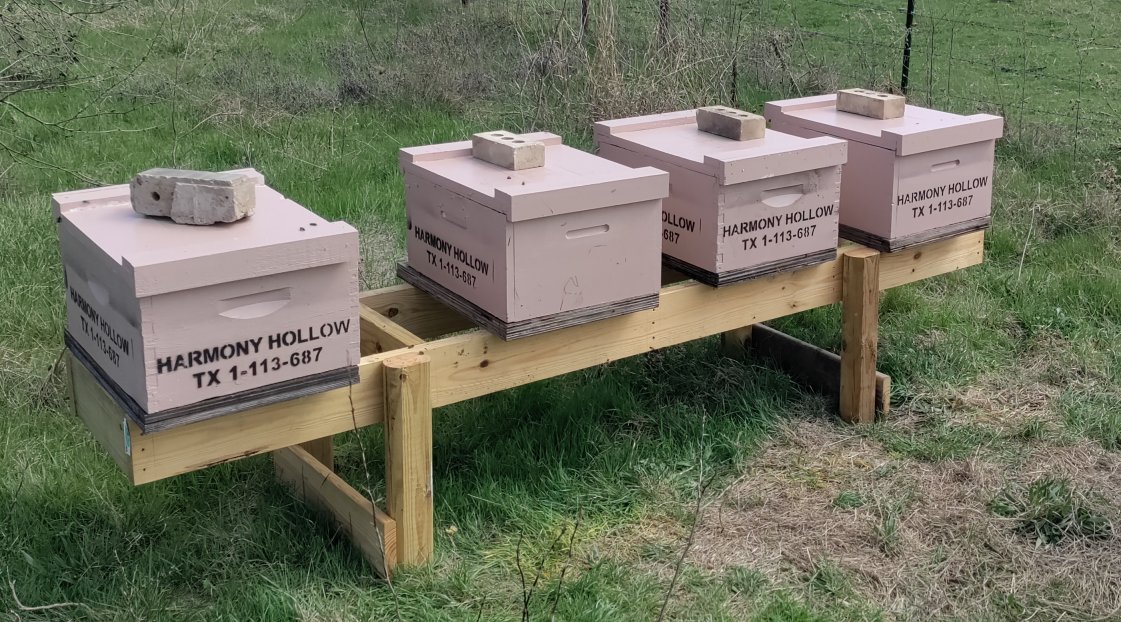
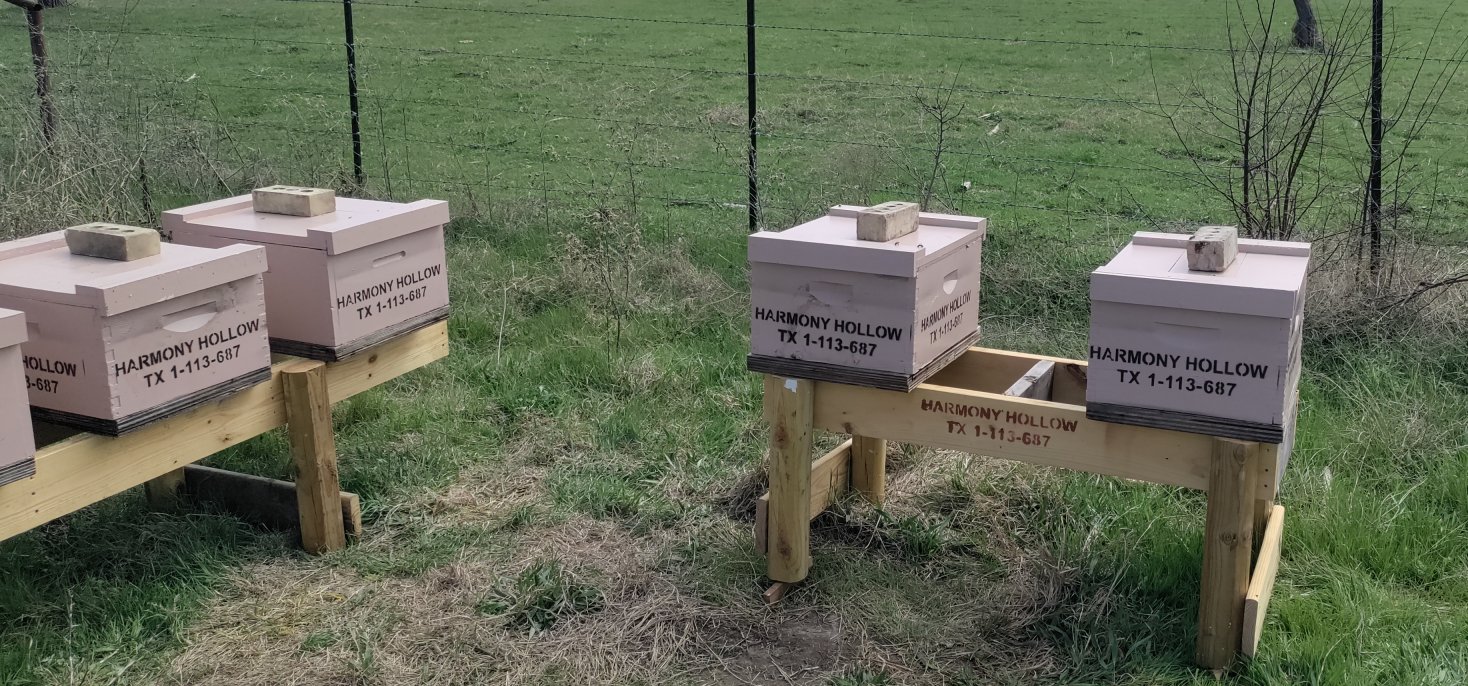
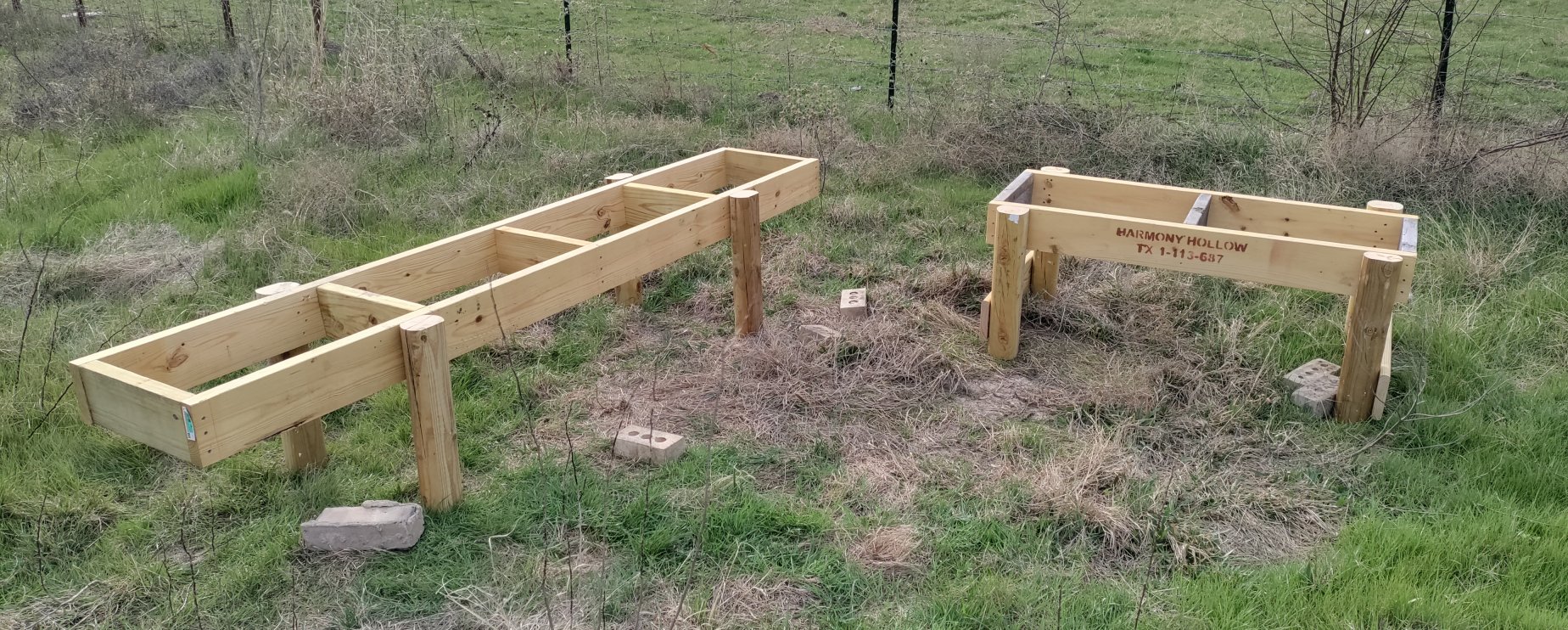
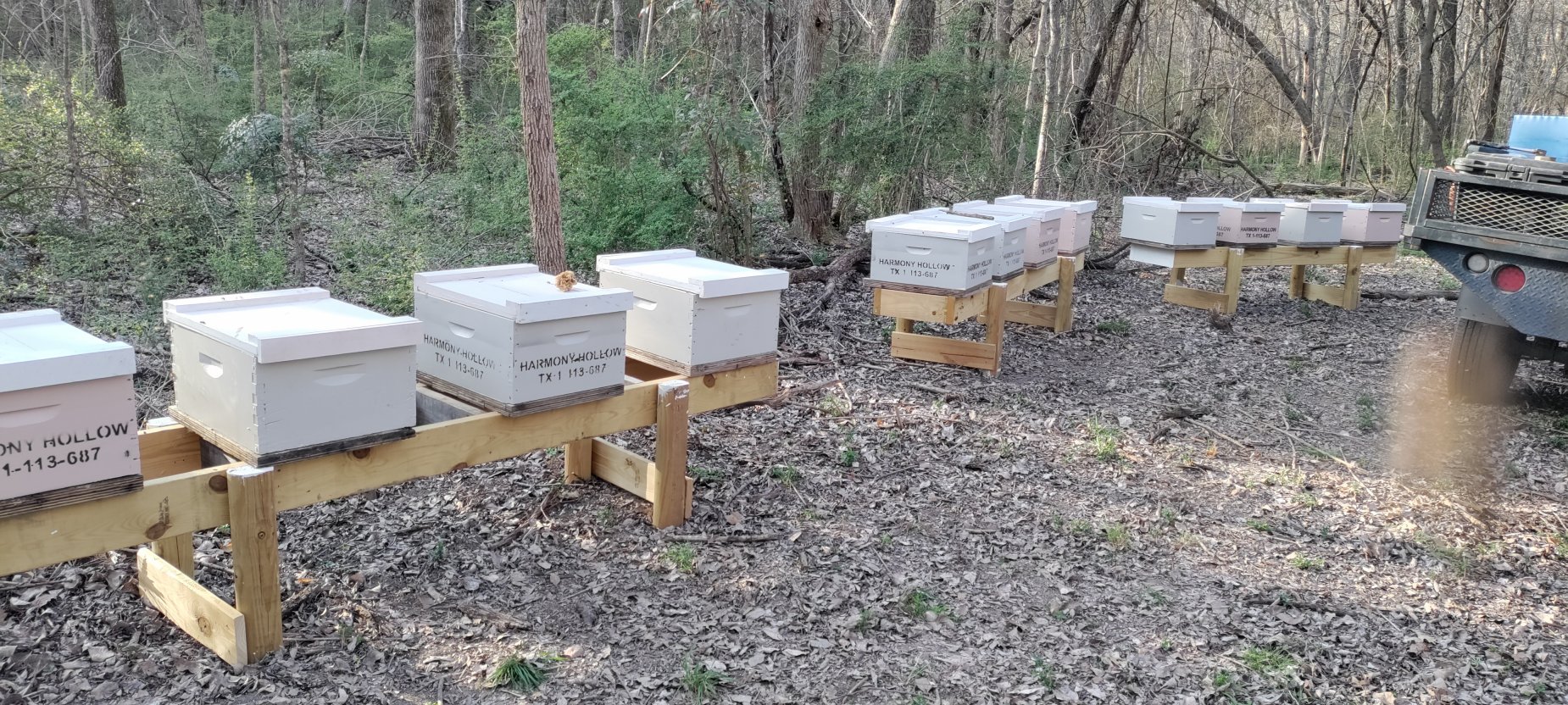
These hive stands are strong, hold the hives to a proper height for easy inspections – and are quick to make with simple tools.

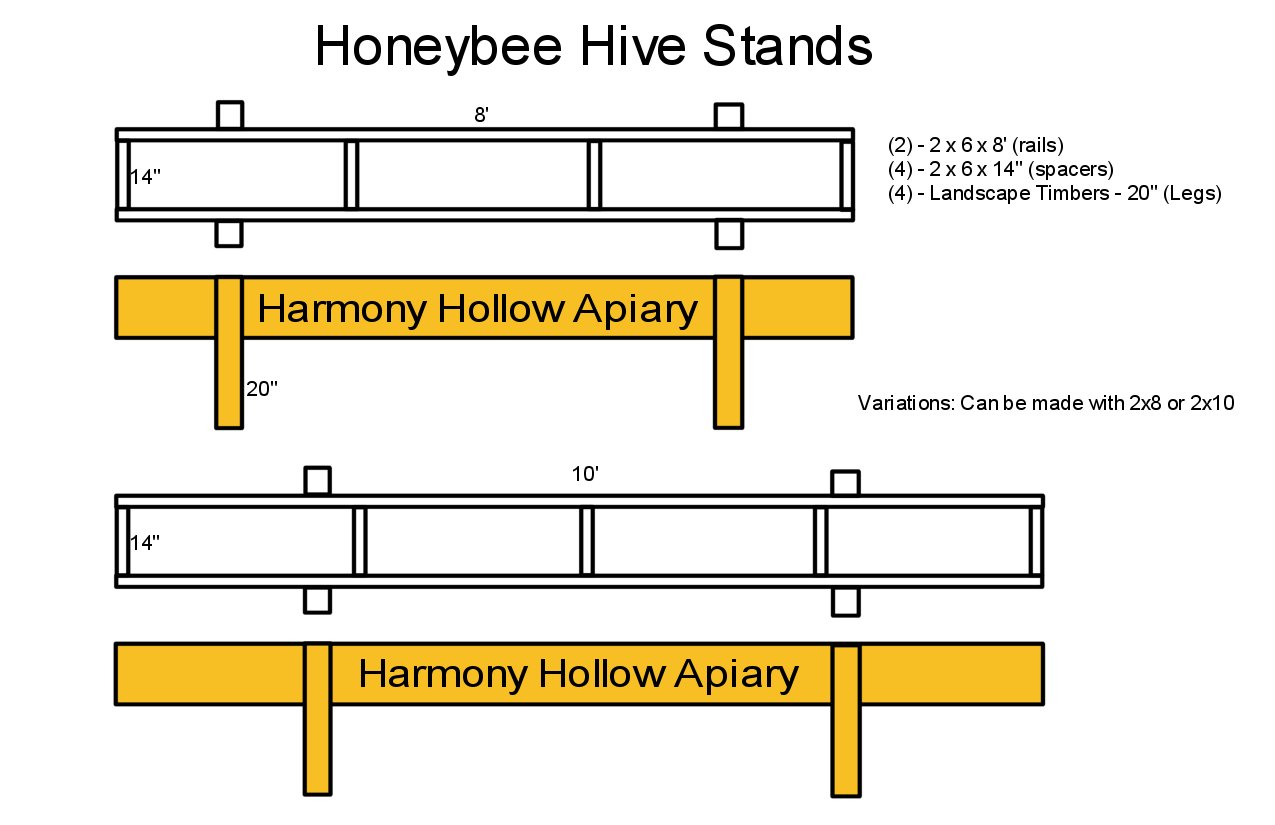
Most of the ones I make are 8′ long – and hold 4 hives easily – or 5 that are pretty tight.  So I use 2 stands for most be yards – to hold up to 8(ish) colonies.   For yards that only have 6 hives, I’ll use an 8′ and a 4′ hive stand.

The ingredients list for these stands are minimal.   (2) 8′ (or 10′) 2×6 (or 2×8 or 2×10) Pressure treated pieces of lumber.   Another cut to 14″ lengths as spacers…  and an 8′ landscape timber cut to 20-inch lengths for the legs.

I * DO * paint the bottoms of the legs with a good exterior “oops” paint from the big box stores – to slow down any rot from ground contact.

Enjoy!


Pollinator Plants for Texas

Many property owners ask me about what to plant to help feed the bees.   The short answer – is to plant for ALL the pollinators (butterflies, moths, wasps, bees (including native species as well as the honeybees used in agriculture for pollination services and honey production).

Though I separate this list to categories of trees vs bushes/wildflowers/Herbs/Vegetables/Fruits – know that they ALL benefit pollinator nutrition – and having a good variety of plants will ensure a variety of nutrition provided in the amino acids present in the pollen and nectar of the food offered to your pollinators.

I have a personal goal (or even mantra) – in the plants that suggest.   They must accomplish at least 1 goal of feeding something.

  • Feeding wildlife (deer, hog, rabbits, native & domestic pollinators) etc, etc
  • Feeding Humans
  • Feeding MY bees

If what is planted can fill at least ONE of those goals – then grow it!   This list is by no means all-inclusive – and will be edited to add more as we are educated on more varieties that people enjoy in our area of North Texas.   I *know* there are more beneficial plants that would help the bees (and pollinators) – however, I am going to try to limit this list to those that grow well in this area – knowing our temperatures, soil types, and drought (and rain) levels through the year.

Trees

I LOVE the fruits produced by many trees.

Fig Trees – Though these are pollinated by a wasp – they sure benefit my taste buds and belly!
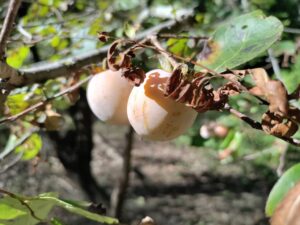
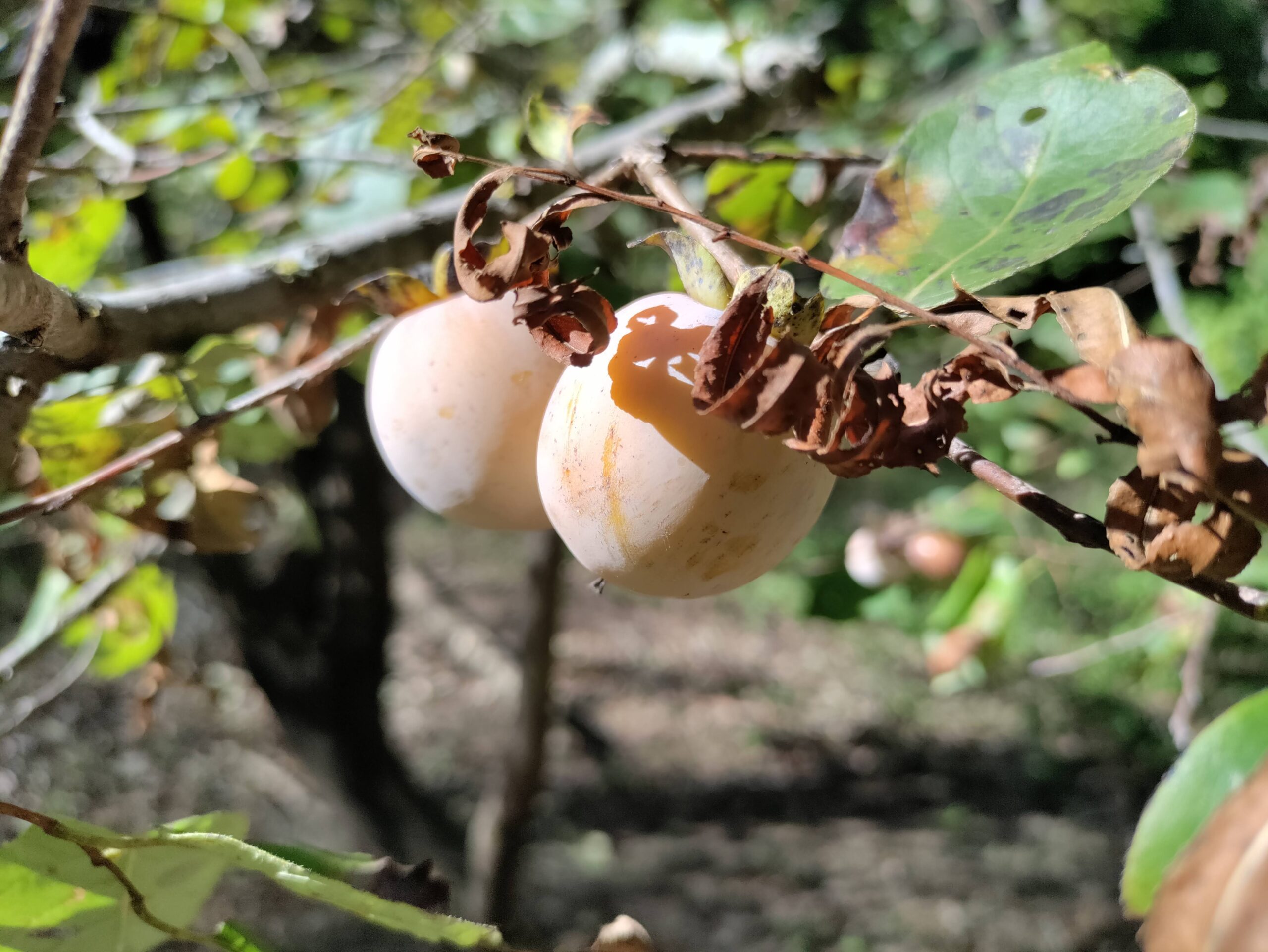
American Persimmon Tree (American Persimmon or Texas Persimmon)  these make a fantastic sweet fruit – I often will eat them when foraging in a forest.  The bees love them.  They also feed the wildlife – and the seeds are spread through the wildlife scat.  These are high in both sugars, and nutrition
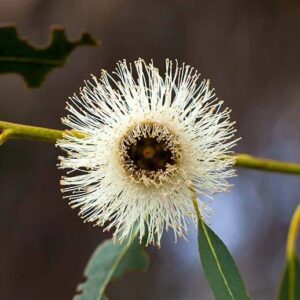


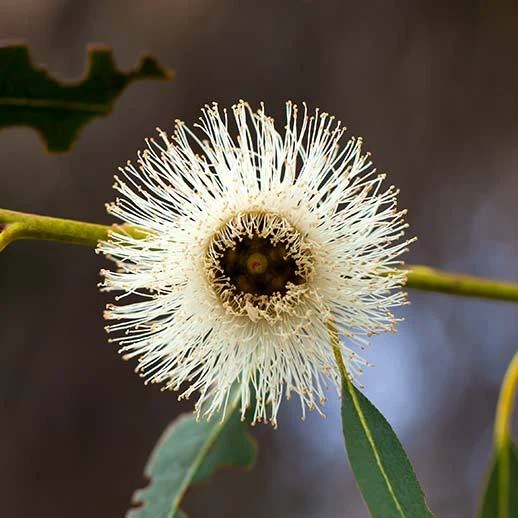
E Globulus Photo by Gaiaherbs.com

E Globulus Photo by Gaiaherbs.com

Eucalyptus (all it’s varieties – but I am growing the E. globulus (Blue Gum Eucalyptus) and E. camaldulensis  (Red Gum Eucalyptus) – Eucalyptus trees are prolific nectar producers, and are tall trees.    Native to Tasmania and Australia – these trees are some of the best nectar producers on that continent.
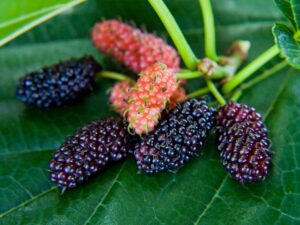


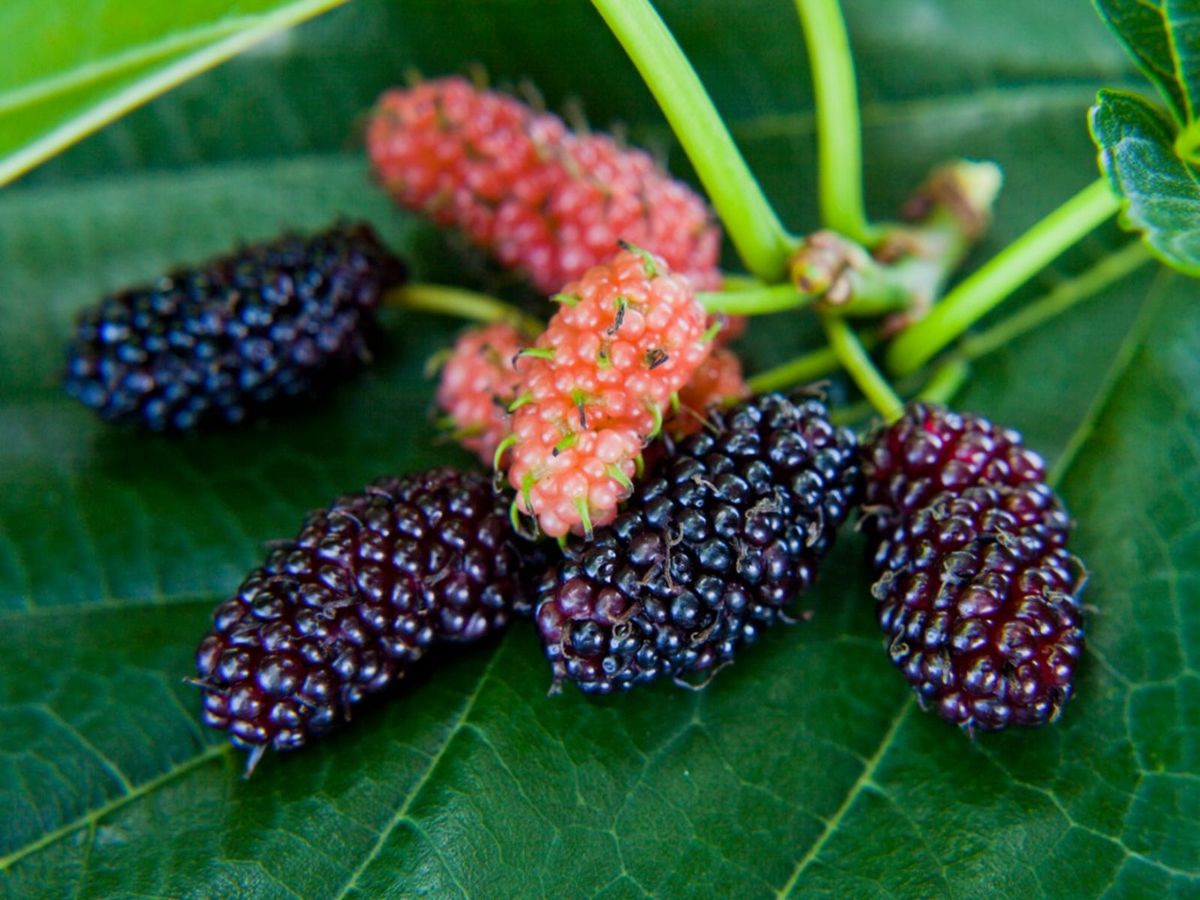
(pic from Gardening KnowHow)Mulberry Trees – These trees feed the bees, the birds (don’t you love the purple spots the birds leave on your car?), people, and more!  They grow easily by grafting, or simply come up volunteer from bird droppings.   A single tree can make 50 lbs of fruit!   Just get them before the birds and squirrels do.   Also good for feeding to your chickens or pigs.


Pear Trees – Note that pear trees EASILY cross pollinate.  So if you have a variety of “ornamental pear” tree – then it may negatively affect fruit-bearing pear trees and cause no fruits or deformed fruits to be set.   Try to make sure you have edible fruit-bearing varieties that you plant.

PawPaw Tree – PawPaw Grow wild in forests in the Eastern US, these grow easily from seed
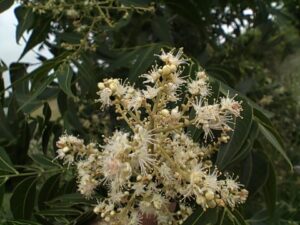
 

Western Soapberry Tree – This native was used by indigenous peoples to make early versions of soap.    It’s blooms are fragrant across the countryside, and feed a WIDE variety of pollinators.    In 2025 – these are in bloom in early June.   See my own in-progress experiment with propagating these trees HERE.


Locust Tree (i.e. Honey Locust, Black Locust).   These trees – for the duration of their bloom – make a WONDERFUL honey for the bees and other pollinators.   Keep the plants in check, though – because the thorns the tree produces can be huge!

Chinese Tallow – Another plant that is a wonderful nectar producer.   Some folks want to eradicate this tree… However – did you know that the Tallow Tree is Texas’ largest commercial honey producer?   A mature tree can produce a barrel (about 700 lbs) of honey in the duration of it’s nectar flow.
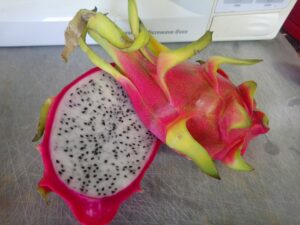
 

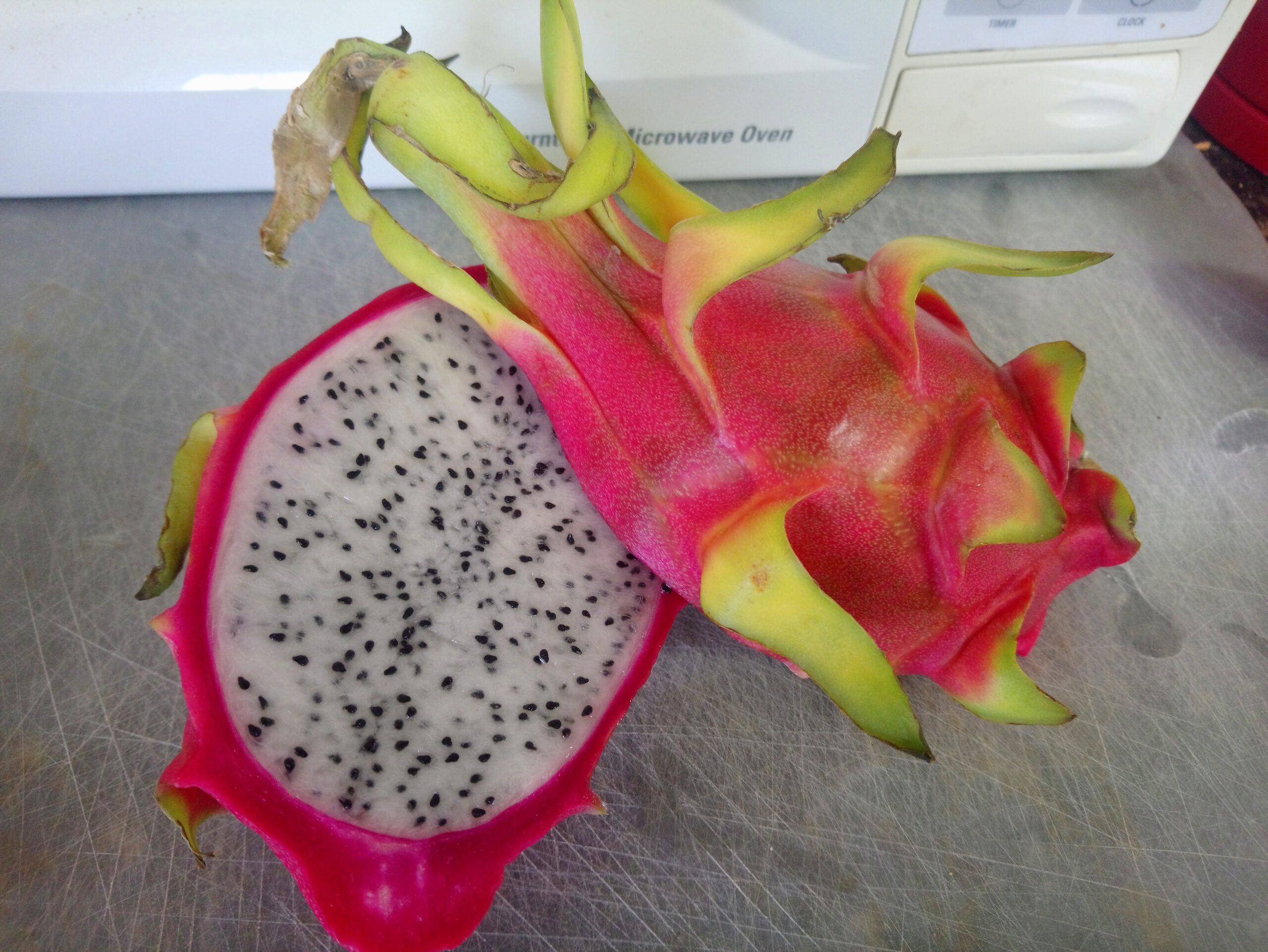
Dragon Fruit – another favorite for the bees, bats, moths, and more!


Quince – a drought-tolerant plant that has fruits that are great for jellies.  It does like well drained soils, though – so some amending of our clay soil is in their best interest here in North Texas.

Mexican Plum – bees are the primary pollinators for these fruits.  Great for pies, preserves, jams, and jellies.


Bushes / Vines

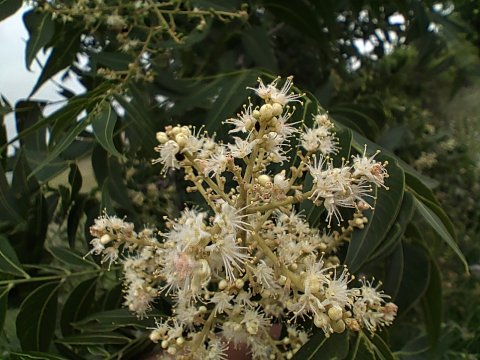
Ligustrum – This ornamental is a great producer of nectar for a short bloom period.   It is VERY fragrant, and makes a great honey crop.

Gourds – Gourds really seem to be a great plant for all the pollinators – and produce a fun variety of fruit shapes that can be used for SO many projects.

Ground Cherries – These have a papery husk – much like a tomatillo, but are sweeter, and nutritious.  Easily grow from seed, and the fruits keep for months.

Gooseberries –  nutritious, and can be preserved without sugar.  HAve natural pectin in their chemistry.

Currants – HIGH in vitamin C – up to 4x more than oranges.   Make preserves, and more.   A single bush can make 10 lbs of fruit.   Grow well in cold regions.

Juneberries – vitamins, and fruit before strawberries.

Cornelian Cherries (Dogwood family) – a favorite in the Mediterranean

Huckleberries – high in antioxidents (higher than blueberries) – and have a LONG storage life.

Privet / Chinese Privet / Ligustrum – Again – a VERY fragrant nectar producer that makes a light-colored honey – and the air is just abuzz when they are in bloom.   Don’t let some folks tell you they should be removed because they think they’re “Non Native” or “invasive”.  That’s horse-hockey.   They simply are a well-adapting beneficial plant.  😉

Almond Verbena / White Almond Bush / Tree Verbena ( Aloysia virgata ) (Info from my friend Esther  Betschart)  a shrubby, flowering plant native to Argentina and Brazil. It’s known for its strong, sweet vanilla-almond fragrance that attracts pollinators like butterflies, hummingbirds, and bees. Here’s a quick overview of the plant:

  • Appearance: White flowers bloom throughout the summer on upright stems with dark green, sandpapery leaves.
  • Growth: Can be grown as a small tree or large bush, and prefers well-drained, clay soil.
  • Sunlight: Needs full sun but can tolerate part sun/shade.
  • Water: Requires medium watering.
  • Hardiness: Susceptible to freezing weather, and is hardy to zone 8b.
  • Propagation: Can be propagated by cuttings in spring or early summer.
  • Other names: White Almond Bush, Tree Verbena.
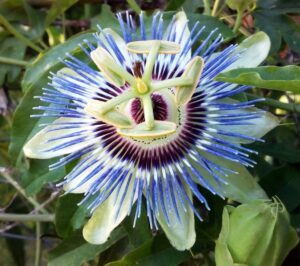
 

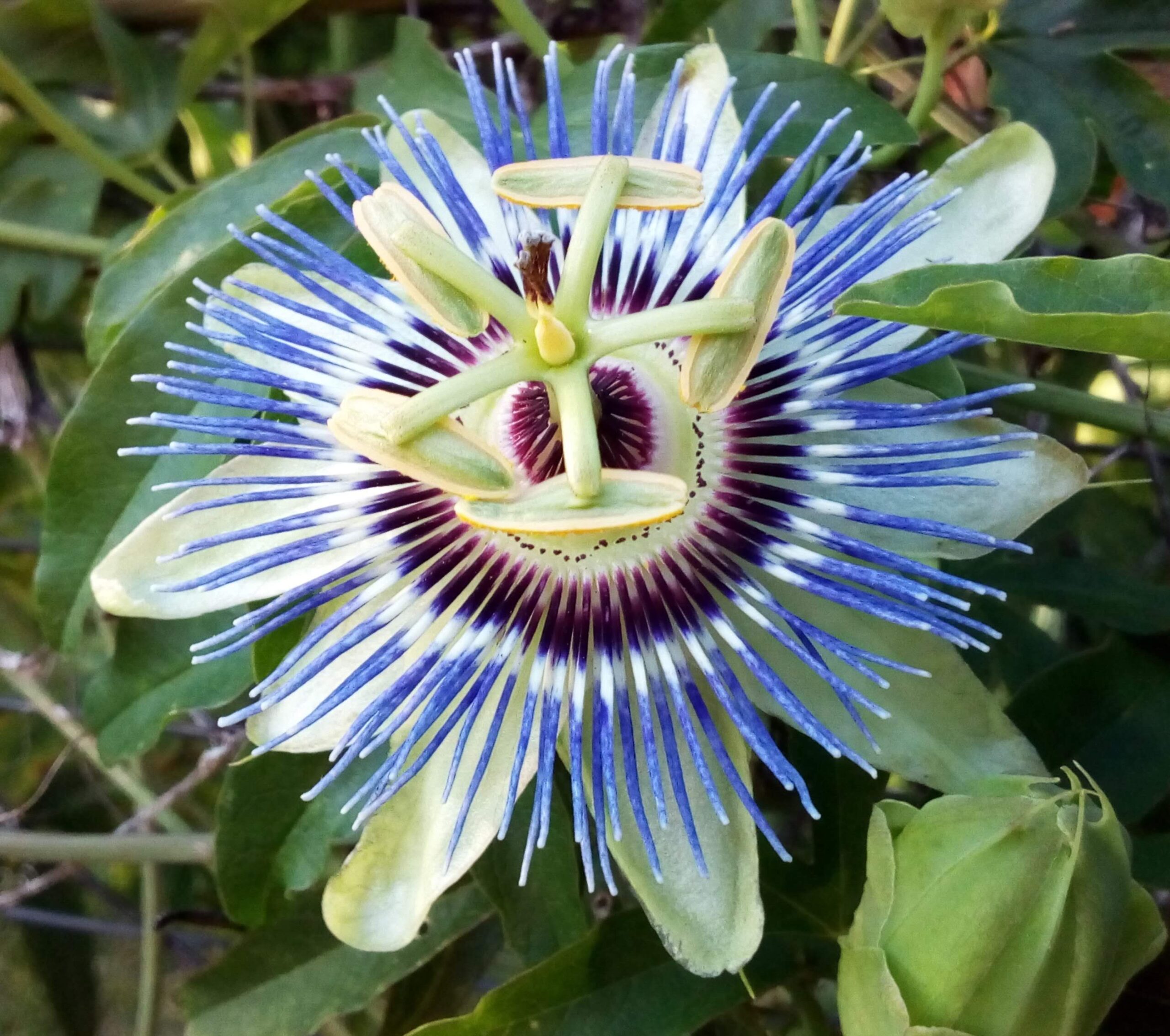
Passion Fruit – This vine has one of the most beautiful blooms I have ever seen.  This one attracts all the pollinators, and it blooms throughout the spring and summer.  The fruit when ripe is delicious!   Definitely plant these seeds on your fence line!


Elderberry – another favorite for bees,  butterflies and more, this stalky tree/bush has a nice umbra of flowers and the berries are great for syrups, juices, and so much more.   It’s also VERY nutritious – and have LONG been known to have medicinal properties.  Good for making preserves, wine, syrups, and more.

Holly


Wildflowers / Ground Covers

Bee Balm / Horsemint / Monarda – These often come up volunteer in a field a year or so after being mowed or plowed.   Bee balm is a bi0annual plant (only blooms every 2 years – or in it’s 2nd year of life) – so don’t be in a hurry to mow fields that have it!  Bee Balm – as it’s name suggests – is a FANTASTIC producer of nectar for honey – as well as pollen for their protein source.
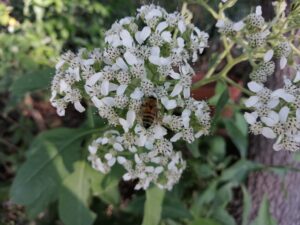
Green Antelopehorn Milkweed – This milkweed develops seed pods that resemble a green antelope horn – thus giving it it’s name.  It feeds bees, monarch butterflies, swallowtail butterflies, and numerous beetles, moths, and other insects.


Clover ( White Clover, Crimson Clover ) – Note – Red Clover is DIFFERENT from crimson clover.  Bees have a hard time reaching into red clover to get any nectar out.  White and Crimson clovers, however, are fantastic nectar sources.  I HIGHLY recommend these.


Garden Herbs

When left to go to bloom and seed – these garden herbs are ABSOLUTELY covered in pollinators when they are ready.

Dill

Fennell

Basil
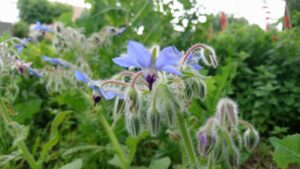
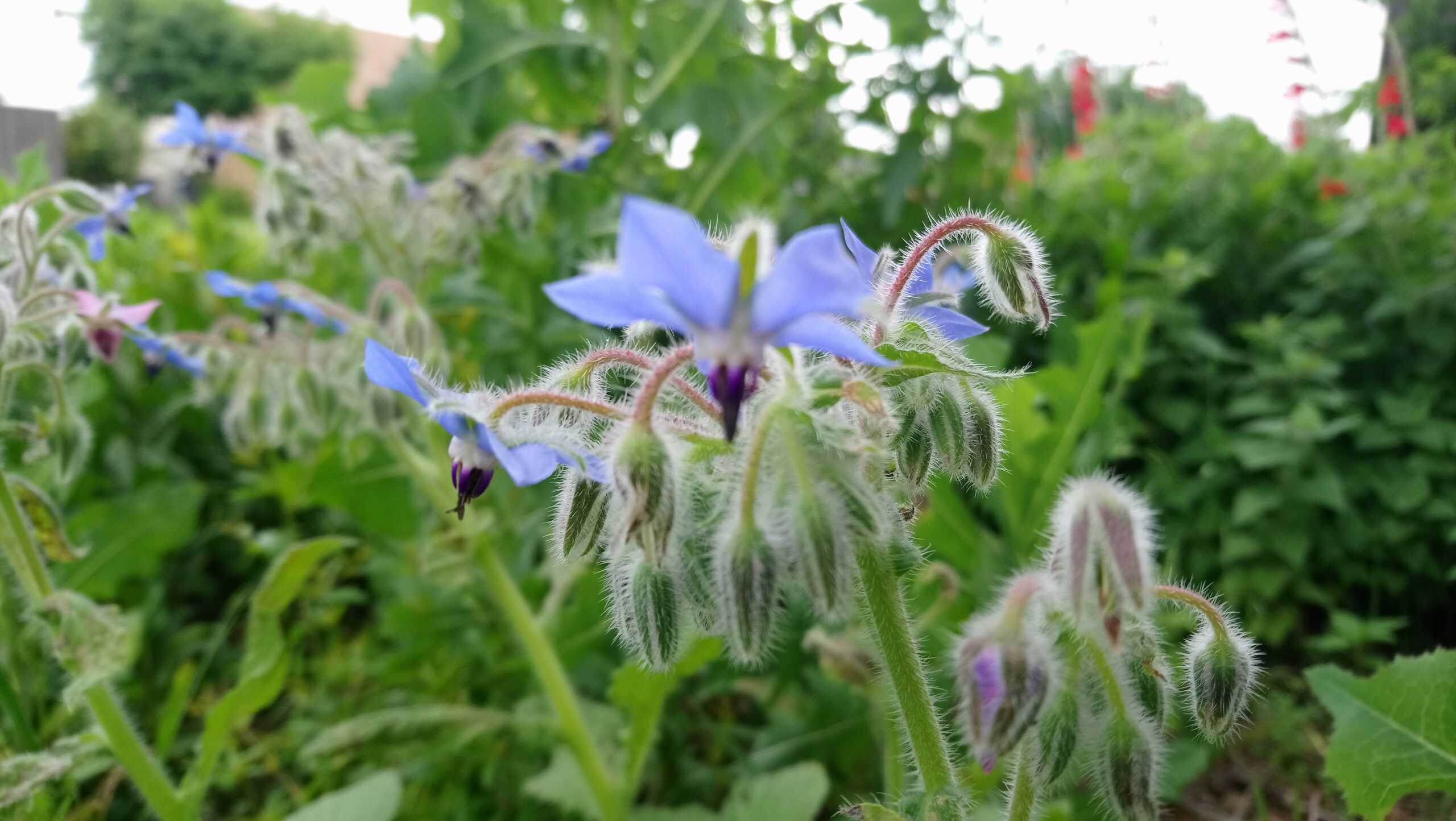
   Borage


Mustard / Wild Mustard – there are SO many plants in the mustard ( brassica ) family.   Broccoli, Cauliflower, actual  Mustard plant, etc.  These typically reseed prolifically, and benefit all the bugs!

Arugula

Radish


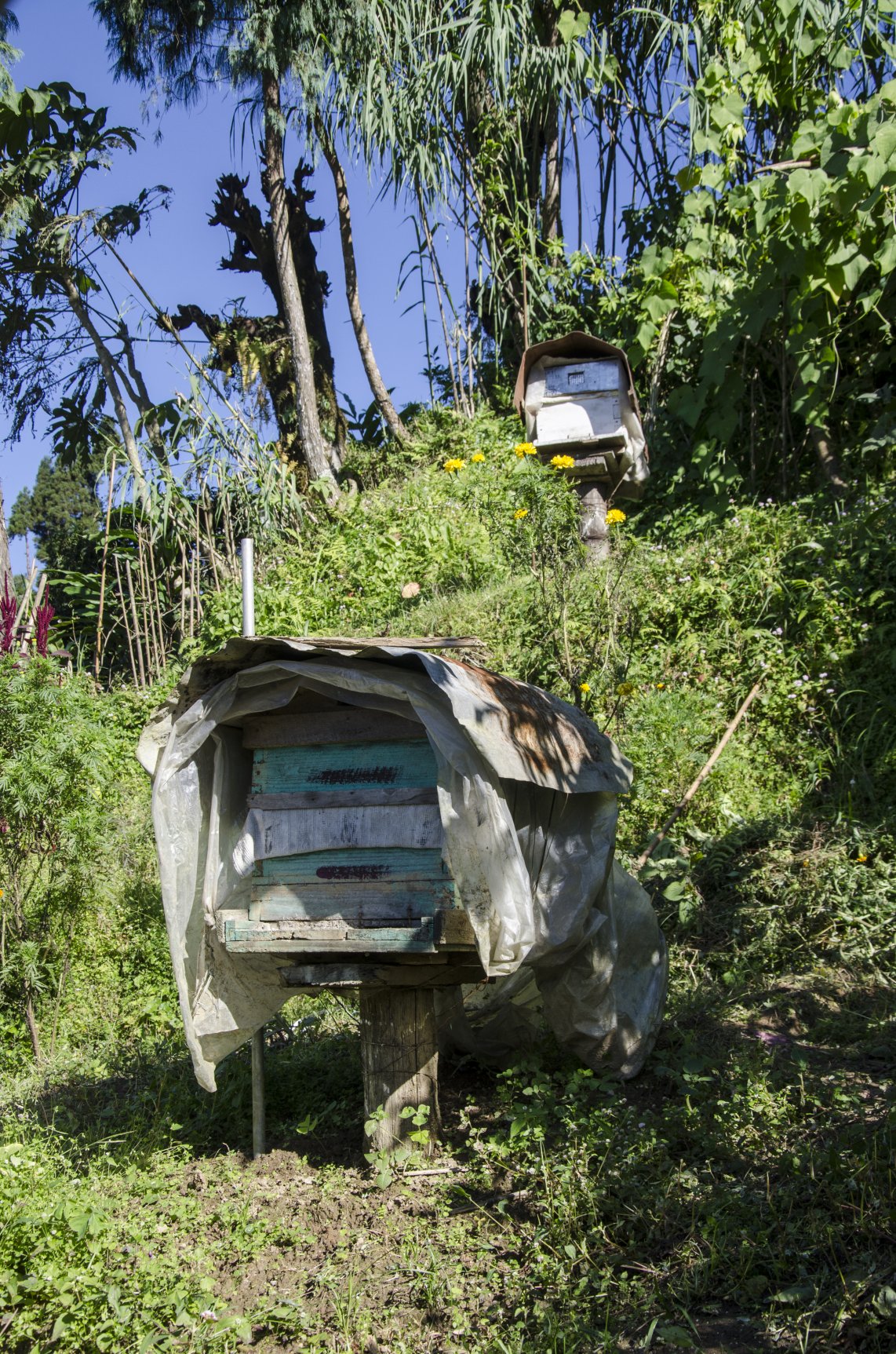
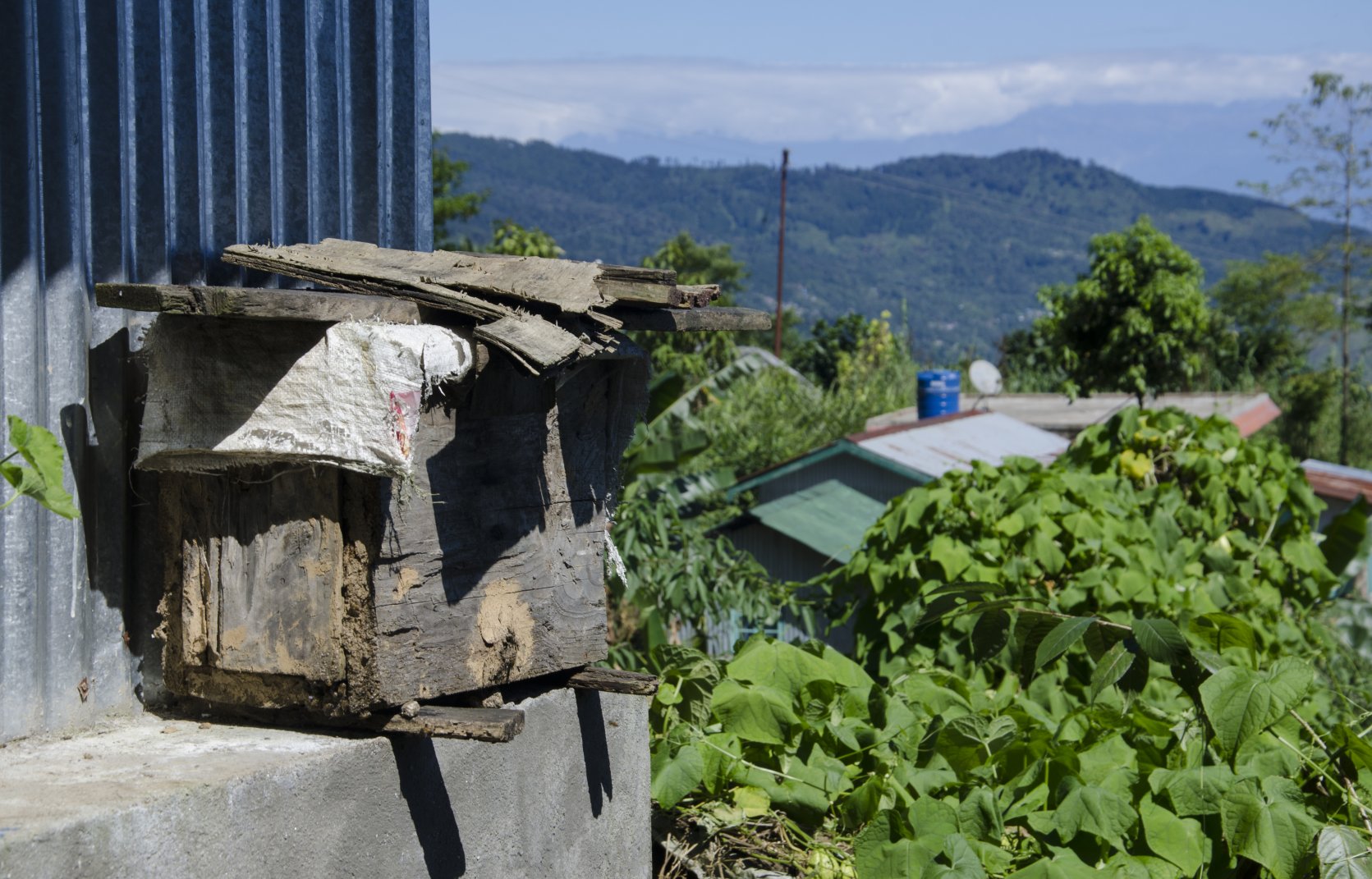
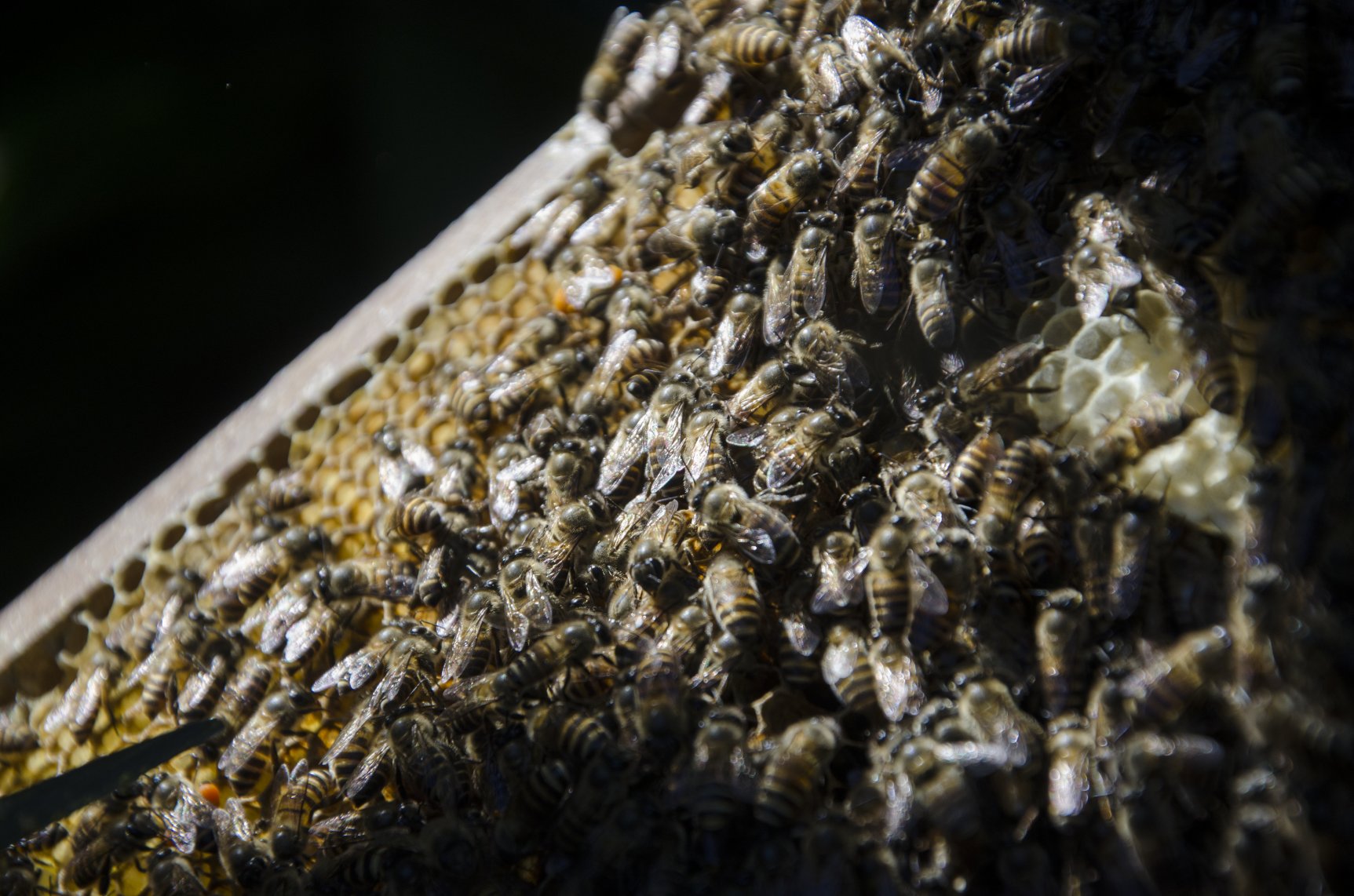
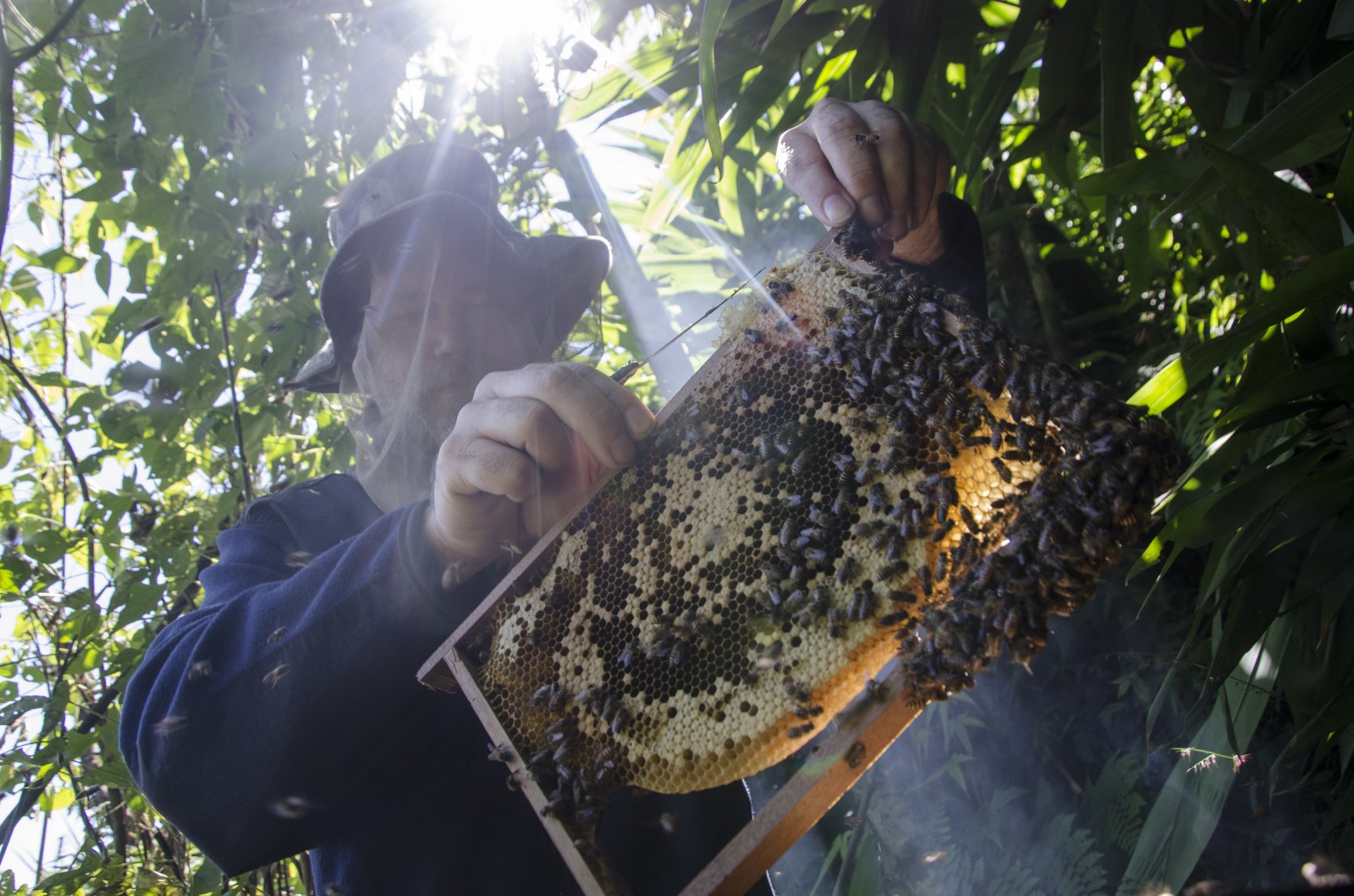
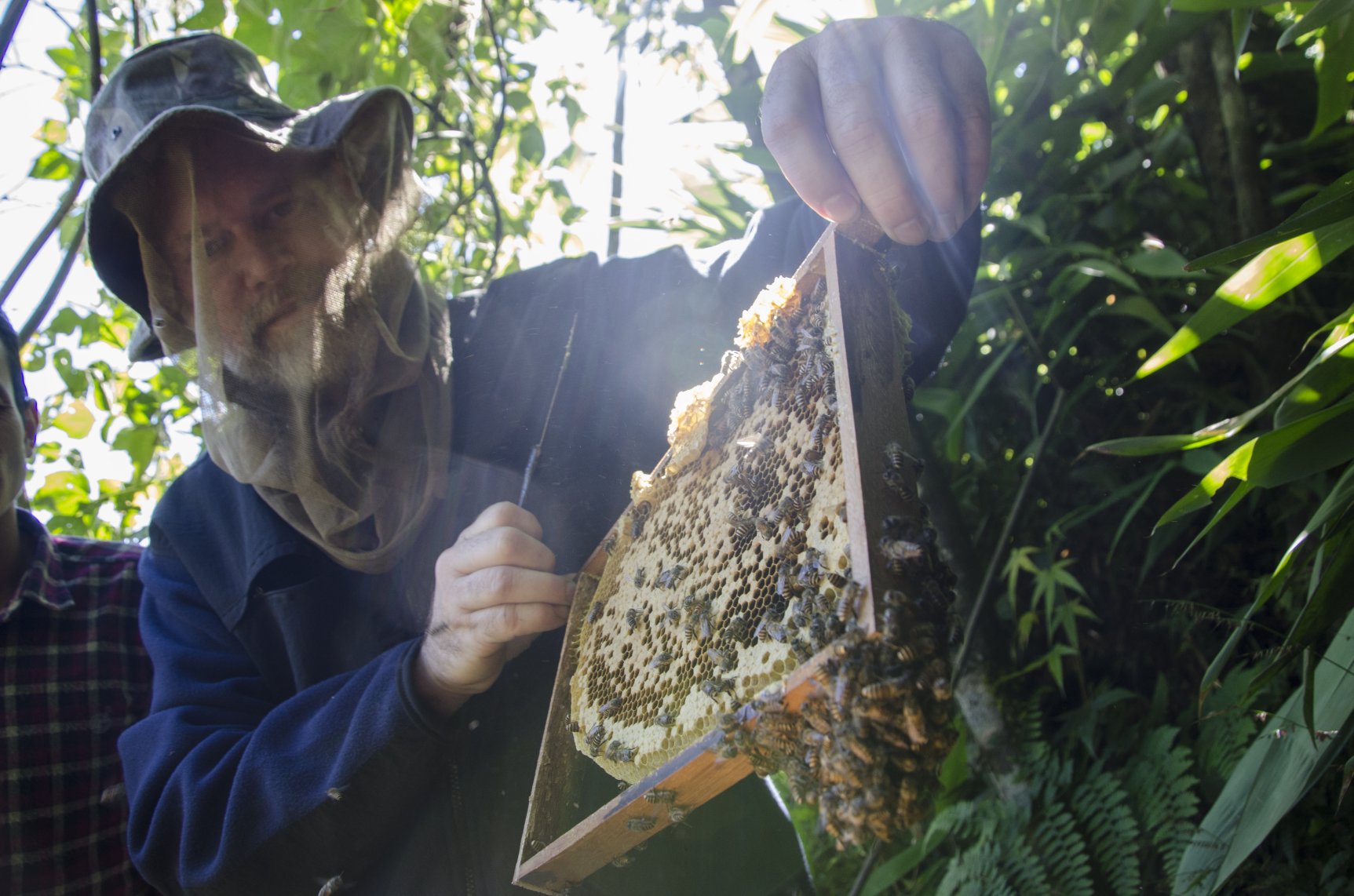
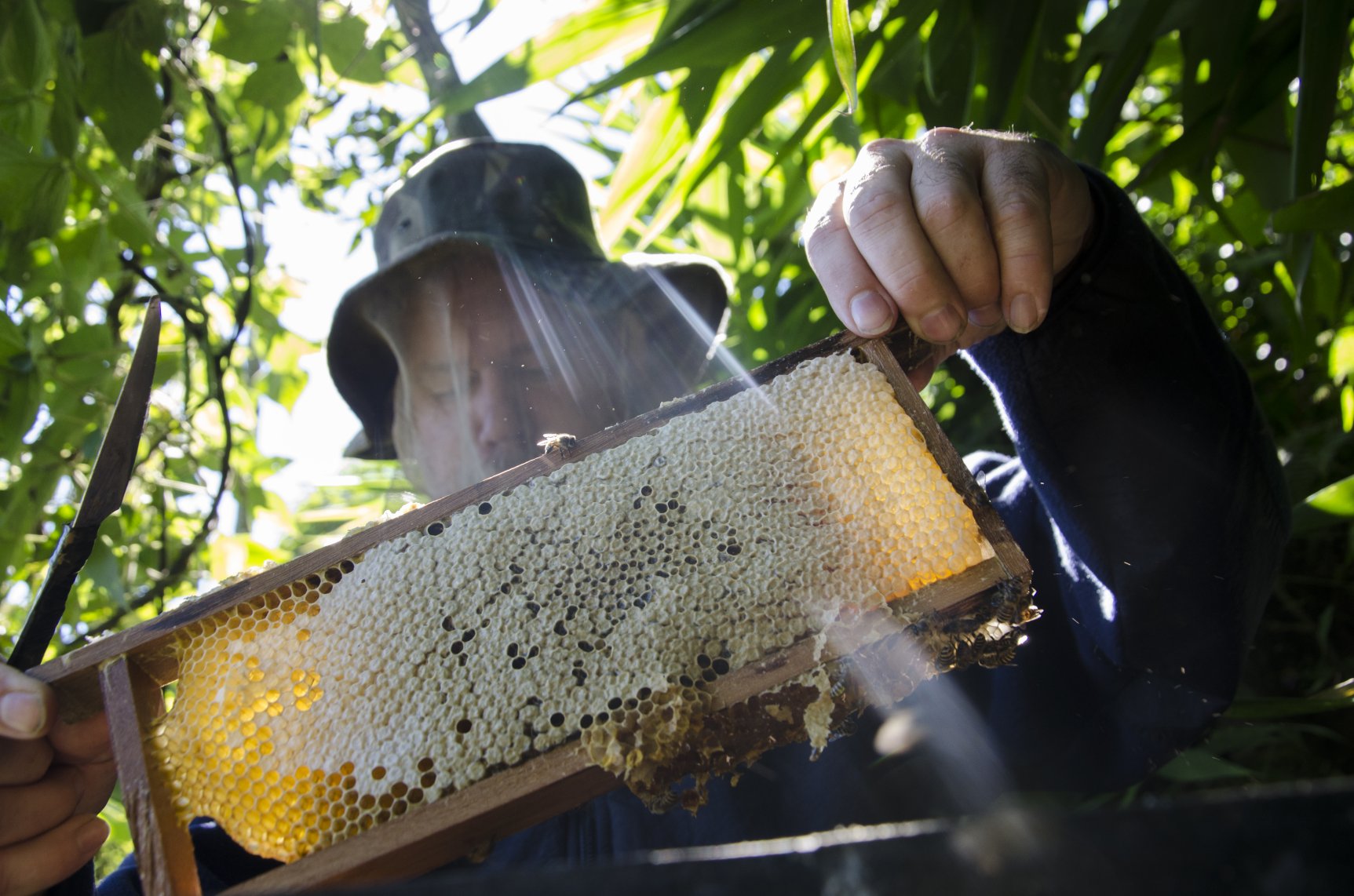
ATREE and Beekeeping in India – West Bengal – Darjeeling Region

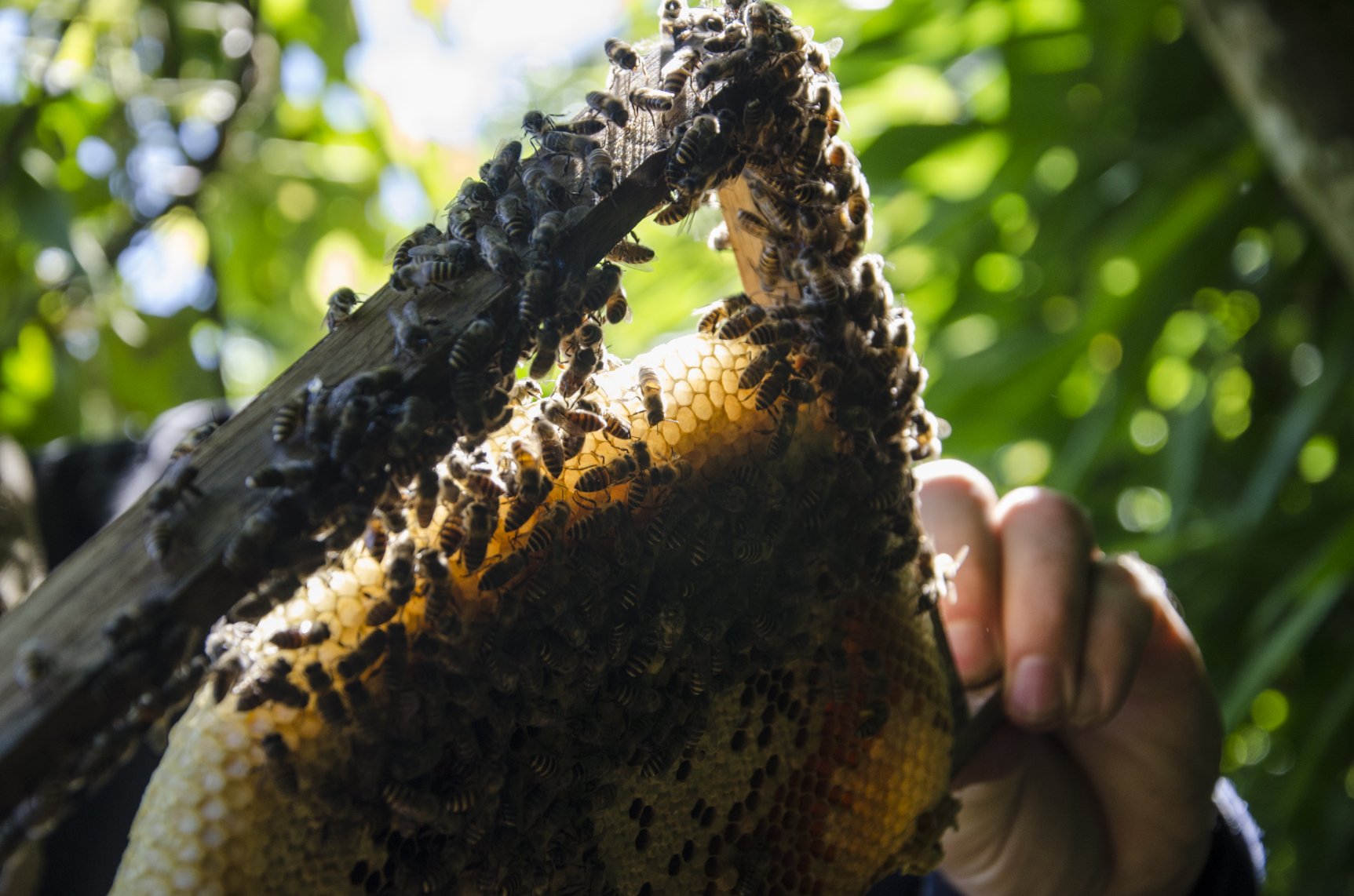
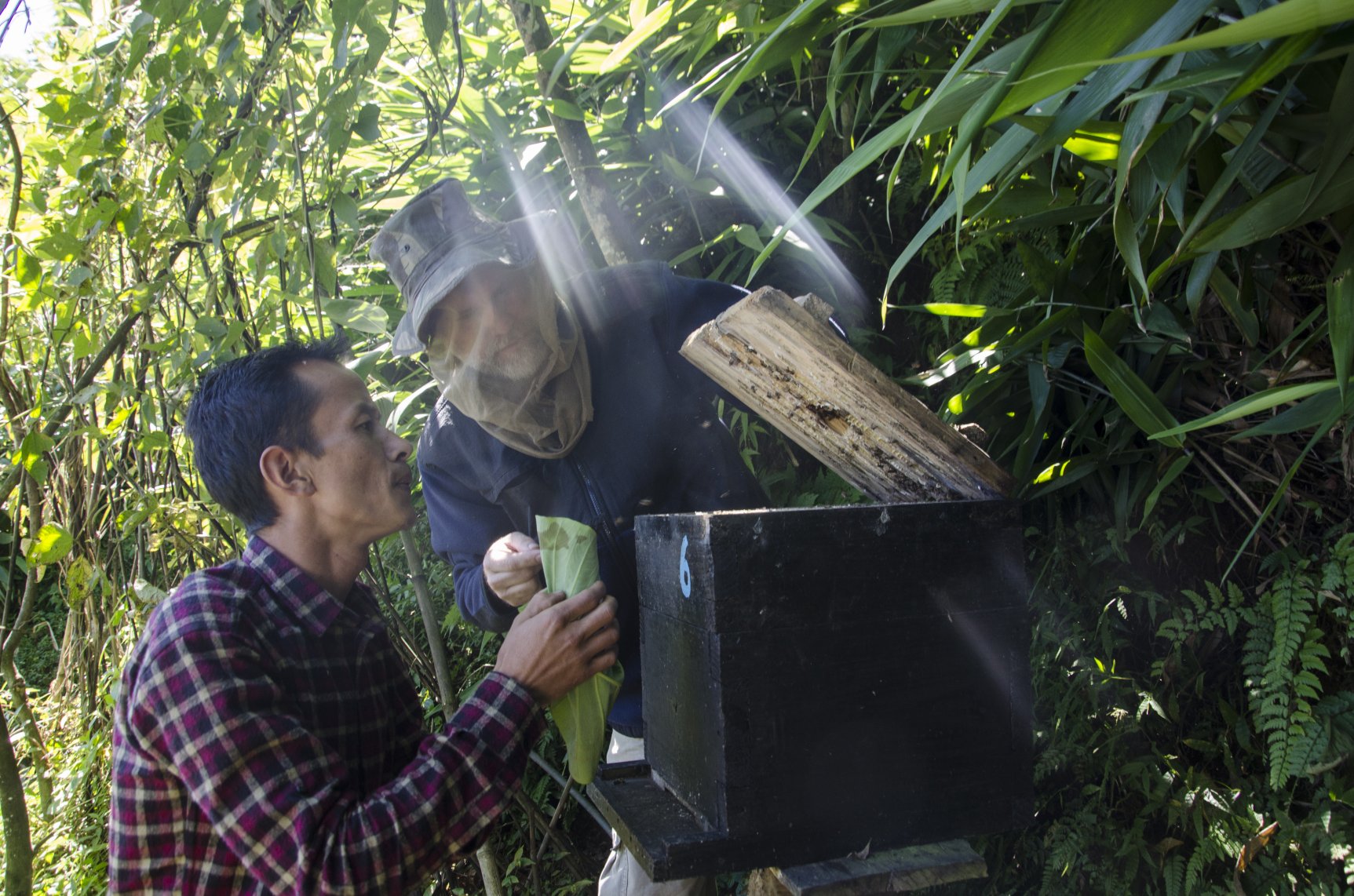
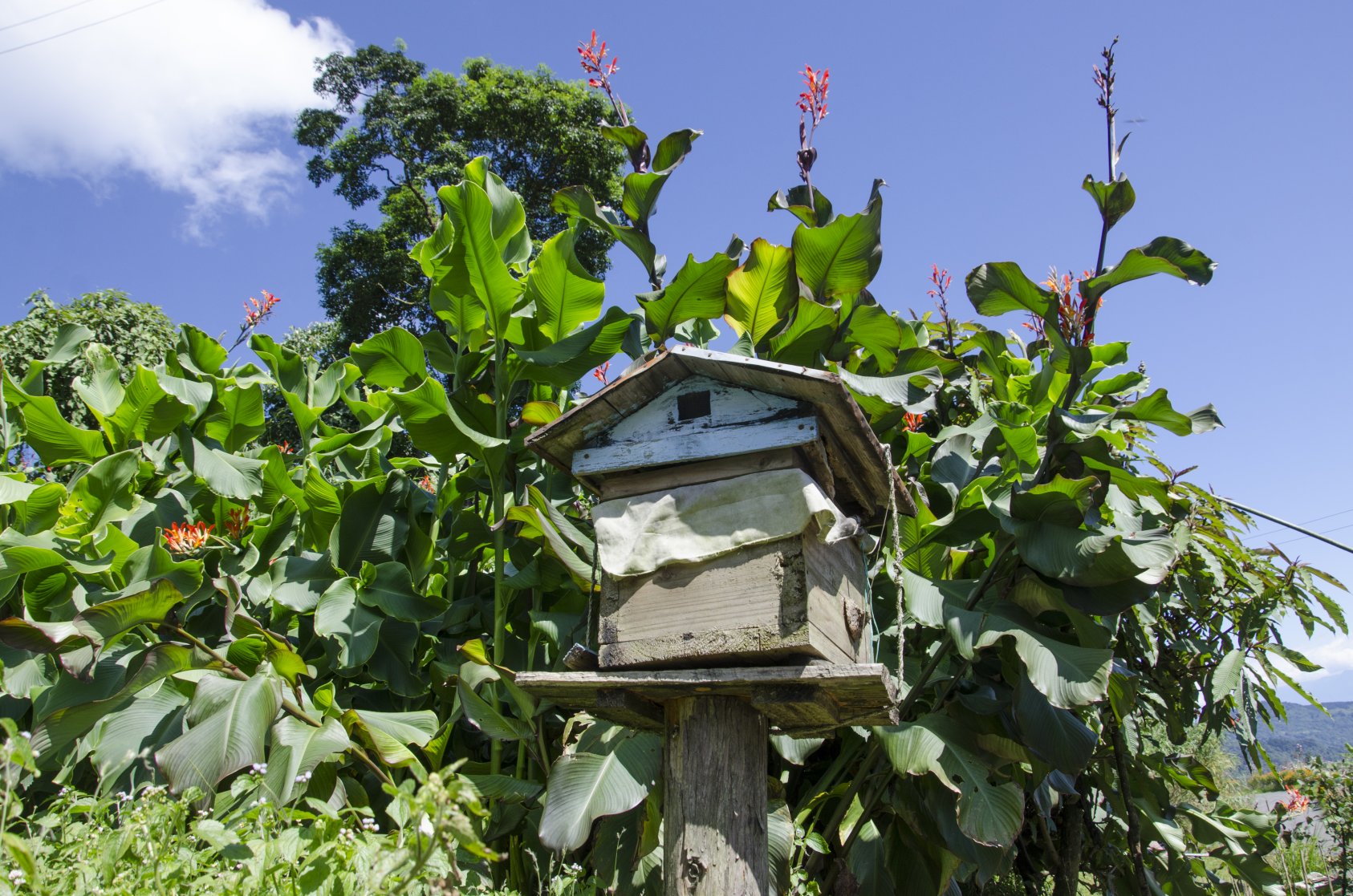
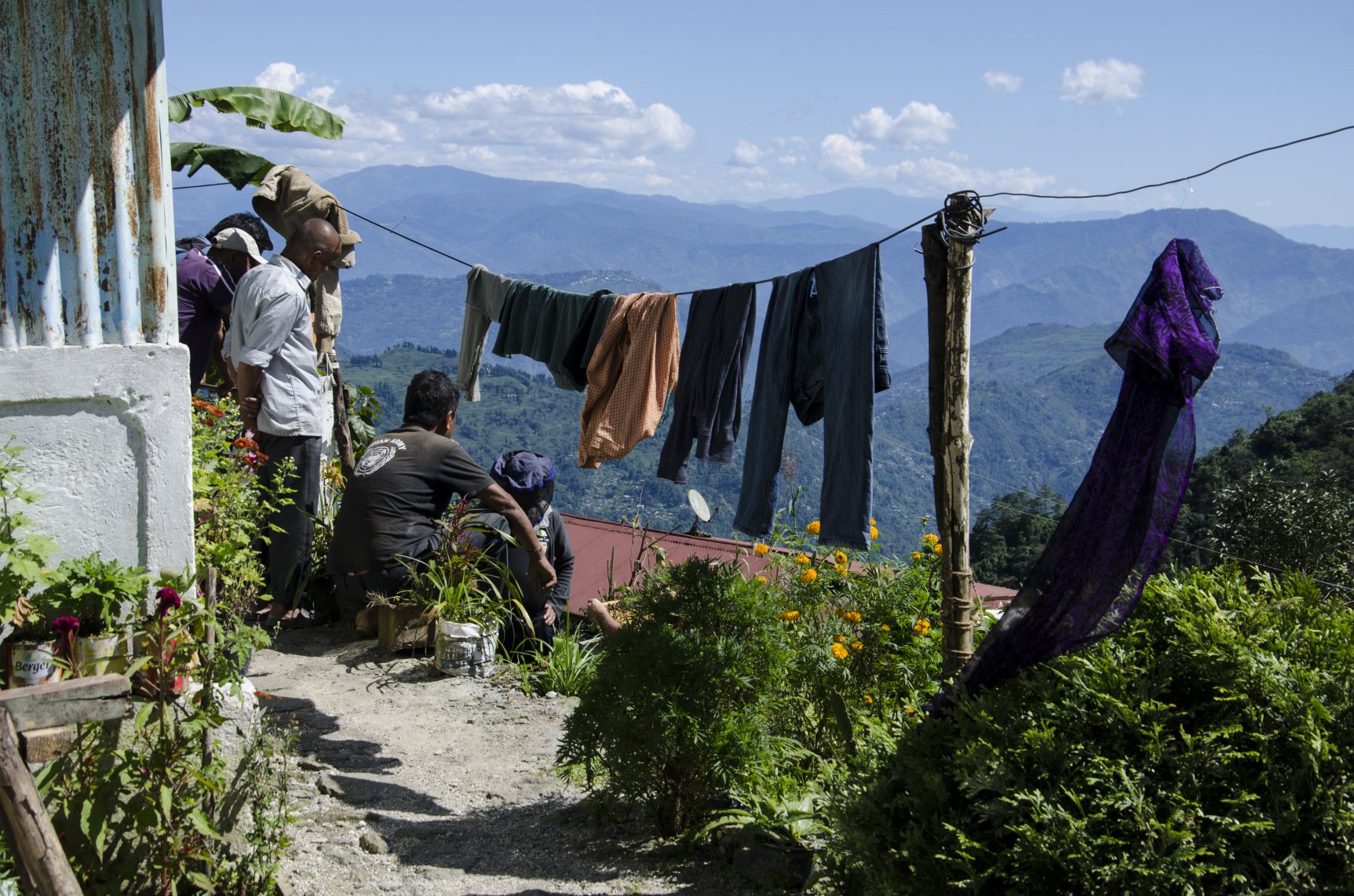
This is a work in progress as I have time to update from my recollection and notes from my trip to India for the month of October and early November 2016.    Some photos are by freelance photographer Saad Amer – and are credited to him on each one.   The remainder were taken by myself.


Ashoka Trust for Research in Ecology and the Environment ( ATREE ) provides initiatives to help rural residents in India to do better for themselves.  A system of education to teach ecological methods of living and farming – with a goal of the residents being self-sufficient with new knowledge and skills to provide better living conditions and health.

One challenge ATREE took on – was better lung health.    In areas where cattle dung is used for cooking (and home heating) fuel, the smoke is usually emitting directly to the living areas in the homes, and residents often have respiratory problems.    ATREE provided ways for rocket-stoves to be installed into the homes.   The rocket stoves burn hotter with the same fuel – fully burning it.  The fumes/exhaust are also exhausted to the outside of the homes – removing the un-burned dung fumes from the living space – immediately improving the quality of the air breathed inside the homes.

Other initiatives that were/are in place:

  • Clean Water Initiatives – for both supply and discharge (sewer)
  • Composting – to improve soil nutrition
  • Worm Growing – (to aide in composting)
  • Mushroom Growing (the villages where I was – were on “Rishi Road”
  • Crop Farming to reduce landslides (choose crops with deeper root systems to hold soil)
  • Beekeeping

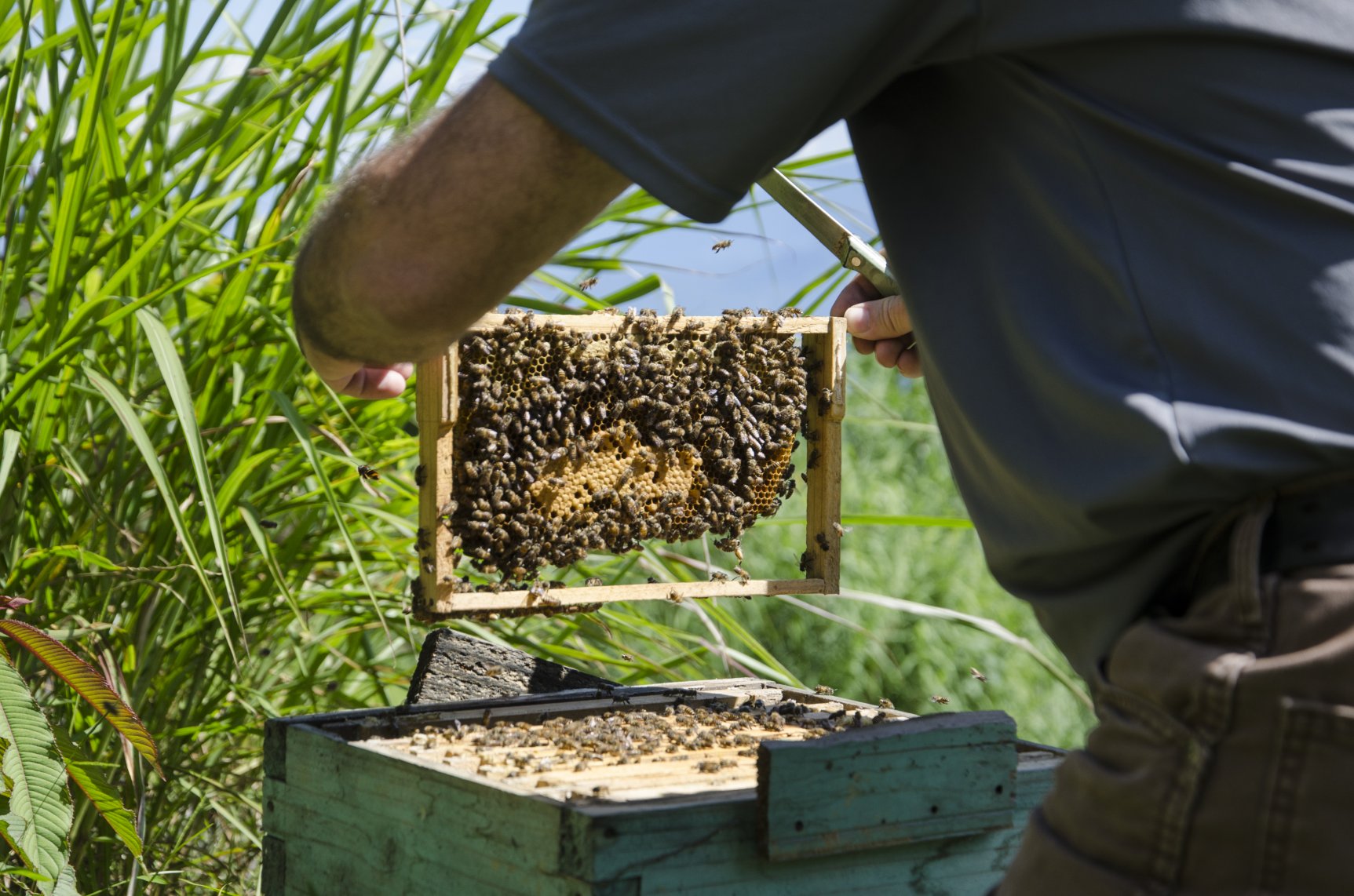
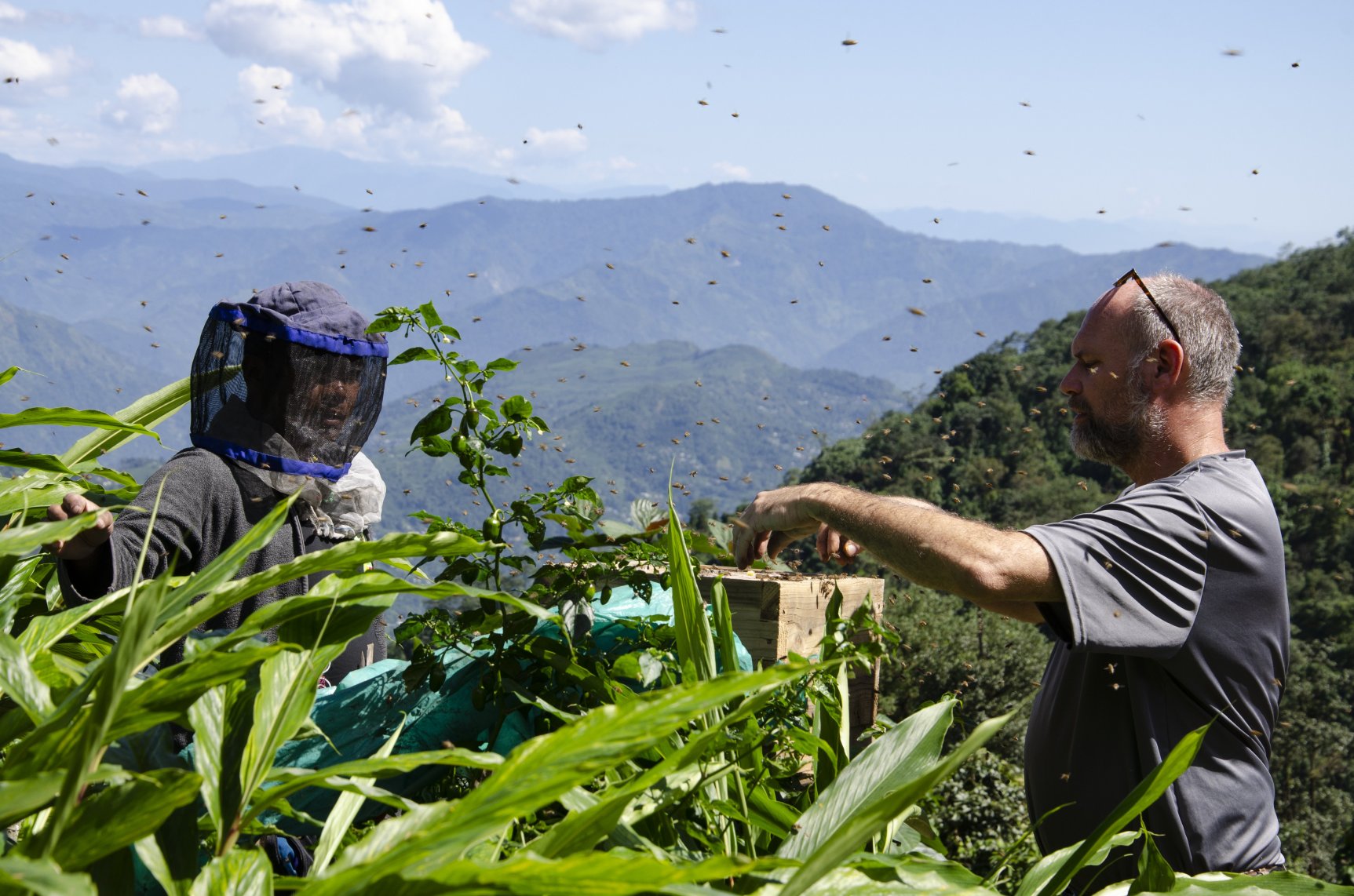
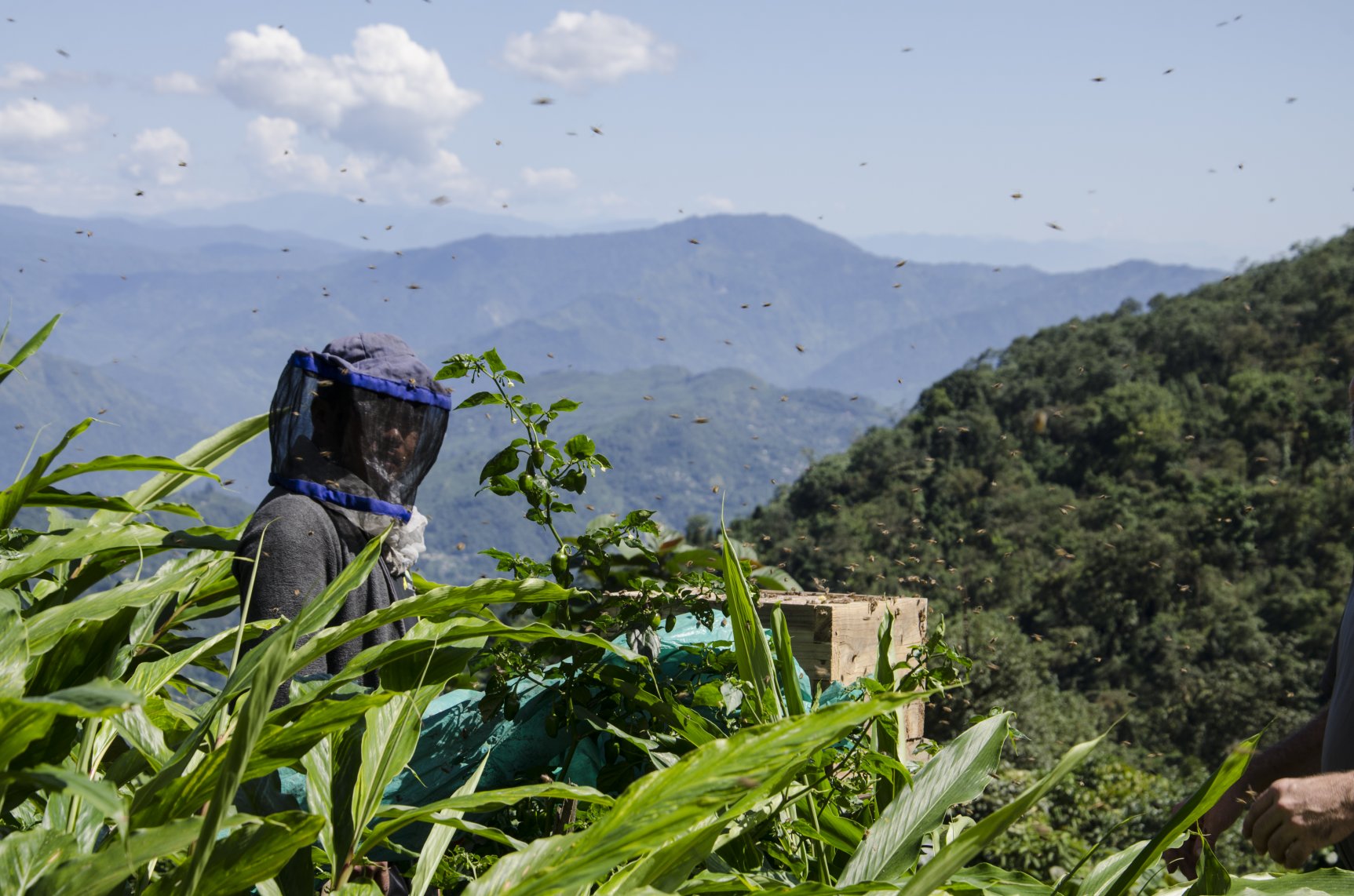
In 2016, I was invited to help an initiative led by the leadership of ATREE to assist in assessing the beekeeping and honeybee knowledge of the farmers in the mountainside villages, and to come up with a curriculum based on what their current knowledge is, and where I think it should be – for them to become self-sufficient with the raising of bees for their home-farm crop pollination.   My trip to India was scheduled for the month of October 2016 – with my time in the Darjeeling area to be about 1 week to assess, and write a suggested curriculum.

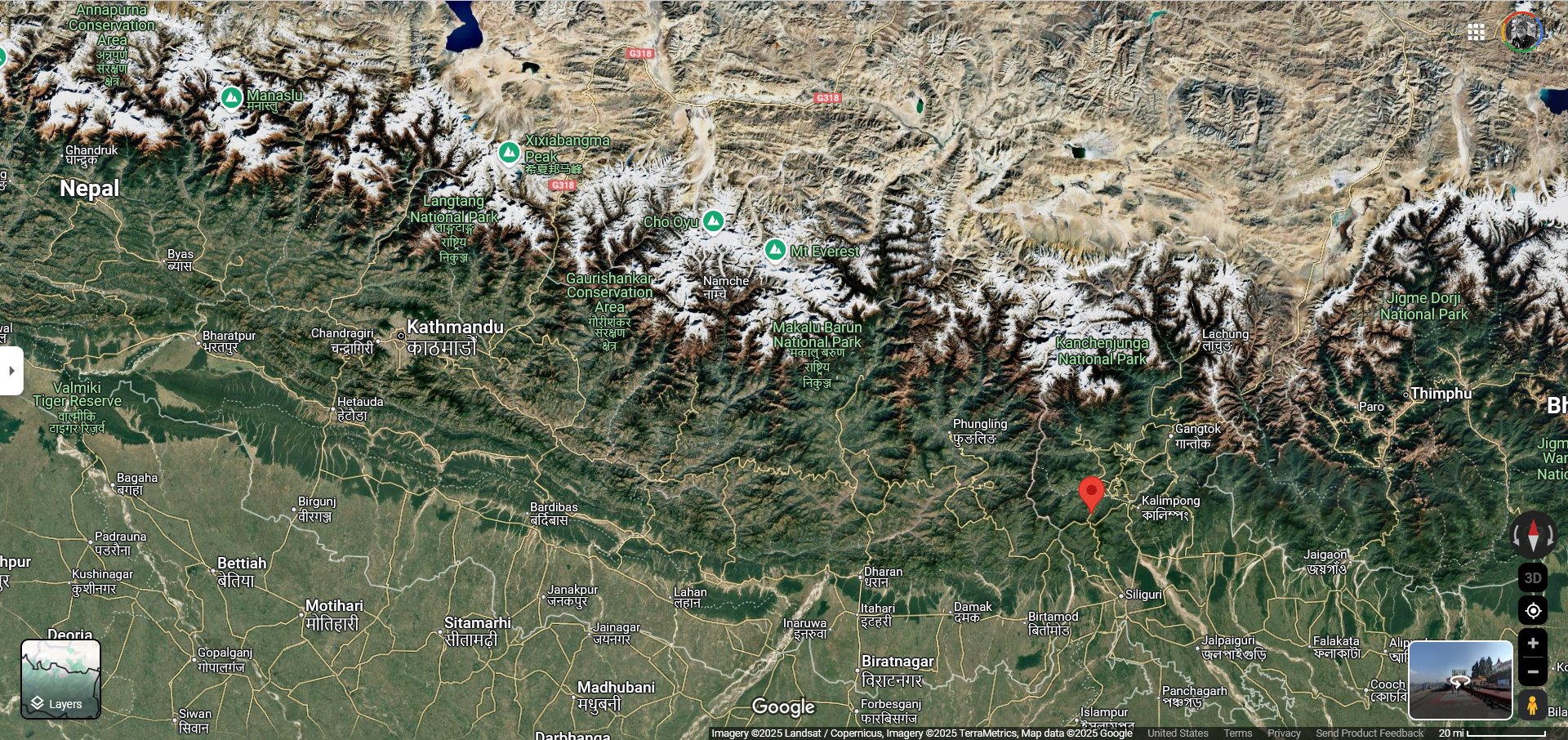
After spending a week in Agra, (Uttar Pradesh (UP) state of India) – I flew from New Delhi to the Bagdogra Airport (military airport) in the Siliguri area of West Bengal.    I was picked up at the airport by a member of the ATREE team, and the slow drive from Bagdogra airport to Darjeeling was started.
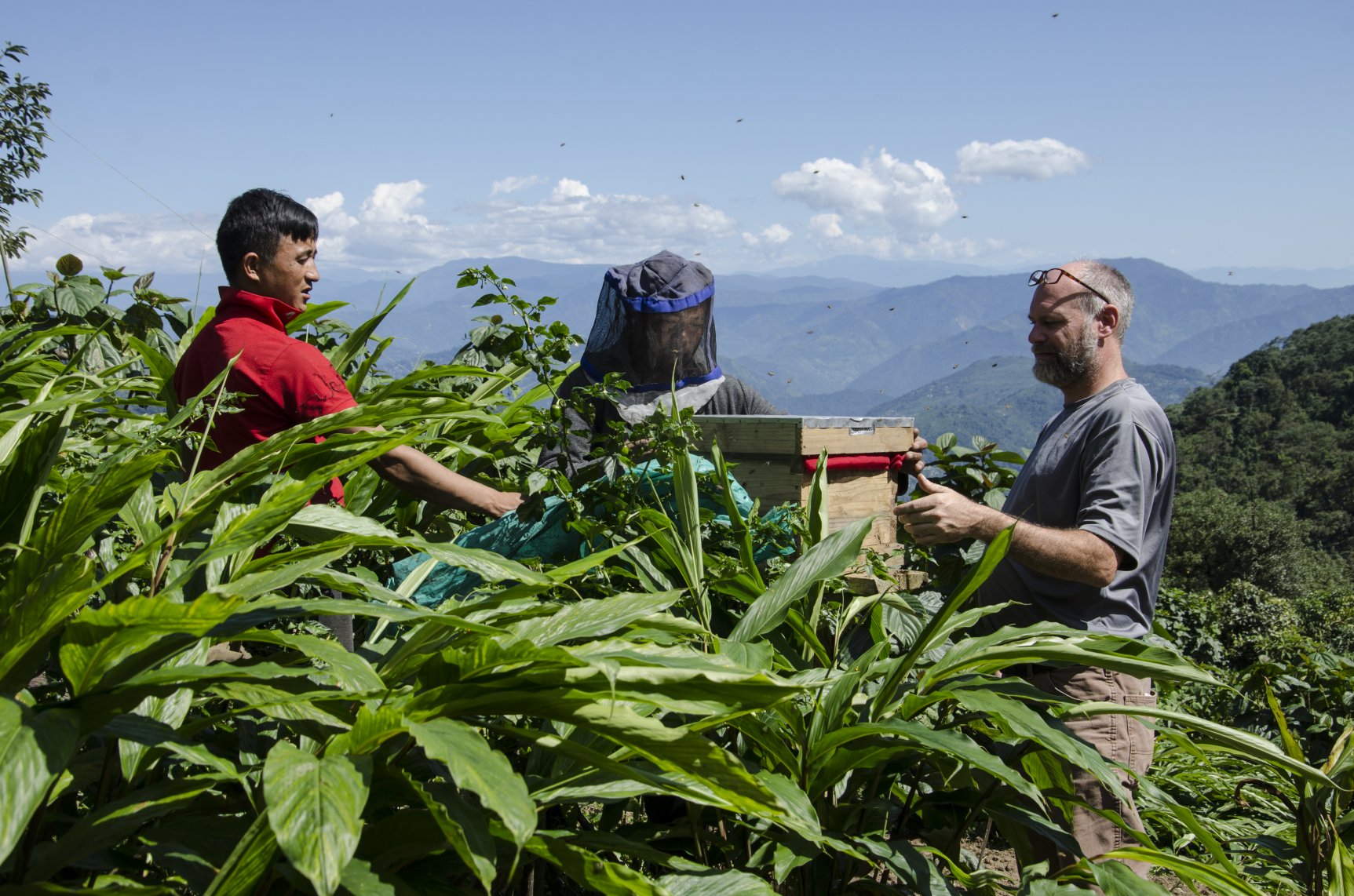
My lodging was arranged by ATREE for the week.   I did not realize that everywhere I went – if staying in a “homestay” or a hotel/motel – I would need a paper copy of my passport to give them – as their government requires the documentation to be kept for visitors.   Next trip – I’ll make sure to have plenty of copies with me.
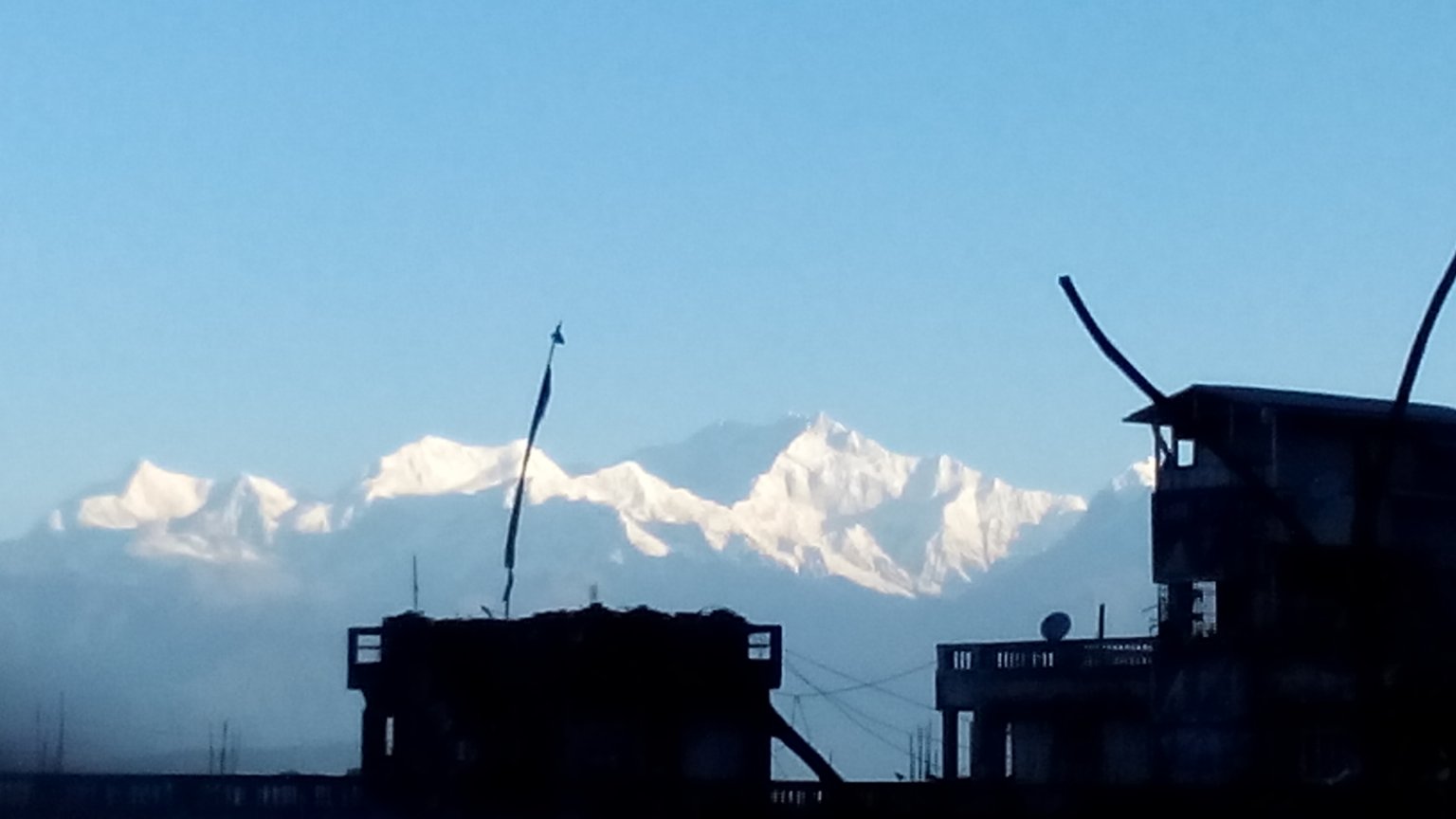
In a country as large as India – they only have one time-zone.   That way (as was explained to me – I’m not sure if they were joking or not) businessmen could not claim “Oh – I missed a meeting because I was in another time zone and didn’t realize time was different for the meeting” – when they’re all on one time zone – there’s one excuse eliminated from the possibilities.    This is a long way of saying – the 2nd week in October – in the Himalayan foothills of Darjeeling and surrounding villages – the sun rose EARLY.  I woke at 5am(ish) and went outside – and saw the glory of Mt Kangchenjunga in the distance to the North of Darjeeling.

Kangchenjunga at 6am from Darjeeling – Photo: Rex Smith


We are not too far from Mt K and Mt Everest.


Day 1 – Took us to the small villages of Upper Bhutia Busty as well as Lalung, then finally to Rampuria Forest Village – where I was hosted by a family for several nights.

Upper Bhutia Busty


Photo by: Saad Amir

Photo by: Saad Amir


Lalung


Photo by: Saad Amir

Photo by: Saad Amir


Photo by: Saad Amir

Photo by: Saad Amir


Photo by: Saad Amir

Photo by: Saad Amir


Photo by: Saad Amir

Photo by: Saad Amir


Photo by: Saad Amir

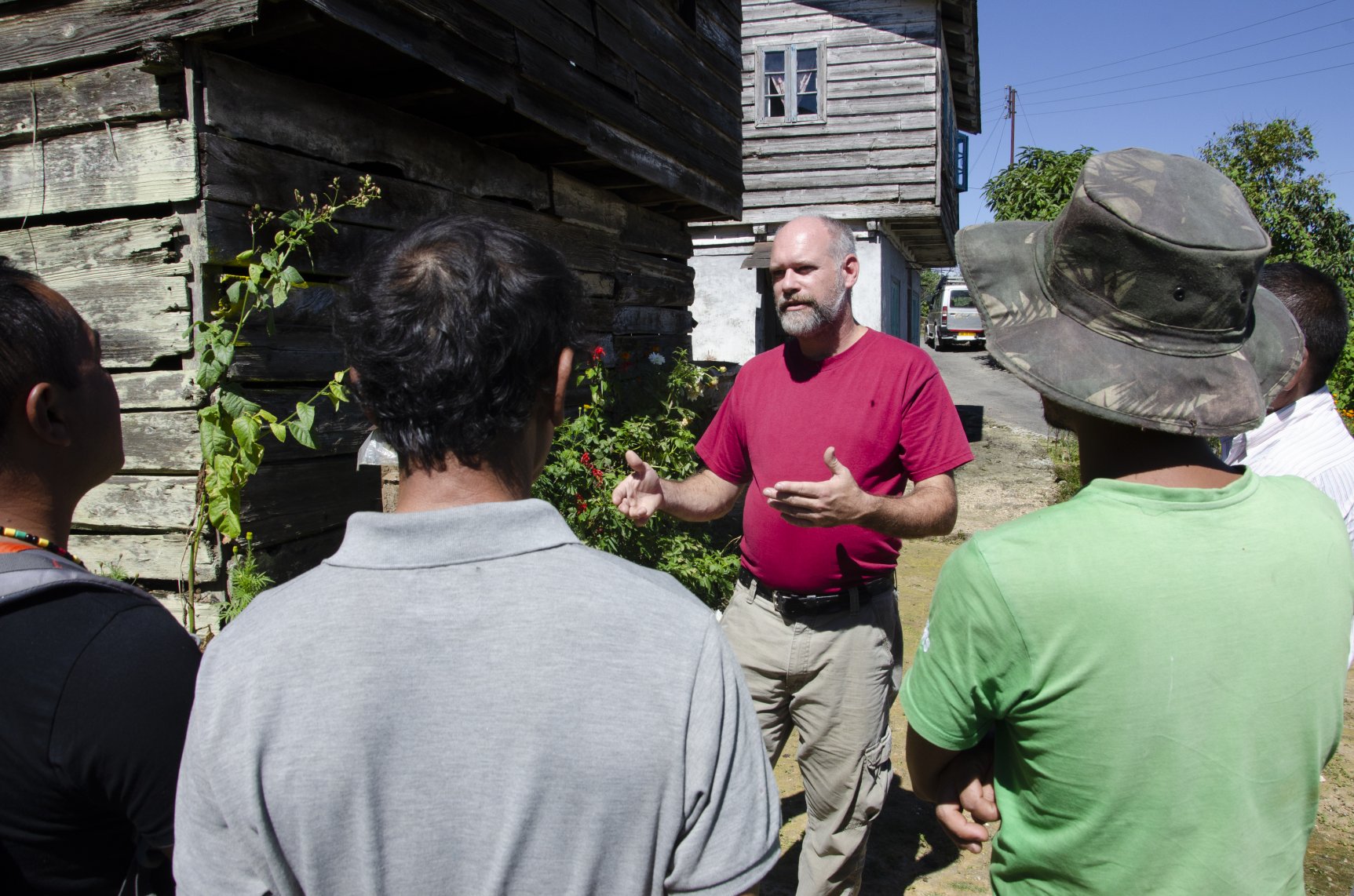
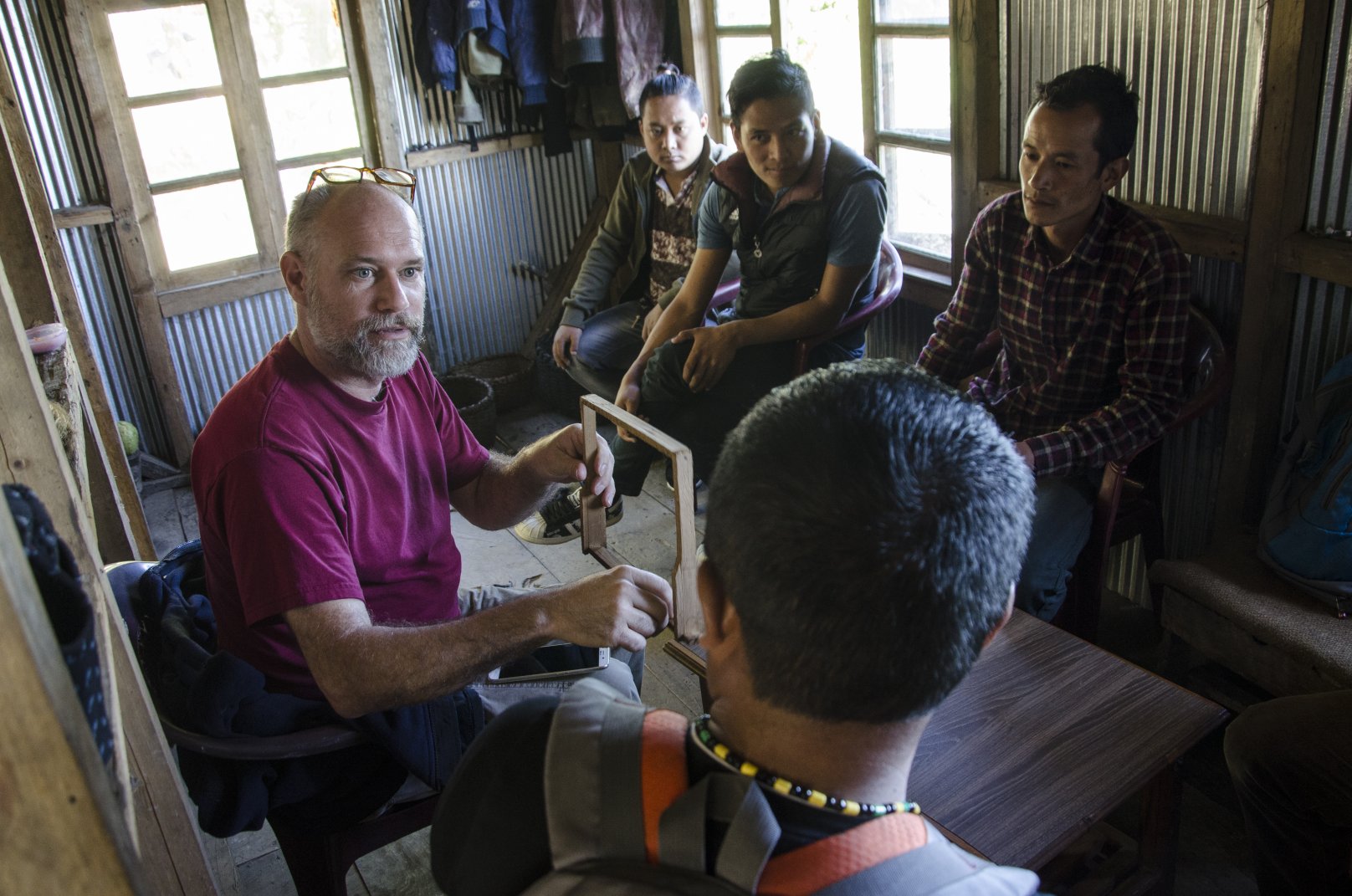
Talking about the equipment, practices, and challenges – in Lalung Photo by: Saad Amir

Photo by: Saad Amir


Rampuria Forest Village


Photo by: Saad Amer

Photo by: Saad Amer


Photo by: Saad Amer

Photo by: Saad Amer


Photo by: Saad Amer

Photo by: Saad Amer


Photo by: Saad Amer

Photo by: Saad Amer


Photo by: Saad Amer

Photo by: Saad Amer


Photo by: Saad Amer


2025 – Central Texas Bee School – Brenham Tx

If you’re available to attend the Central Texas Bee School on March 1, 2025, it’s a great place and opportunity to learn more about bees and their management.

Rex Smith will be teaching (2) sessions – on performing hive inspections at the bee school.

Sign up ASAP to reserve your space.

https://centraltexasbeekeepers.org/bee-school/


Fencing the Bees

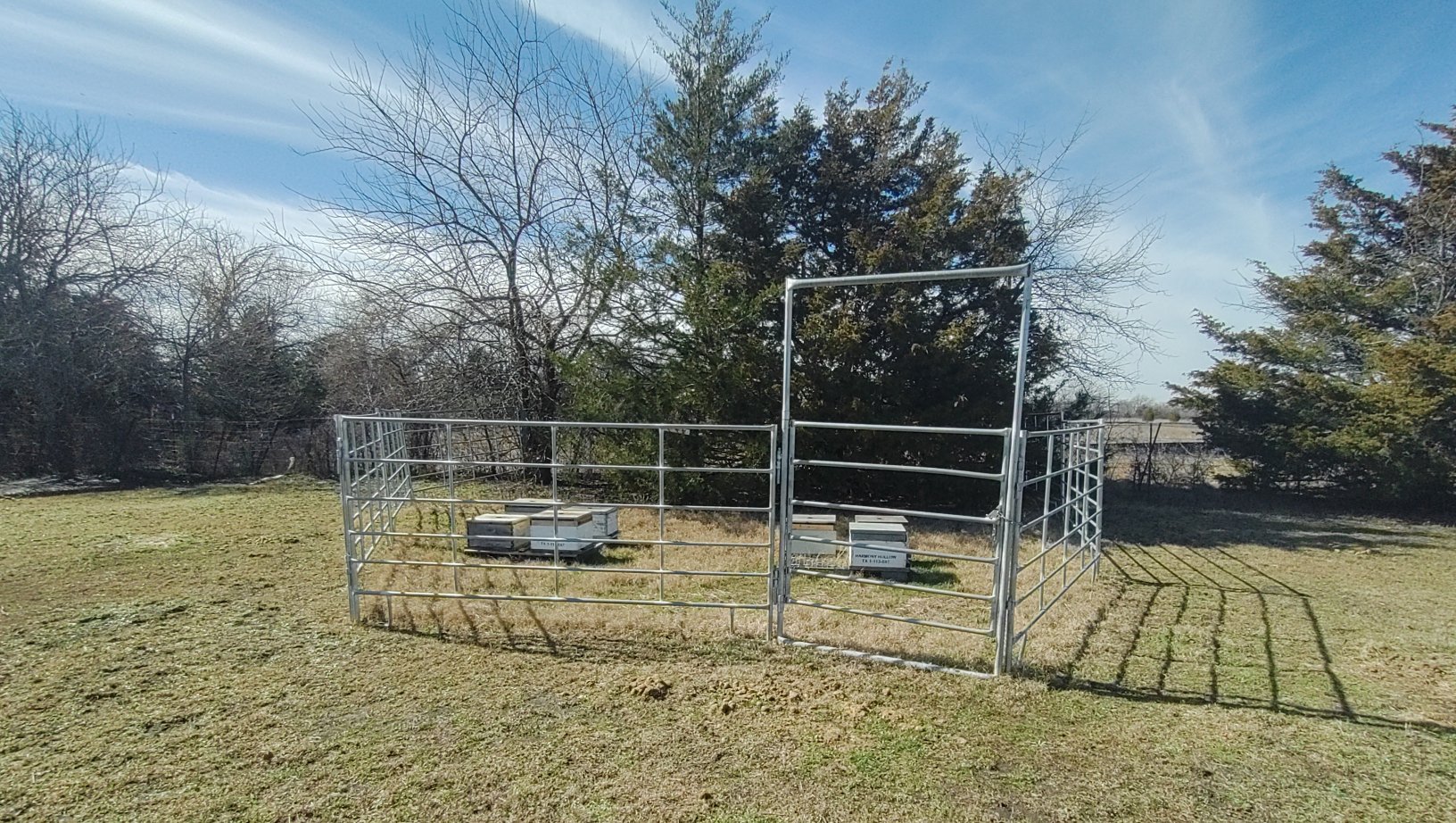
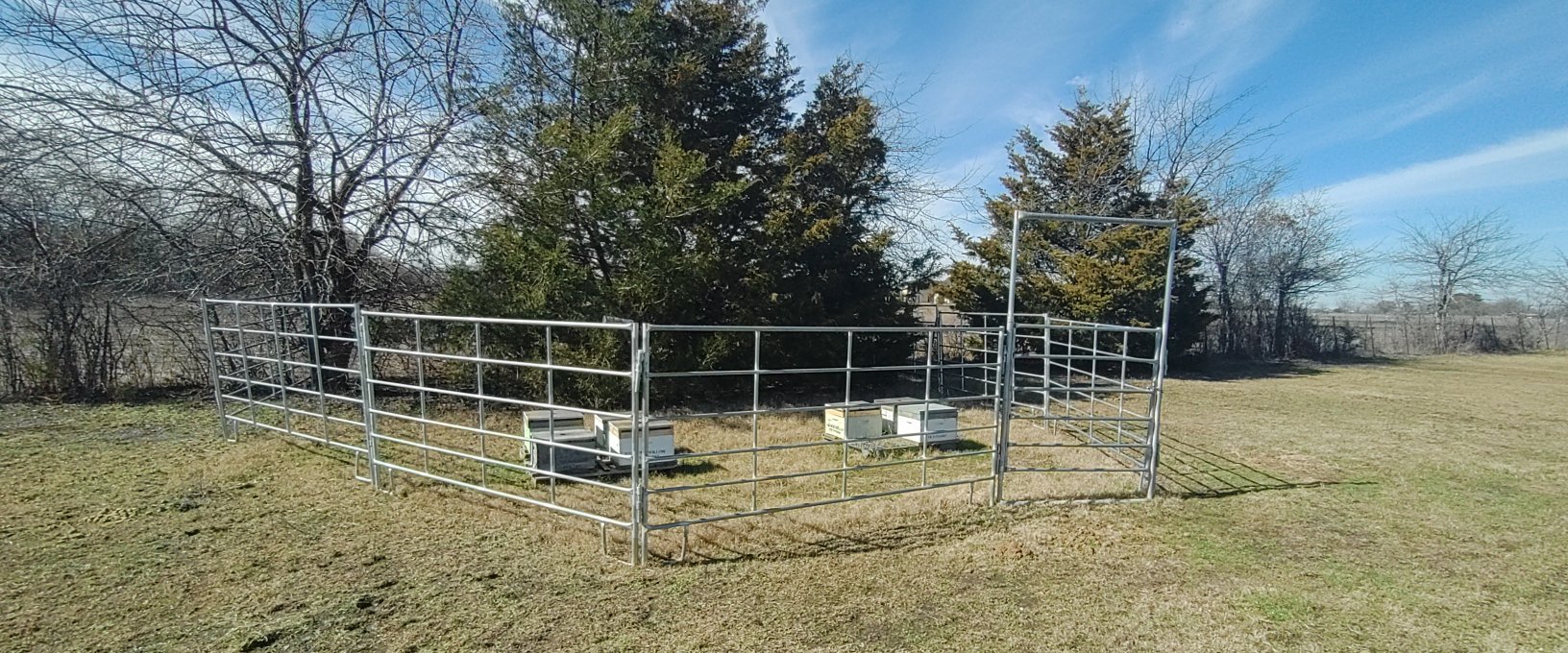
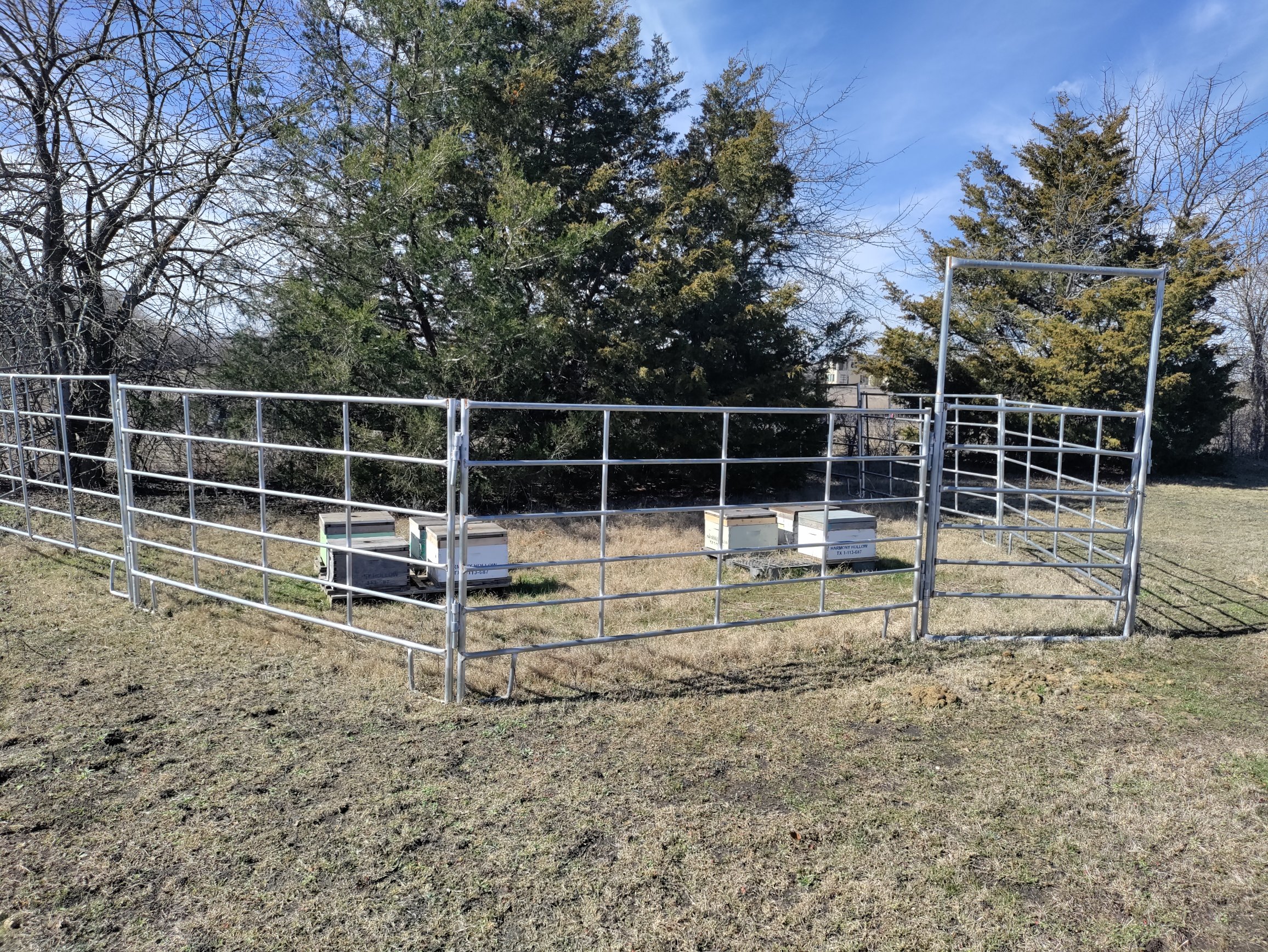
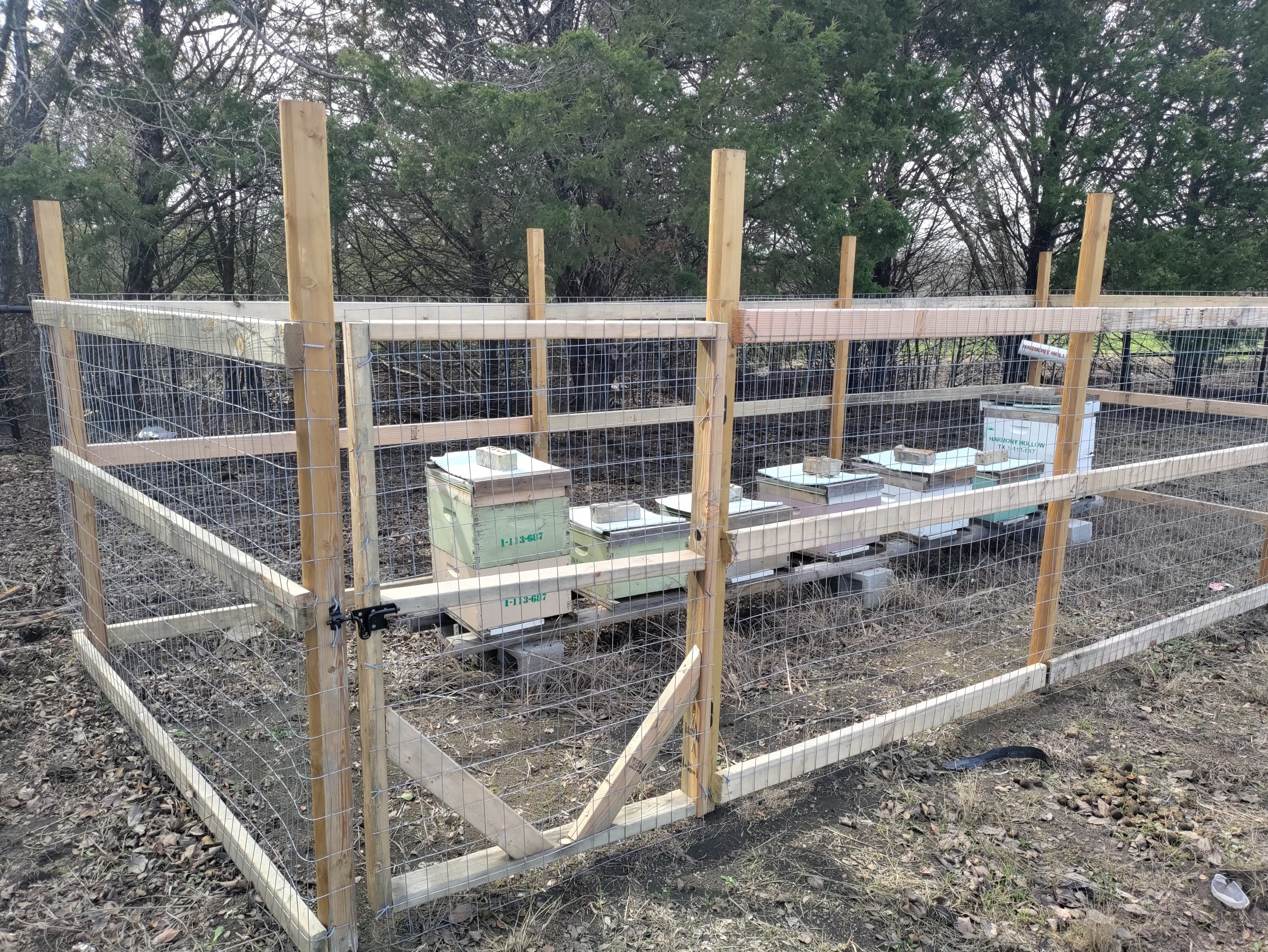
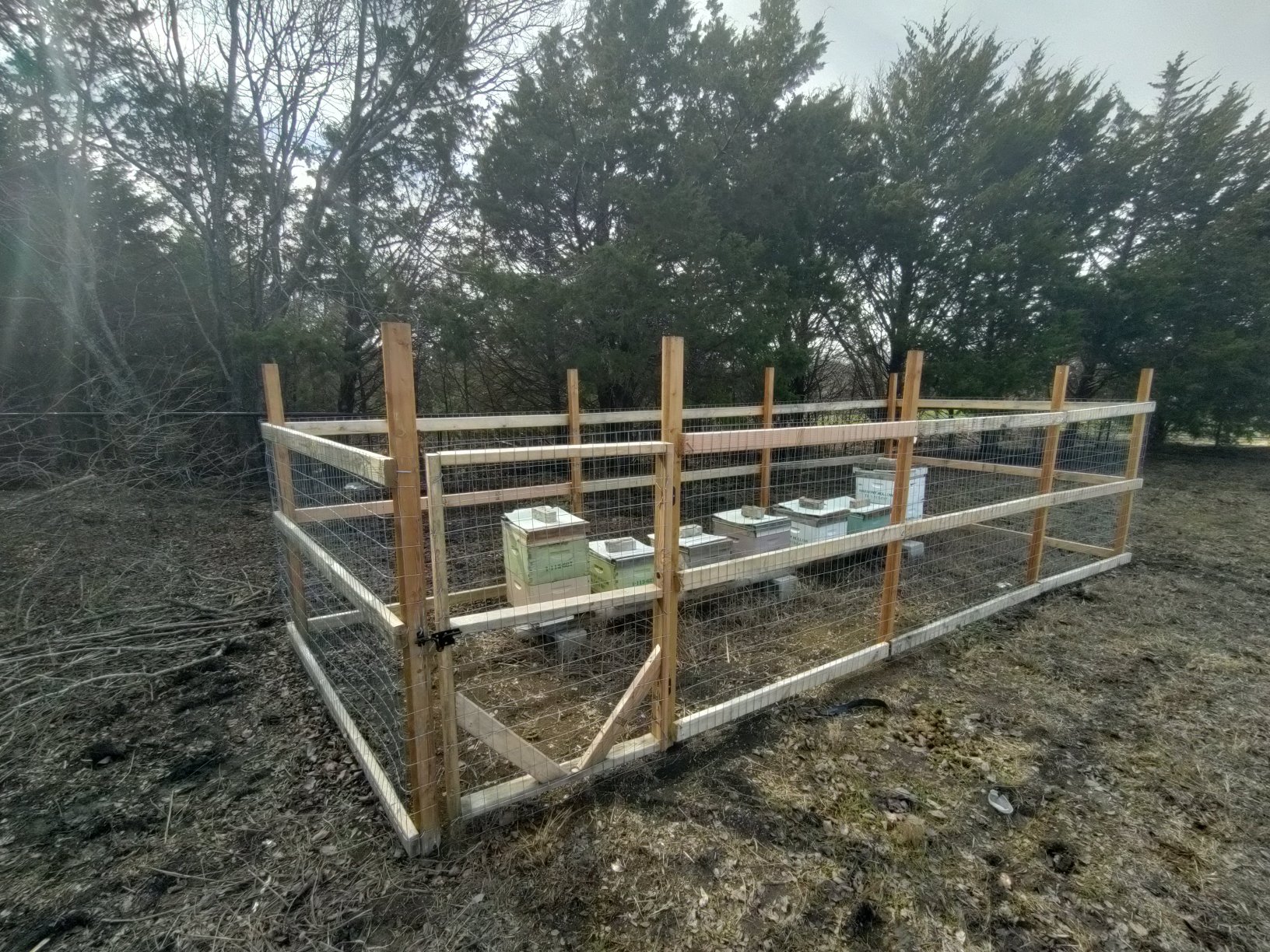
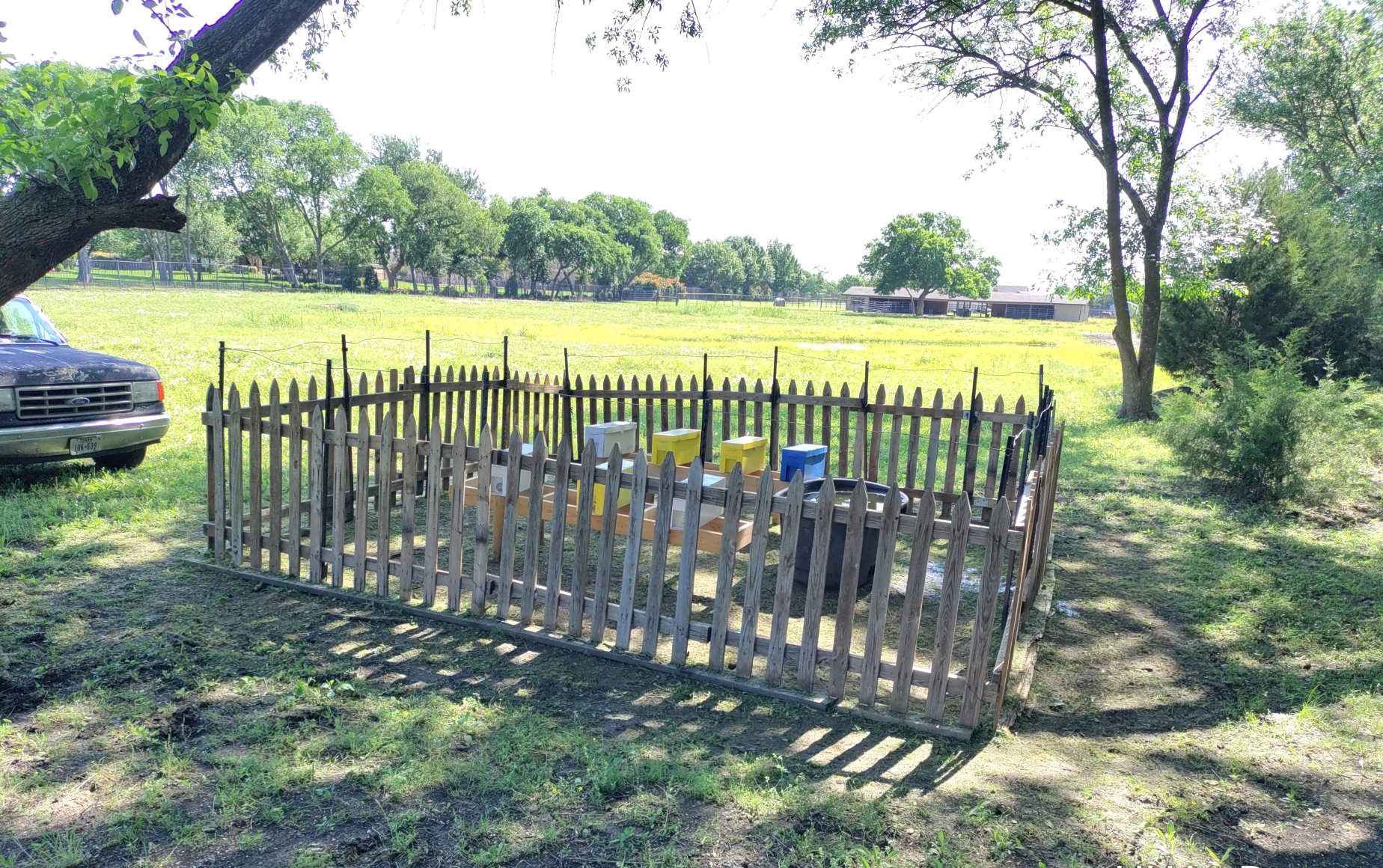
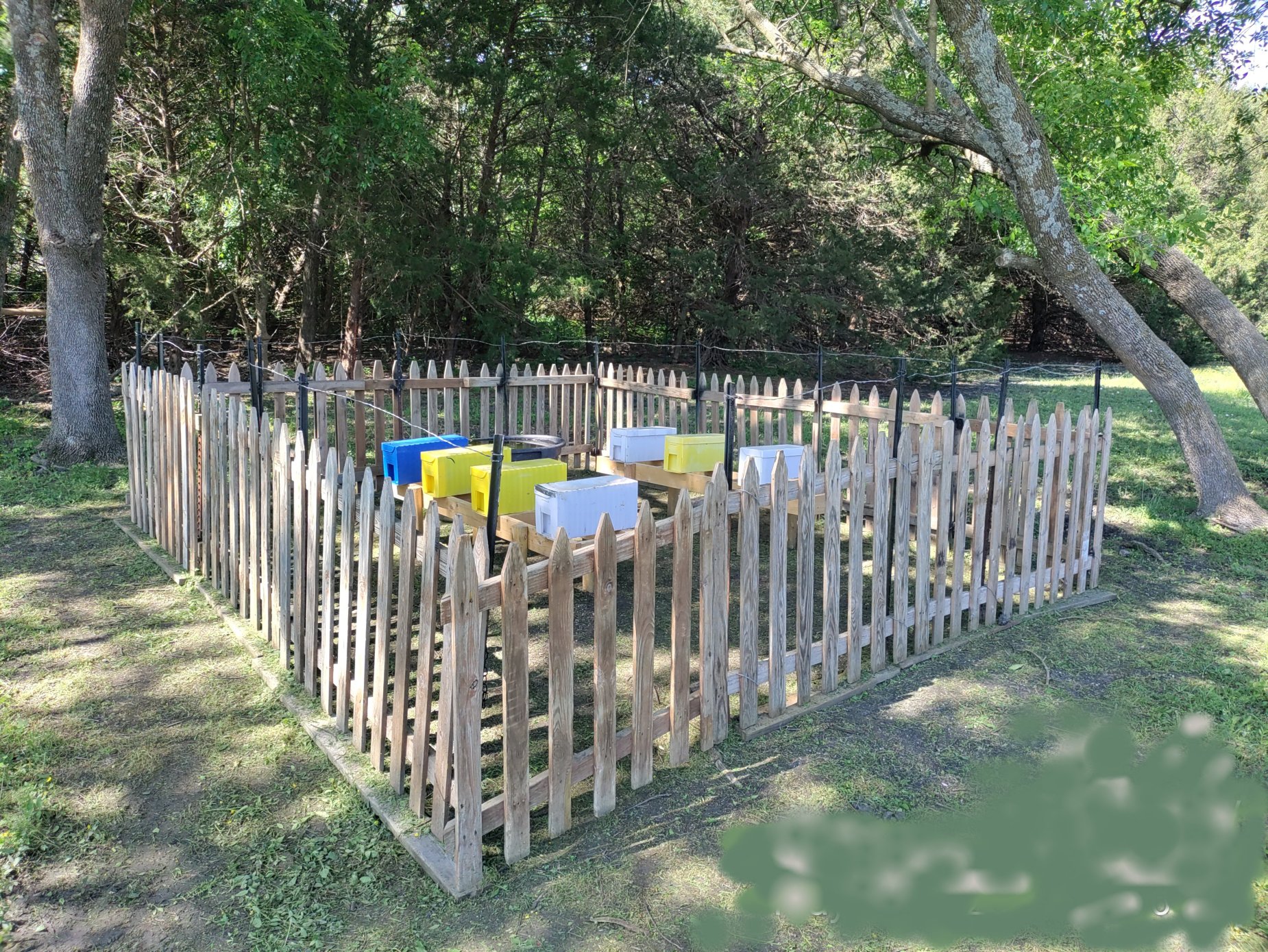
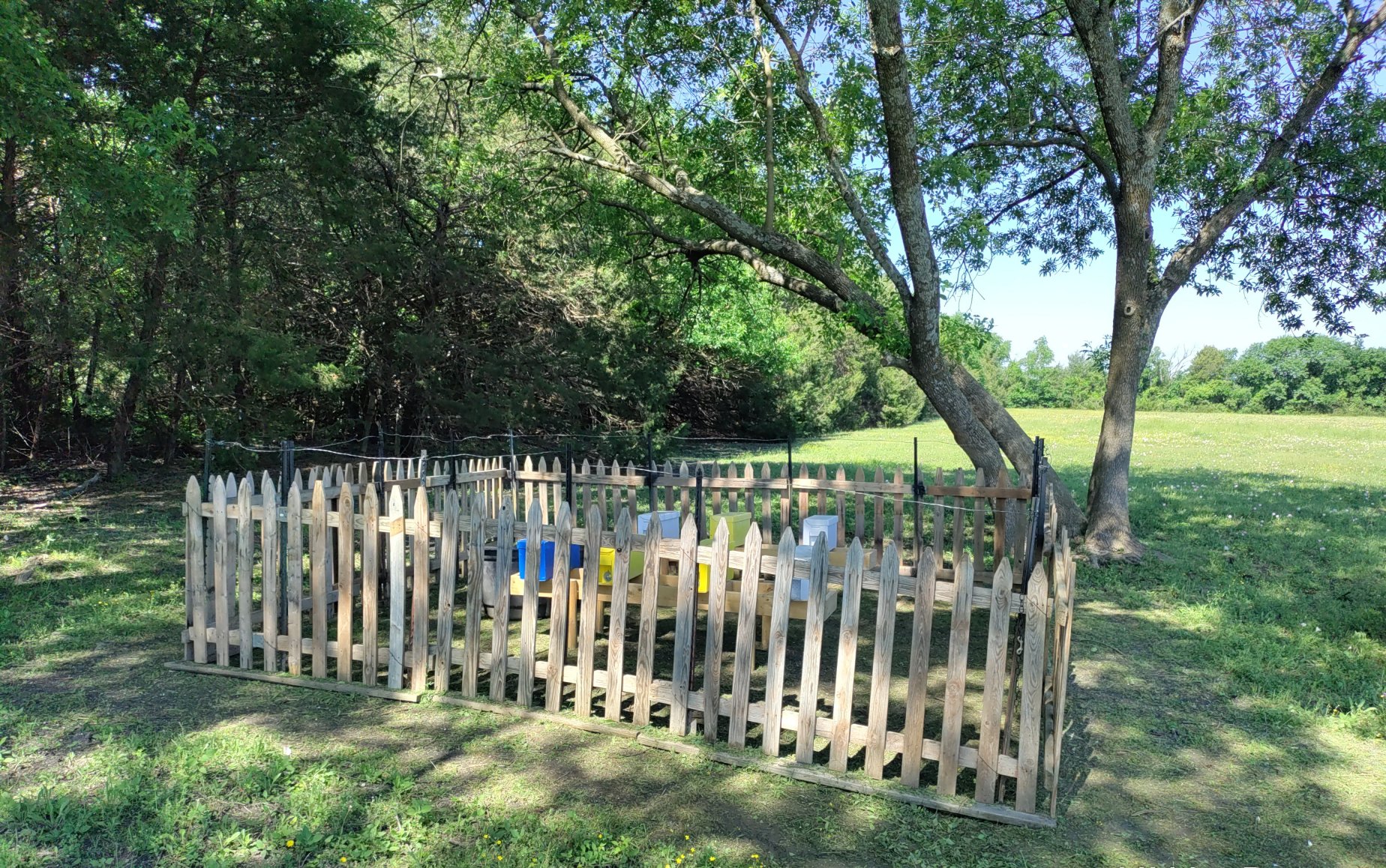
Some customers who may have other livestock on properties – or in fields that aren’t fenced to keep the public out – may be asked to provide fencing around the hives.   Here are some samples that a few of my clients have put around the bees to protect from cattle, horses, humans, goats, and sheep.   Theft and vandalism of bee hives are a serious concern, and protecting your investment of managing hives on your property is important.   Remember – Theft, vandalism, and poisoning of hives are NOT covered for replacement in our contracts – and will be at the cost of the property owner to replace should these occur to the bee colonies.

Whether the fence is around the entire field, or just around the hives – I will provide my own chain/lock to secure the fence gate.

(scroll down to see several methods – and clicking the pics will open the full-sized pic in a new window)


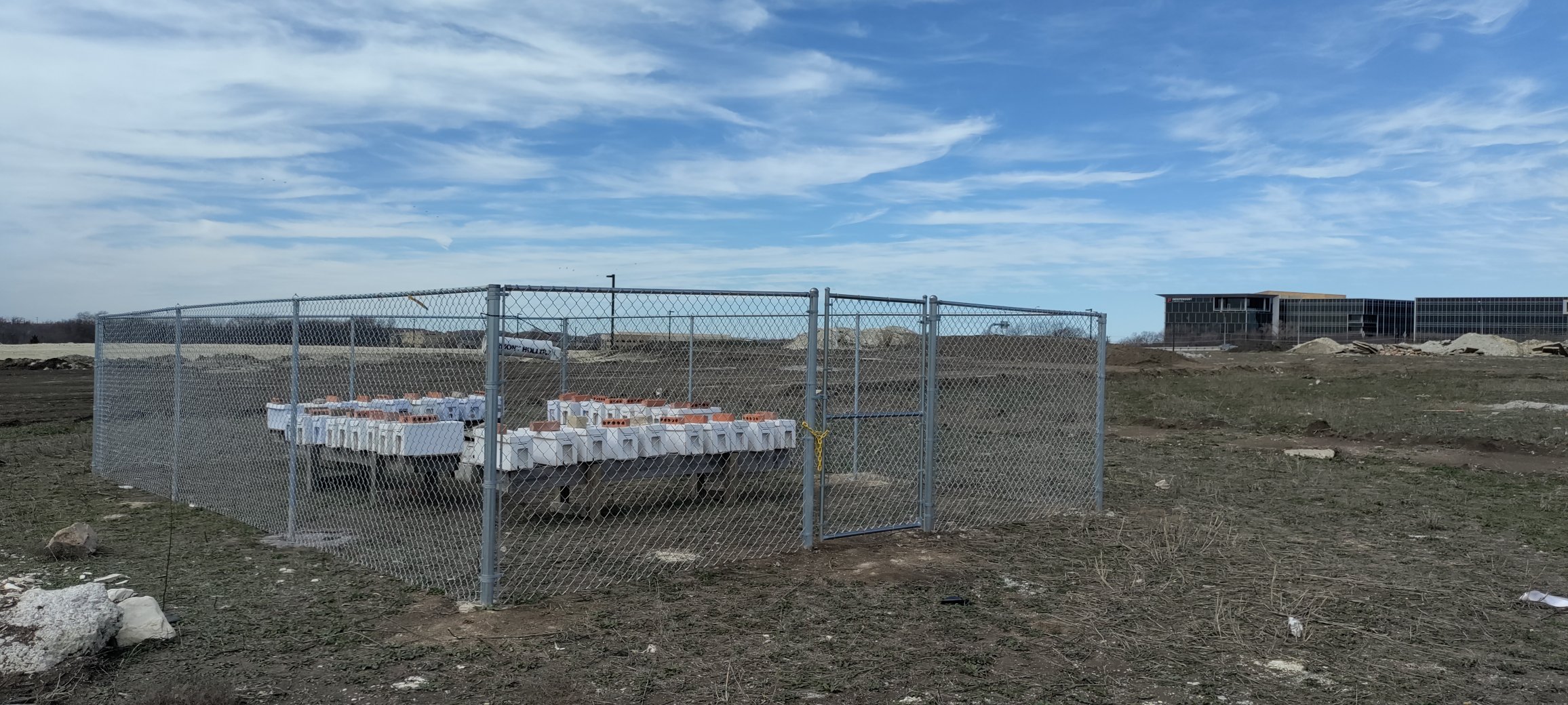
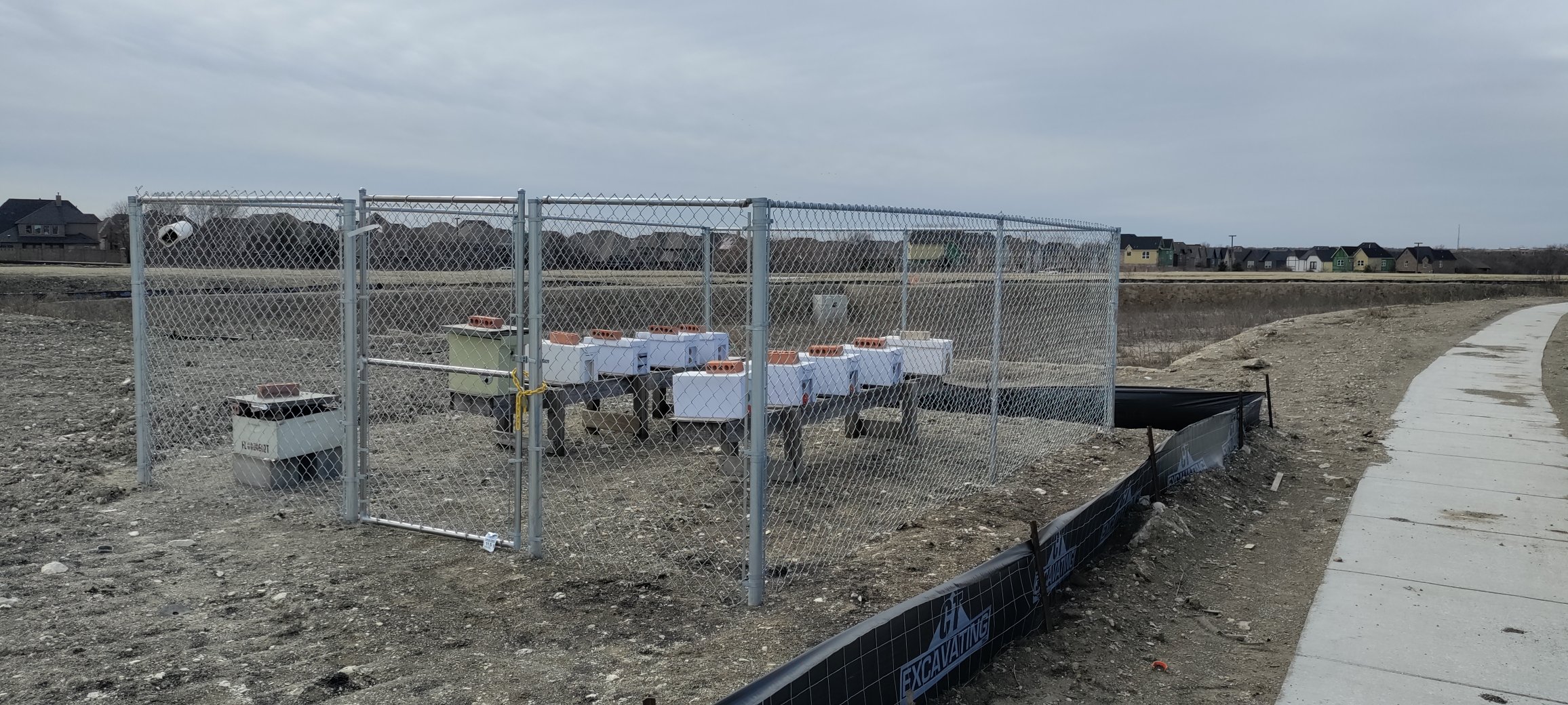
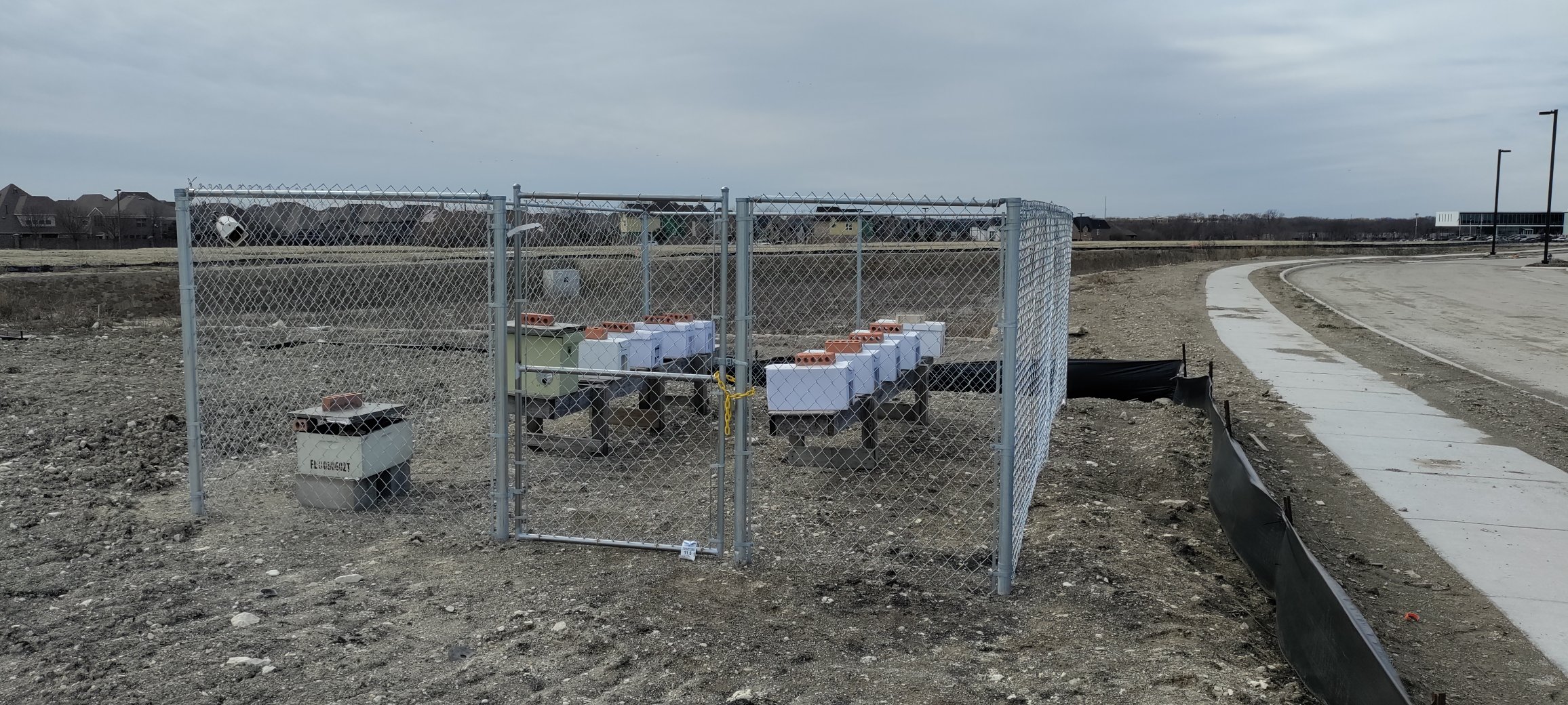
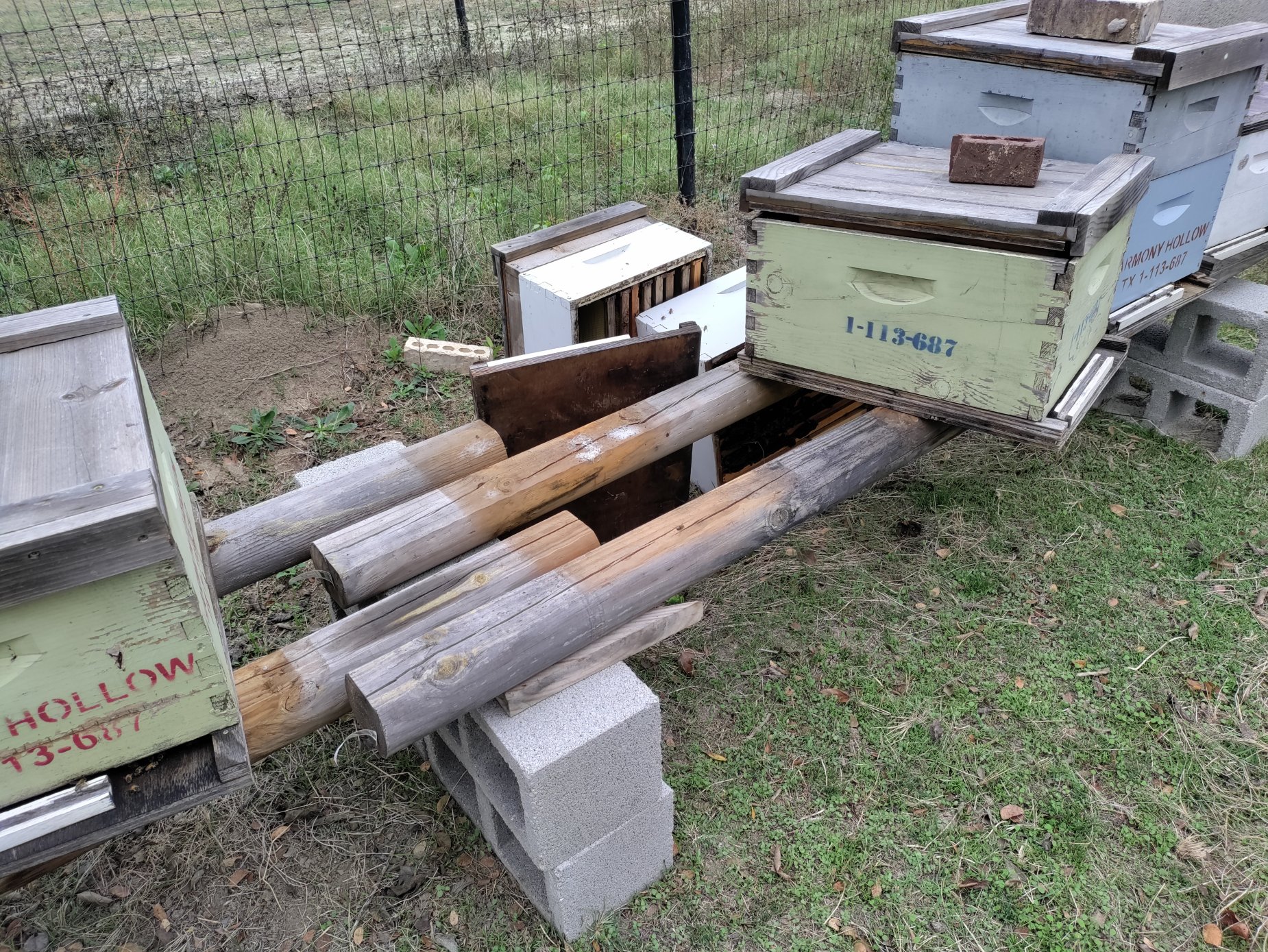
Chain-Link Fence with gate: Good for places where posts in the ground are better – especially if in a publicly available spot.   This client is a land developer, and the field is open to the public.  They needed livestock on the land to maintain their ag valuation until construction started.   Theft and vandalism was the main concern, so they had their own contractor place fencing around the hive stands before the bees were set in place.   


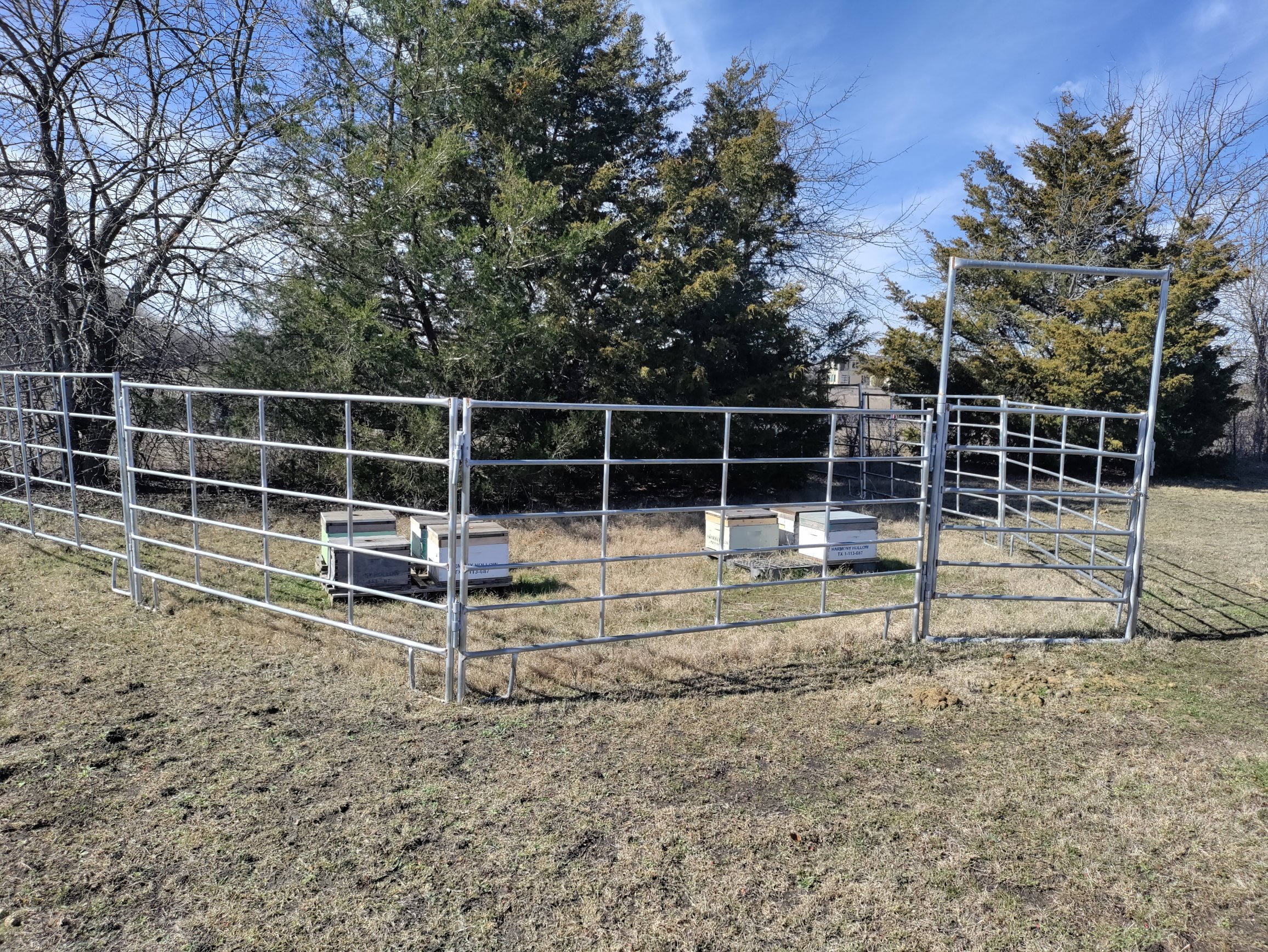
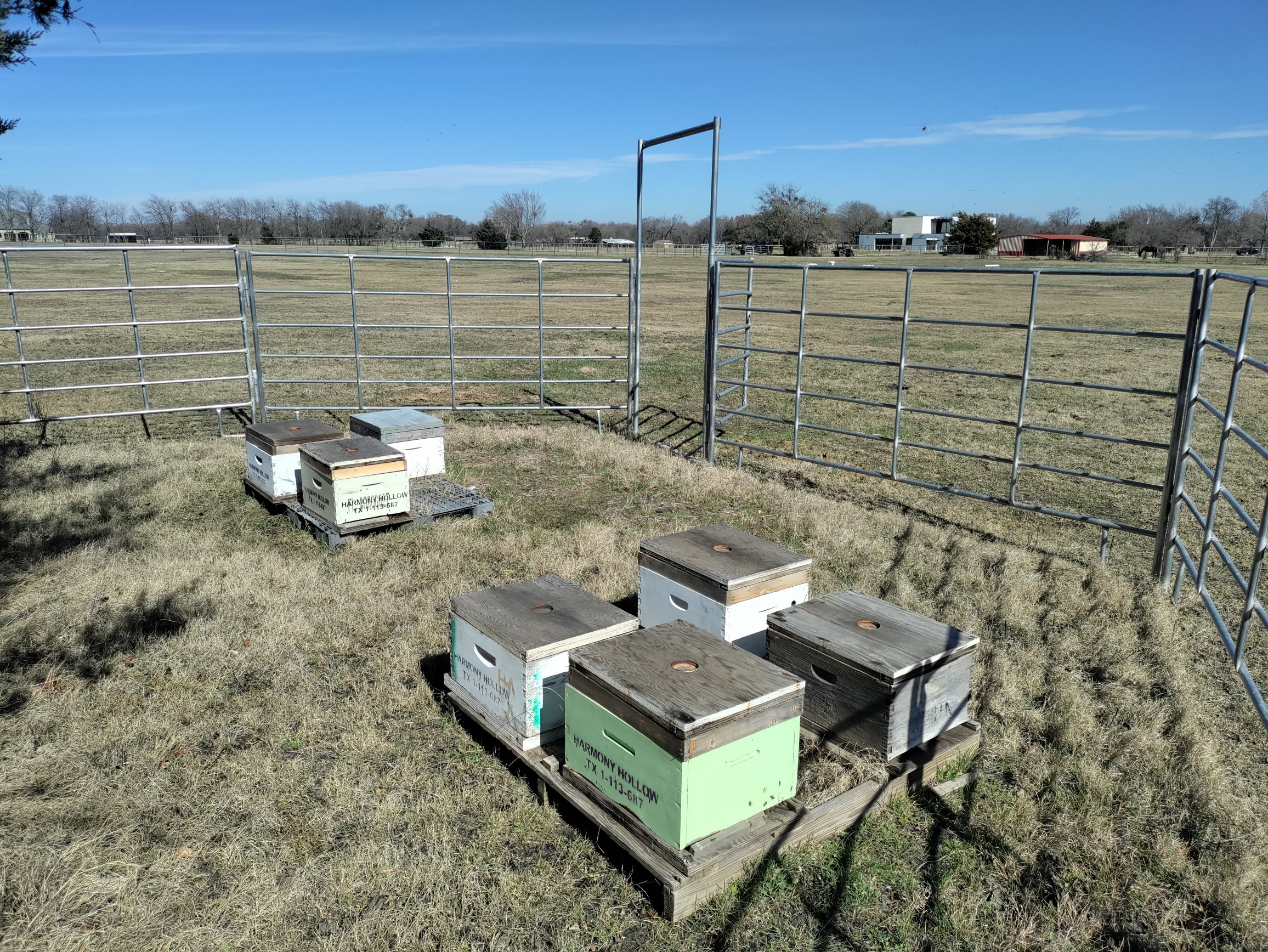
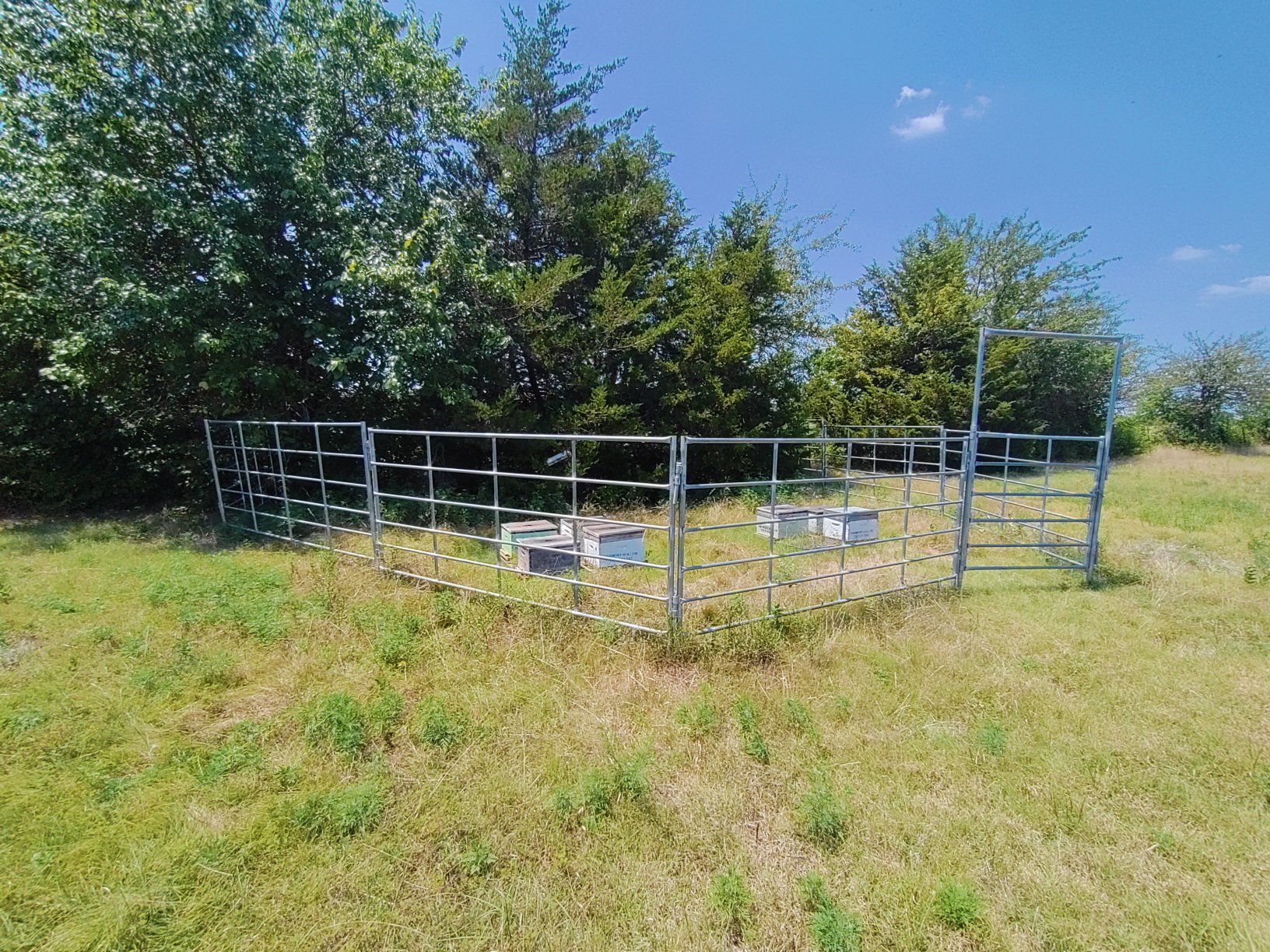
Sectional cattle panels with gate This is probably the easiest fencing to put into place – and is good for protecting from other livestock – but not necessarily secure against theft – as the panels just pin together at the ends of the panels.    This client has horses – and horses are notorious for their shenanigans for playing tricks and getting into things they shouldn’t.   Horses will tear up hives to get to any sweet frames of honey they smell – so protection from other livestock is essential to protect the bees (and their other farm animals if the bees deem that they need to defend themselves if a hive is moved, jostled, vibrated, knocked over, etc.   No lock required here, since the hives are already in a fenced field at the back of a property, and the fence-panel gate has a chain that secures the door closed.


Wood Fence with gate: Good for places where posts in the ground are better – especially if in a publicly available spot.   This client also had horses, and this fence they built provides a secure space around the hives from the horses.   No lock required here, since the hives are already in a fenced field at the back of a property.


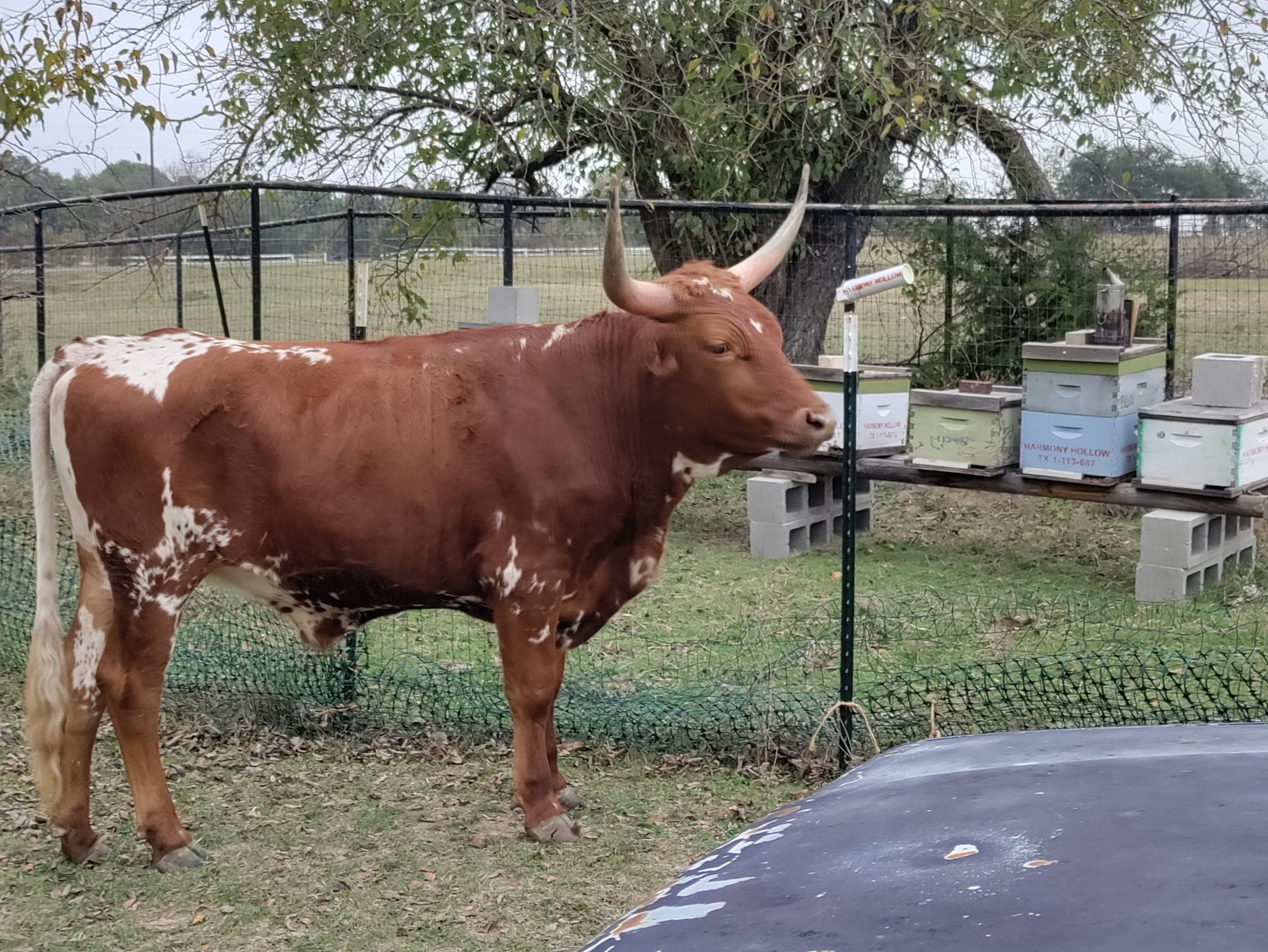
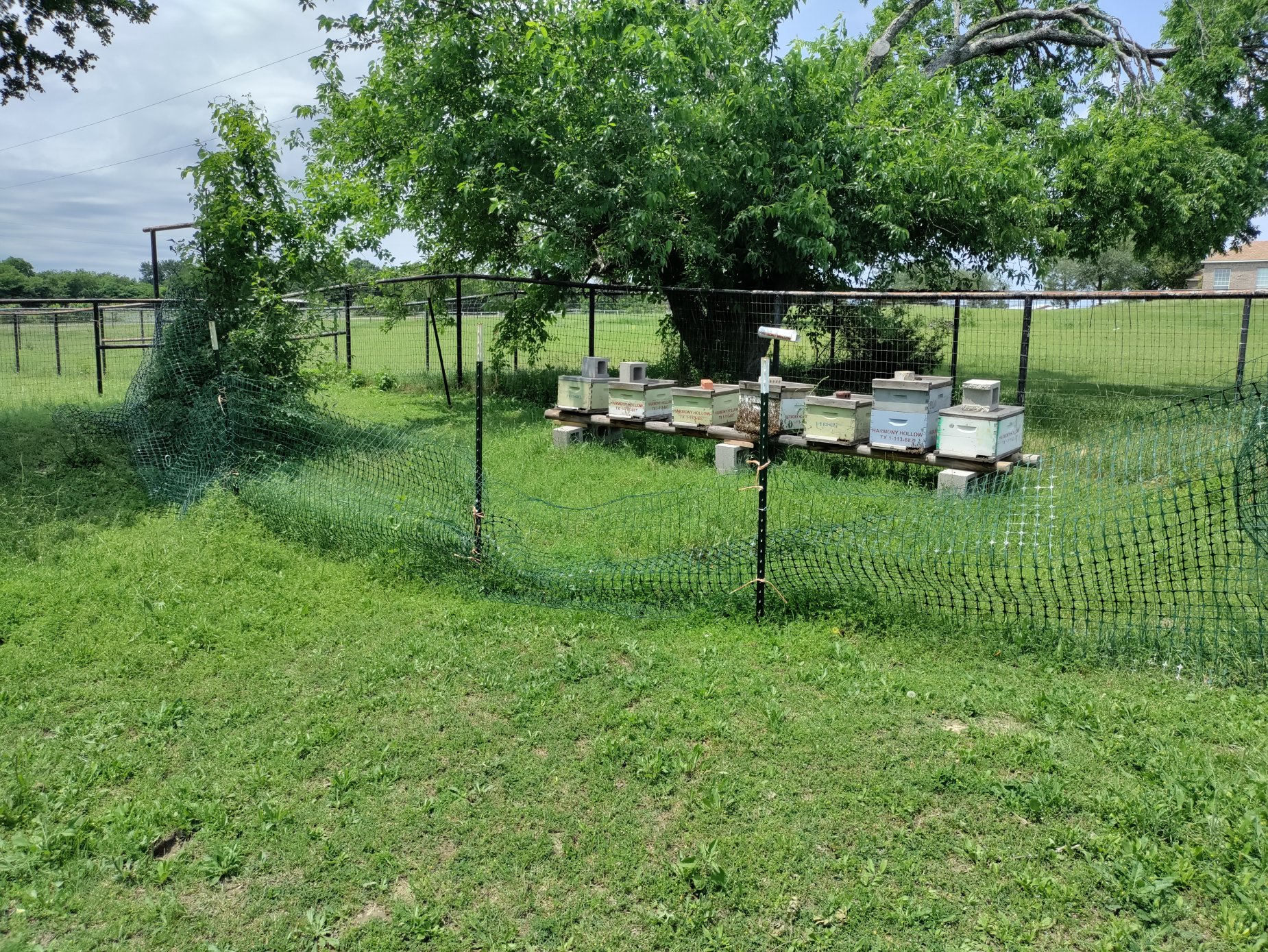
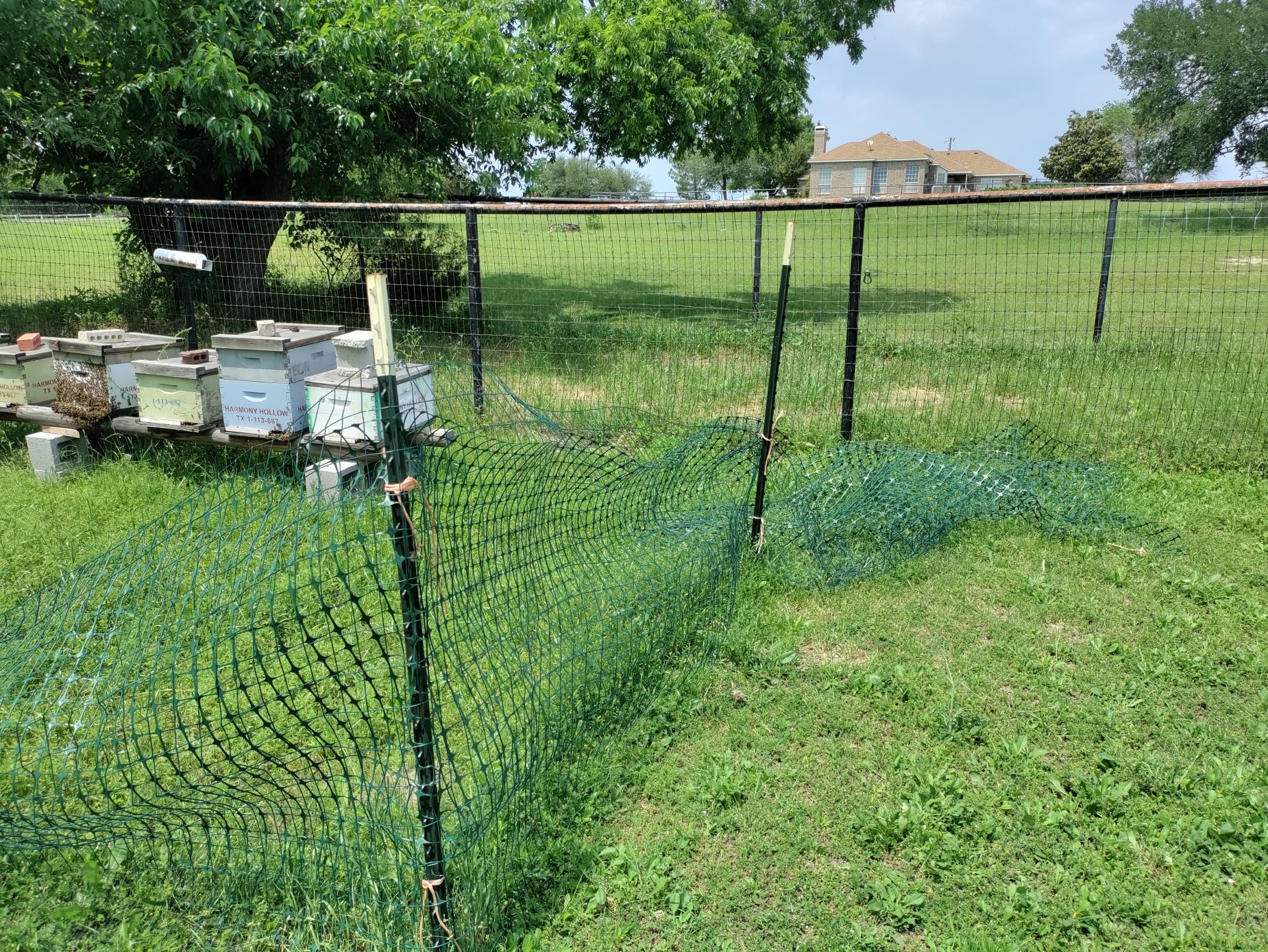
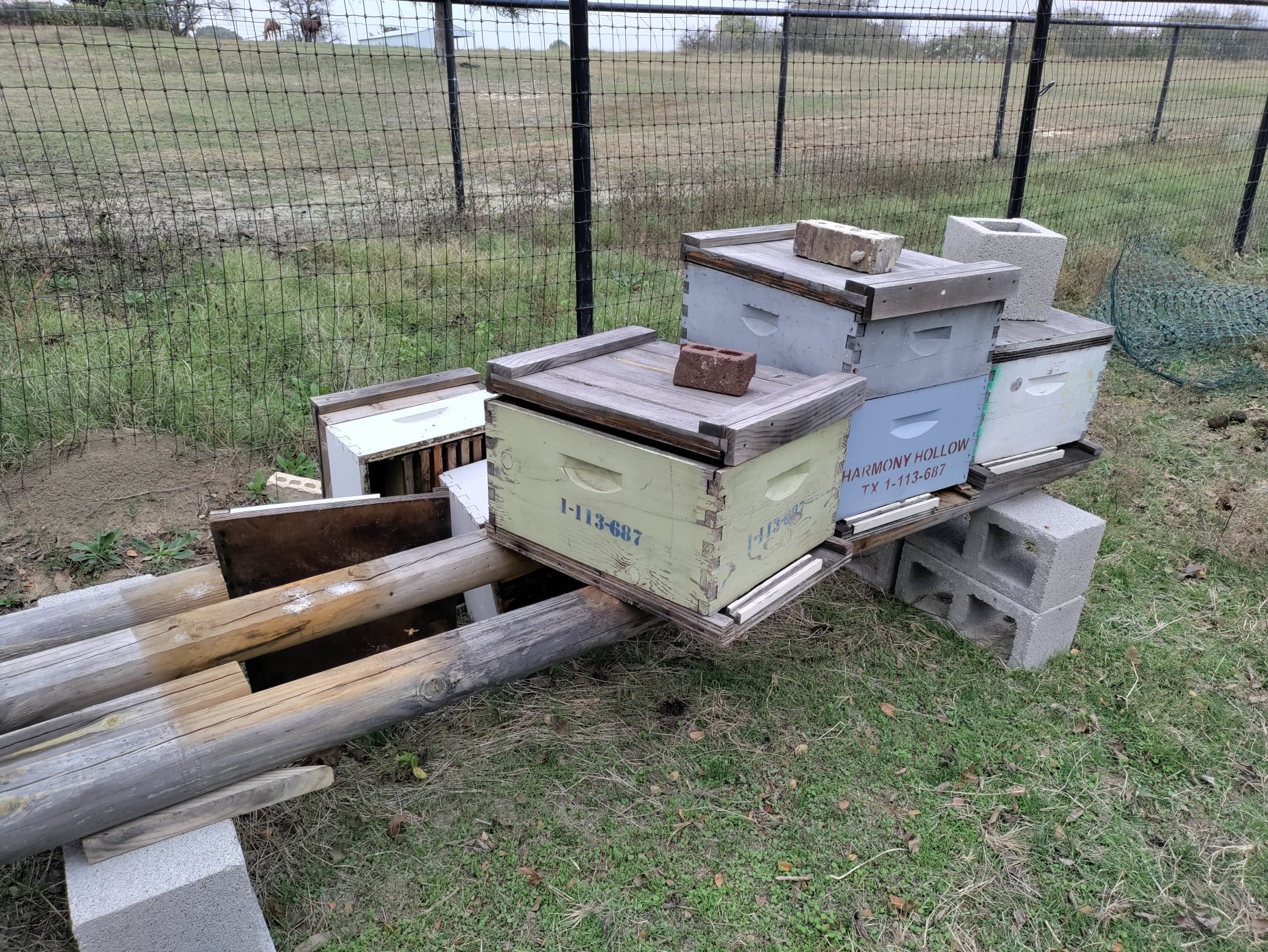
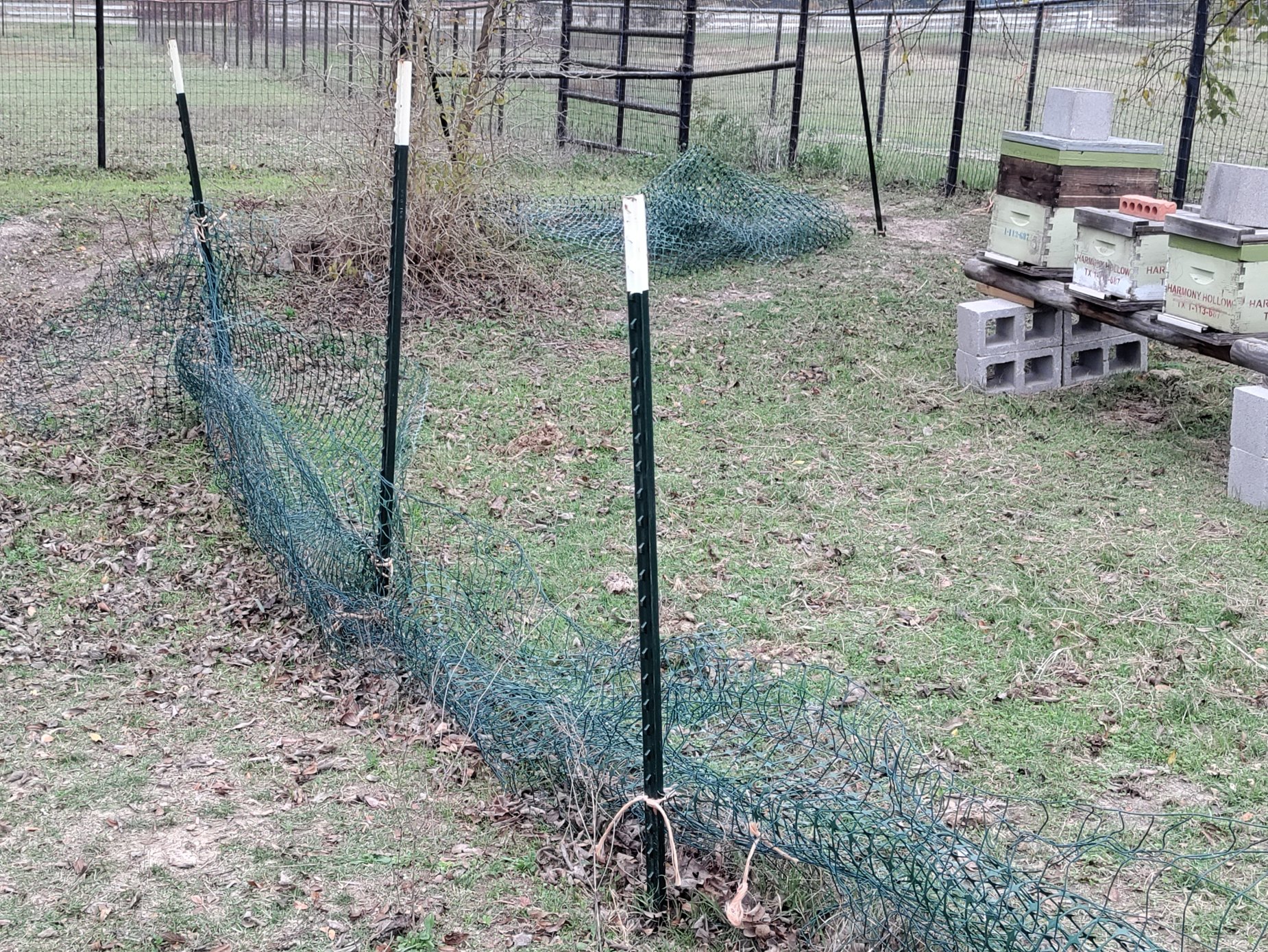
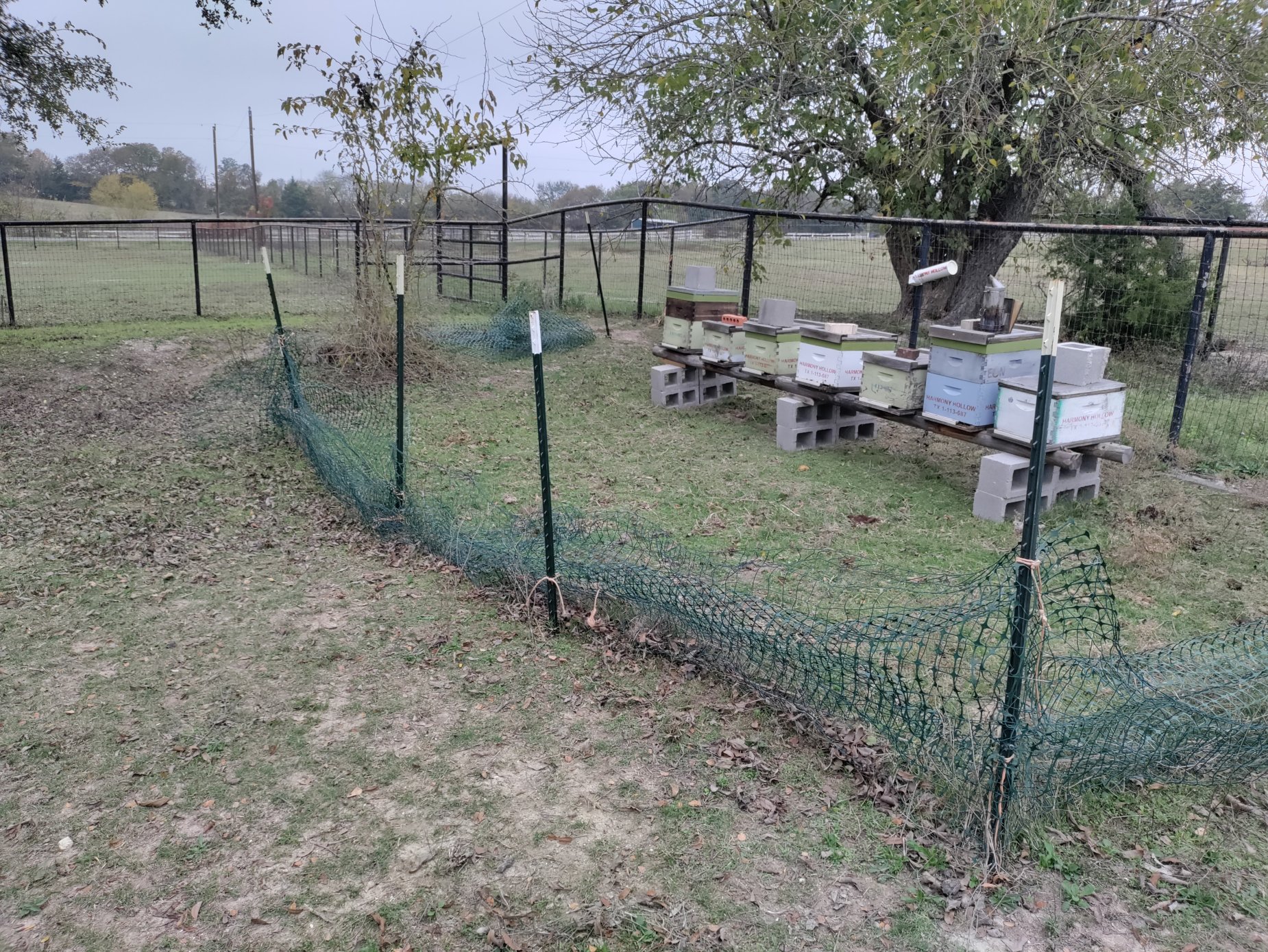
And an example of what NOT to try to use to protect the beehives.   Construction trash-fence zip-tied to t-posts.  This does NOTHING to keep the horses and longhorn cattle out of the hives.

DO NOT DO THIS !!


2025 Texas Legislation to watch

12-11-2024 / Updated 6/22/2025 :  Legislation that may affect beekeeping and associated agriculture operations in Texas during their 89th Legislature session:

Searches in Legiscan were for keywords:   Honey, Bees, Honeybees

https://legiscan.com/gaits/search – Specify Texas as your state and if asked – 89th Legislature.


  • HB 519 –  ( Mary Gonzales – D )   Defines honeybee producer of honey operation.  Defines that local governments cannot require further regulation.    This is for pure honey and honeycomb that has NOT been further adulterated (other ingredients or flavorings).   This keeps honey production as a “raw agricultural commodity” and is in line with FDA rulings.+
  • https://legiscan.com/TX/bill/HB519/2025
  • Action: 2025-06-22 – PASSED!   Effective on 9/1/25
  • Harmony Hollow and Birds and the Bees Apiary – SUPPORTS this legislation


  • SB 541 –  ( Lois Kolkhorst – R )  Relating to cottage food production operations. –
    💰 It triples the annual sales cap to $150,000 and indexes it for inflation.
    📑 It allows cottage food producers to register with DSHS instead of putting their home address on the label.
    🍪 It creates simple, common-sense standards for providing samples to potential customers without permits.
    💯 And it very explicitly clarifies that the local health departments cannot require permits or charge fees of cottage food producers.
    This is the biggest expansion of the cottage food law we’ve ever had, and it puts Texas back at the forefront of the Food Freedom movement.
  • https://legiscan.com/TX/bill/SB541/2025
  • Action: 2025-06-22 – PASSED!   Effective on 9/1/25
  • Harmony Hollow and Birds and the Bees Apiary – SUPPORTS this legislation


  • HB 552 –  ( Mary Gonzales – D )   Relating to a study by the Texas A&M AgriLife Extension Service to determine standards for the appraisal for ad valorem tax purposes of certain agricultural land used to raise or keep bees.
  • https://legiscan.com/TX/bill/HB552/2025
  • Action:    Died in chamber
  • Harmony Hollow – SUPPORTS this legislation


  • HB 1437 –  ( Mary Gonzales – D )   Relating to the task force on pollinator health.   Defines the team for this task force – as well as their mission.
  • https://legiscan.com/TX/bill/HB1437/2025
  • Action:  Died in chamber
  • Harmony Hollow – SUPPORTS this legislation


  • SB2850 – Relating to the task force on pollinator health.   Defines the team for this task force – as well as their mission.
  • https://legiscan.com/TX/bill/SB2850/2025
  • Action:   Died in committee
  • Harmony Hollow – SUPPORTS this legislation


  • HB 5193 – (Lois Kolkhorst – R )  Relating to improving efficiency, transparency, and regulatory processes in state and local government.
  • https://legiscan.com/TX/bill/HB5193/2025
  • Action:   Died in committee
  • Harmony Hollow – Researching at this time


  • SB 1360 – (Lois Kolkhorst – R )  Relating to the labeling and sale of Texas honey.  Specifies that a label may not claim “Texas”, “Local”, etc, unless it consists ENTIRELY from apiaries located in Texas and at least 75% of its nectar derived from plants in Texas.  Also specifies that Texas Dept of State Health Services shall enforce and have a 90-day suspension of Mfg License if violated.
  • https://legiscan.com/TX/bill/SB1360/2025
  • Action:  Died in committee
  • Harmony Hollow – Neutral on this issue at this time – But in general supports this.


  • HB 3522 – (Janis Holt R )  Relating to the labeling and sale of Texas honey.  Specifies that a label may not claim “Texas”, unless it is ENTIRELY from apiaries located in Texas.   No enforcement is specified.
  • https://legiscan.com/TX/bill/HB3522/2025
  • Action:  Died in committee
  • Harmony Hollow – Neutral on this issue at this time – But in general supports this.


  • HB 2930 – ( Brent Money – R )  Relating to the eligibility of land for appraisal for ad valorem tax purposes as qualified open-space land.  Adds fruits & vegetables to agriculture use of the land as well as organic and/or uncommon ag use of land ; calls for appraiser to consult with A&M Extension offices; Establishes that a consultation of knowledged people define the degree of intensity AND RECORDKEEPING  for ag practices;
  • https://legiscan.com/TX/bill/HB2930/2025
  • Action:  Died in committee
  • Harmony Hollow – Neutral on this issue at this time – But in general supports this.


  • SB 497 – ( Kevin Sparks – R )  Allows DURING A TIME OF DECLARED EMERGENCY – and via ISSUED PERMIT – vehicles to use red dyed fuel (that is not taxed) during the time of declared emergency – and in the area of the emergency declaration.   Dyed sales of fuel need to be documented.   Operation of normally off-road or equipment not meant for on-road use – must be done in a manner to prevent damage to the roadways.
  • https://legiscan.com/TX/bill/SB497/2025
  • Action:  Died in committee
  • Harmony Hollow – Neutral on this issue at this time


  • HB 2118 – ( Briscoe Cain – R ) Relating to the issuance of oversize or overweight permits for vehicles transporting agricultural commodities during or preceding a disaster.
  • https://legiscan.com/TX/bill/HB2118/2025
  • Action: 2025-04-24 – In Senate – Referred to Transportation Committee
  • Harmony Hollow – Neutral on this issue at this time


  • HB 1113 – ( Briscoe Cain – R )  Allows for hemp to be added to Agricultural products and commodities in Texas – and allows for places of higher education to apply for a permit for research on hemp.
  • https://legiscan.com/TX/bill/HB1113/2025
  • Action:  Died in committee
  • Harmony Hollow – Neutral on this issue at this time


Equipment Build – Solar Wax Melter (Broke Boy SWM)

Broke Boy Solar Wax Melter – BBSWM

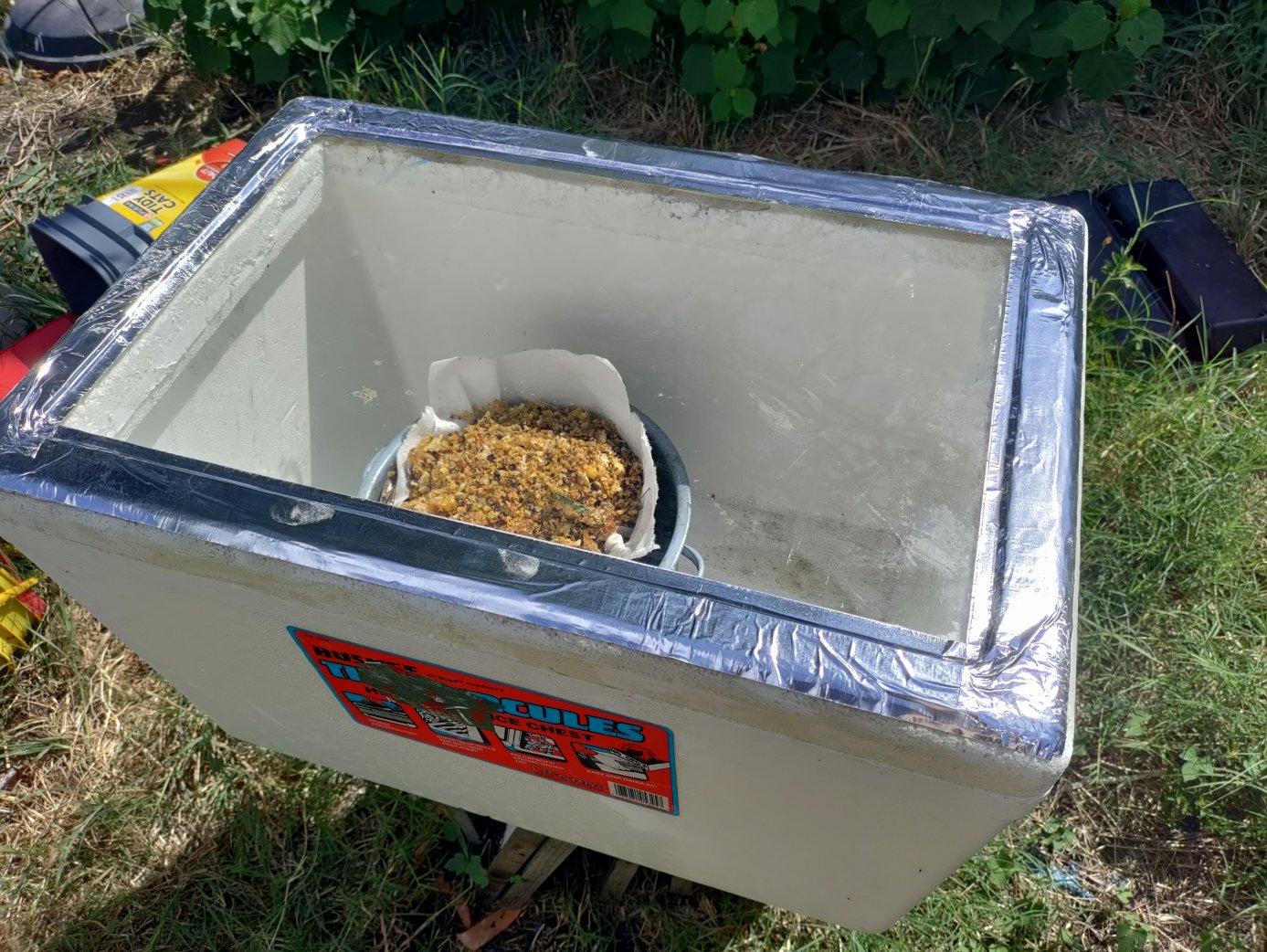
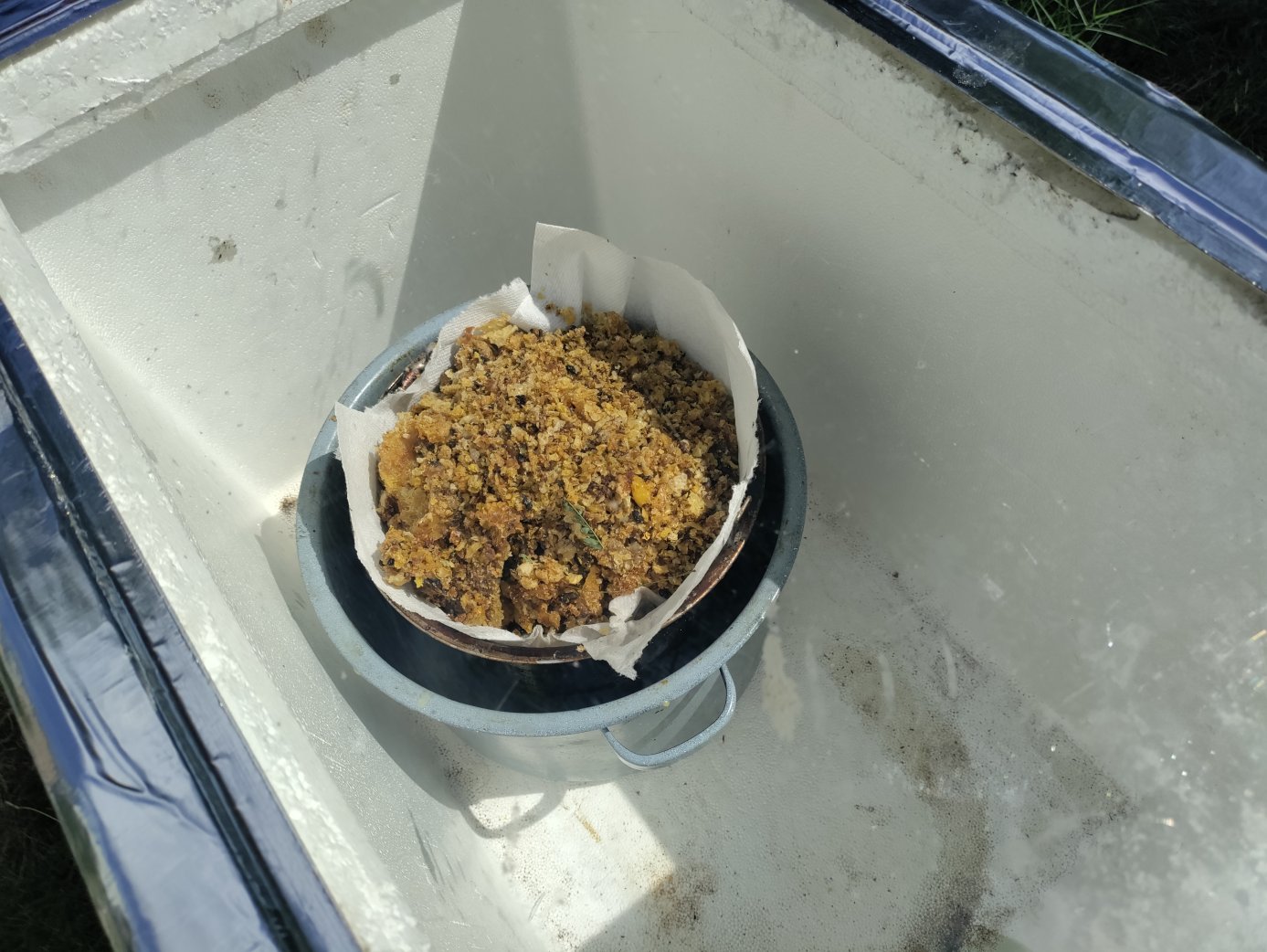
This solar wax melter is one that was cobbled together in the time-frame of about 2012.   I call it the “Broke Boy Solar Wax Melter”.

Commercially sold solar wax melters for the hobby market – are currently (2024) marketed at prices ranging from $170-$350.   For something that is essentially a box with a clear(ish) lid, and a tray.   There are various ways the wax is melted, filtered, and put into a container – depending on how much money you want to spend.

My goal in building this melter – was to see how affordably I could build it, and it be effective.    After all – we beekeepers are notorious for being… uh… “Frugal”.

Use what you have… maybe source things from garage sales.. or from thrift stores.

I bought a fairly large (45 Quart) Styrofoam cooler from a retailer..   And a thick piece of plexiglass from a big-box home improvement store.

A box-cutter blade was used to cut the Styrofoam to the size that allowed the plexiglass to fit on top – then foil tape was used to affix the “window” to the lid.

Pots and a vegetable steamer cage – sourced from thrift stores are used for wax melting.   I line the steamer cage with paper towels, then fill it with the cleaned and dried wax cappings from extracting honey.   The steamer cage is then set into a larger pot to catch the filtered wax.


Click Pic for YouTube Video


Rainfall and the Effects on Nectar

In North Texas – the 2024 spring season gave me a false hope of being a good honey production year.   The first weeks in March provided the beginning of a decent nectar flow from the plants that were in bloom leading up to that week.    Several hives proved to me that nectar was being brought in – with plenty of open cells of nectar being brought in to the hives.

Then it started to rain.    and rain….    and rain….

I use an app called BushelFarm (formerly known as FarmLogs) to track rainfall amounts on specific property lots.   BushelFarm is pretty darned accurate for rainfall numbers – and it gives a daily alert of rainfall, and tracks the amount (in the paid account version).

For the 103 calendar days from Feb 29 2024 to June 11 2024, there were 47 days of rain – that totaled to 40.76″ of rain.    This averages to rain every 2.19 days.

In 1917, a report was issued  in the Botanical Gazette – it is indicated that measured nectar from red clover and white clover have significant decreases in sugar concentrations on the day of a rain, as well as up to several days after a rain event.

It is said in North Texas – that it takes 3-4 days for our native plants to recover from a rain to thicken up the nectar it offers to pollinators.   With an average of 2.19 days between rains – the plants never had a chance to significantly recover their nectar before another rain came along.   The bees (and other pollinators) suffer shortages of natural forage (nectar) – and require being fed by the beekeeper to sustain their lives to the next season of potential available nectar – which is usually in late autumn when rains may induce another bloom from the plants available  at that time.


Reported research results from :

https://www.journals.uchicago.edu/doi/pdf/10.1086/332023


VOLUME LXIII NUMBER 4
T H E
BOTANICAL GAZETTE
APRIL 1917
ENVIRONMENTAL INFLUENCES ON NECTAR
SECRETION
CONTRIBUTIONS FROM THE HULL BOTANICAL LABORATORY
Leslie Kenoyer

(from page 253)

RAINFALL
The author has shown in a statistical study (12) that heavy rainfall just before the secreting season is advantageous, as it gives the plants greater vigor. But during the season of greatest secretion good years are somewhat drier than poor. Also a rainy day shows a lighter honey yield than a day before or after the rain.

The deterrent effect of the rain on the honey flow is twofold: it hinders the activities of bees and it washes away the nectar. To illustrate the latter point, in 1915 on the morning following a day of continual rainfall, red clover corollas were found to contain 0.02 mg. sugar per gm., whereas a day earlier they contained
3. 8 mg.,a day later o. 6 mg., and 2 days later 4.4 mg. Buckwheat blossoms were subjected to an experiment to determine the extent to which rains wash away the nectar. Flowers subjected before
gathering to a spray for 20 minutes, 15 mm. of water falling,were found to contain 0. 12 mg. per 10 as against 1.28 mg. per 10 of untreated flowers. A 30-minuterain of 35 mm. reduced the nectar of red clover blossoms from 0.48 to o. 19 mg. per 10, and that of white clover blossoms from 0.27 to 0. 07 mg. per 10.


As of 12 June, 2024 – the only potential blooms in our area – are mesquite trees – which in some areas are in their 2nd seasonal bloom, and possibly horse-mint (spotted bee balm or Monarda).   Once we approach 95+ Deg F – the summer is here, and no more food until Snow on the Prairie.   For those who don’t know – Snow on the Prairie is a wildflower that makes a nectar that is “spicy” to humans – and not very pleasing to the palate as it makes ones’ throat seem to be burning.    Great food for the bees, though.