Archives

Sassafras Harvest

In the past, Sassafras root had been used as the colorant and flavoring in Root Beer.   This isn’t the root beer that is based on the sugary syrup carbonated beverage we have become accustomed to in America.  This was the real, genuine “root beer”.  But what was it?  It was actually sassafras tea.  Cleaned roots, with hot water poured over them and allowed to steep.  What genuine frontiersman wanted to be known for drinking tea while en route to new explorations of a big land?  No – these explorers had to change the name to something a bit more rugged for the frontier.  How about calling it beer?  Yep.  Root Beer was actually sassafras tea.

Note – After the original writing of this article – our friend Tim Hall wrote to let us know that:

“… the term “beer” might not be entirely incorrect. It was very common “back in the day” to make what was called “small beer.” This was often made with roots, sarsaparilla, wintergreen, spruce, maple, etc. It was basically a very low alcohol beer, brewed so it was often safer to drink than water and would keep for a while.

“Root(s) beer” was most likely a small beer, probably less than 1 or 2% alcohol.”

When we moved to our little utopia, otherwise known as Harmony Hollow, we noticed an abundance of sassafras saplings and three good sized ‘mother’ trees.  Score!

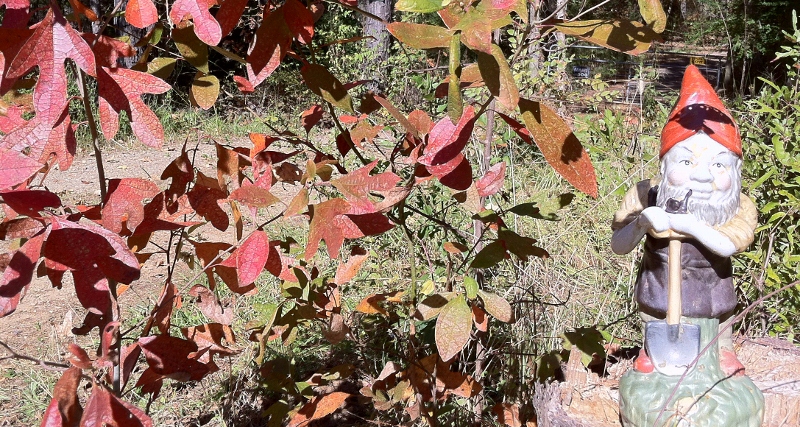
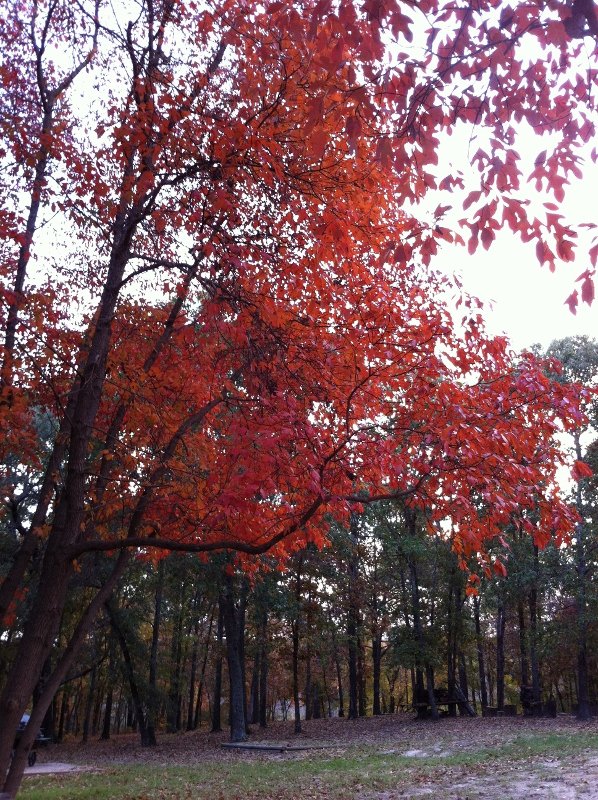
Fall is the best time to harvest Sassafras.  When its leaves begin to turn beautiful red, you know the energy of the plant is returning to its roots in preparation for the winter’s sleep.   Harvesting on a waning, or ideally new moon further accentuates this.  Just as the moon pulls the tides of the ocean, it also pulls the sap of plants to the light of the sun when full and to their roots in the darkness of the earth when new.  We chose a drizzly Sunday afternoon, two days before the new moon for our long awaited harvest.
HISTORY

Sassafras has long been touted for its healing properties.  Most commonly, it was used to treat the common cold, flu and bronchitis.  Upon research I discovered it was considered an antiseptic and pain killer and was considered an effective treatment for a multitude of aliments such as urinary tract disorders, kidney problems, rheumatism and arthritis, painful menstruation and recovery from childbirth, high blood pressure, tooth ache relief, bruises, swelling, insect bites and lice.  Additionally, it was added to soaps, perfumery and toothpaste and the twigs were even used as toothbrushes!

With the advancement of modern medicine, the primary active constituent in sassafras – safrole – was found to be toxic and ‘not safe for human consumption’.  Despite its long history of miraculous healing powers which date back to Native American practices, sassafras has been reduced to an artificially concocted flavoring added to our carbonated infused corn syrup elixir, Root Beer, and ‘the little tree that could’ is now considered a cancer causing nuisance.

DESCRIPTION

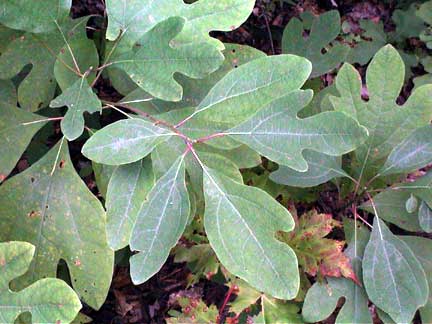
The plant has three distinct shapes of leaves.  One of the leaves is often referred to as looking like a mitten.  The second is elliptical in shape, with “almost pointed” ends – like a thin football, and the third type of leaf is a fully symmetrical leaf – like the thumb-side of the mitten.

All three are shown in the picture below.
HARVEST

When scouting, it is easiest to look for a large ‘mother’ tree.  While sassafras does propagate from seed, it reproduces more prolifically from rhizomes, so typically you will find an abundance of saplings under the larger trees just as we did.

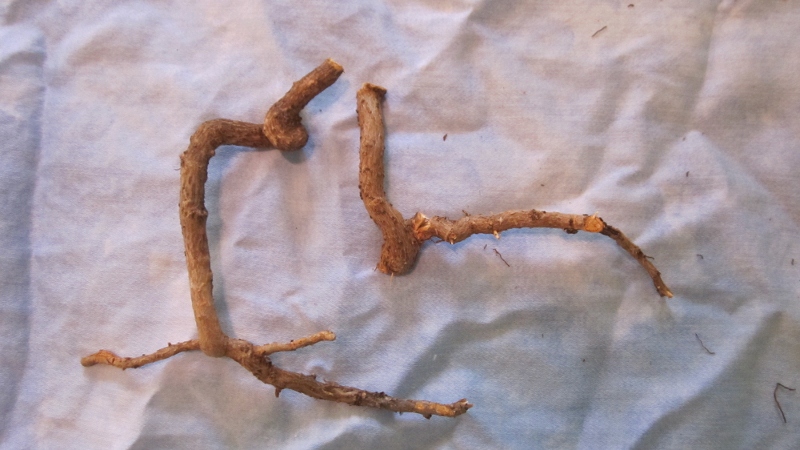
Second year saplings are the best to harvest.  They will typically be 18″ – 2′ in height and be no bigger around that a No. 2 pencil.   We found a sharpshooter shovel works best for getting under the roots.  Before you start digging,  you want to  remove the top soil and leaf matter away to expose the direction of the root as best as you can.  The root, several inches under the surface of the soil, makes a sharp 90 degree turn and has a feeder root growing in the opposite direction.
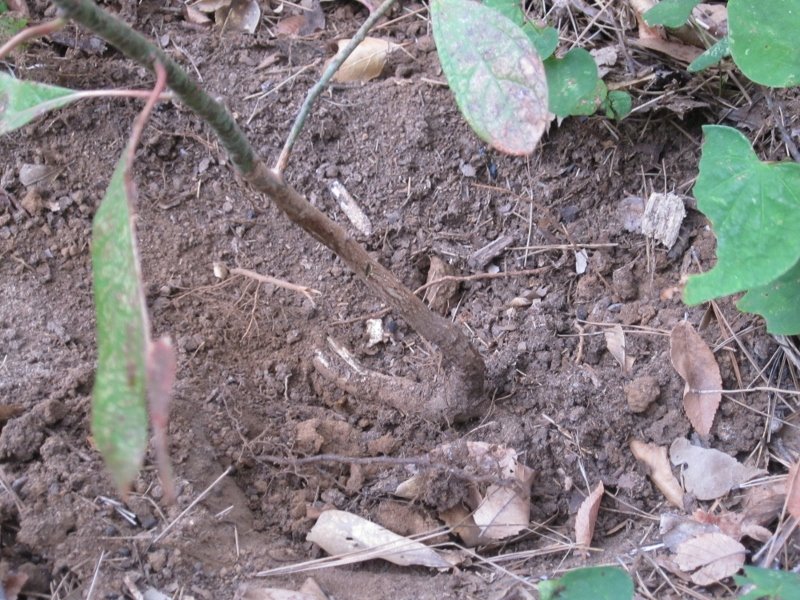
This series of saplings was carefully unearthed to reveal that they were in fact one tree root system that was growing into individual trees.
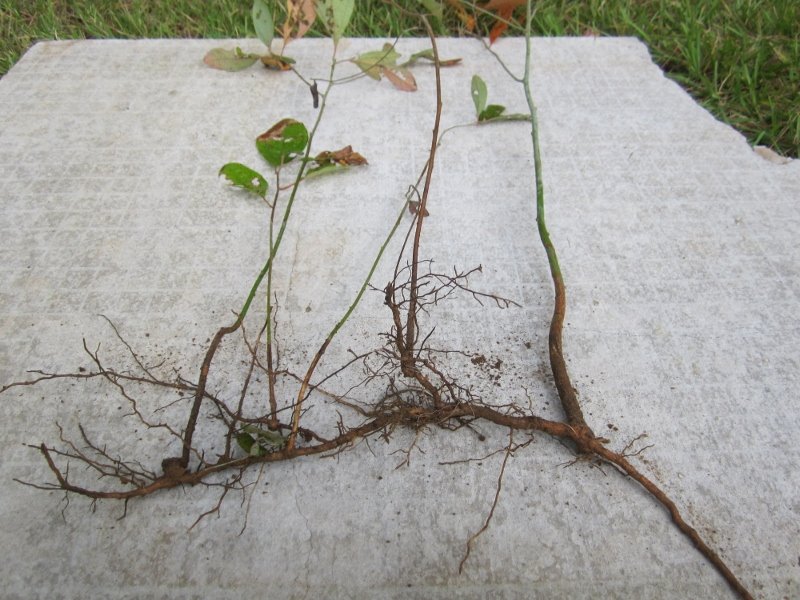
A nice harvest for the year, we are ready to clean our roots up a bit! Don’t forget the leaves can be placed in a paper sack to dry, then crushed and used in gumbo.  No gumbo is complete without file powder!
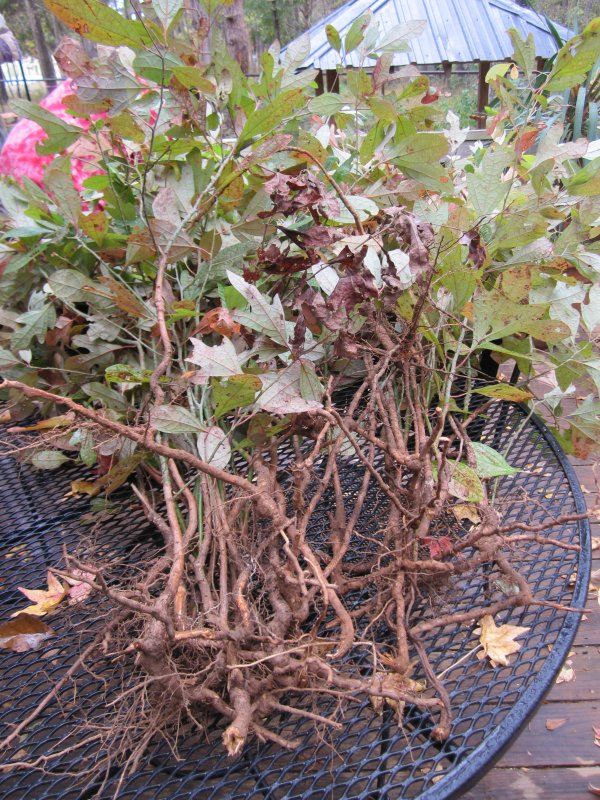
Shake off as much dirt as possible and remove the above ground portion of our trees.  You can smell a huge difference between the tree and root portion.  When trying to determine where to cut and what to keep, the nose knows! Give your roots a good rinse.
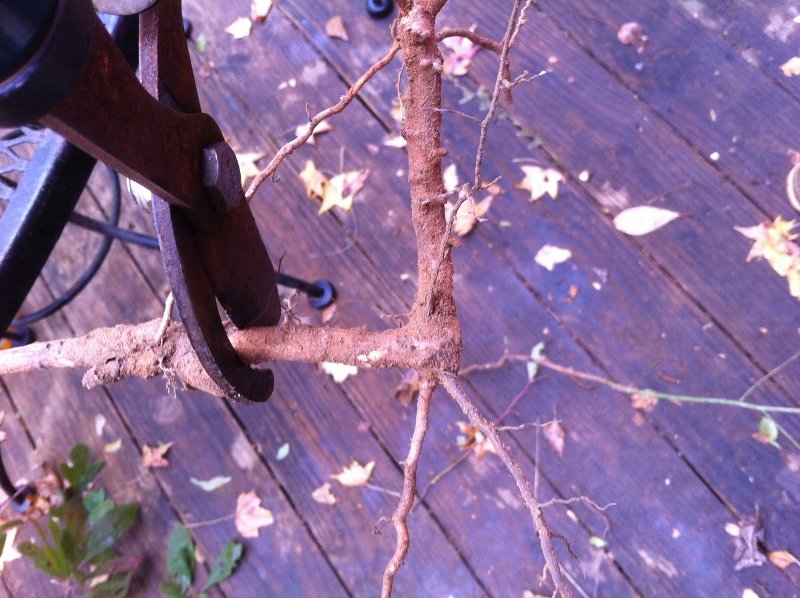
The thin stringy portions of the root tends to also hold dirt and should be removed.  We used a pair of utility scissors or diagonal cutters to remove them.  For faster drying, the roots should be cut into lengths of approximately 4 to 5 inches long.
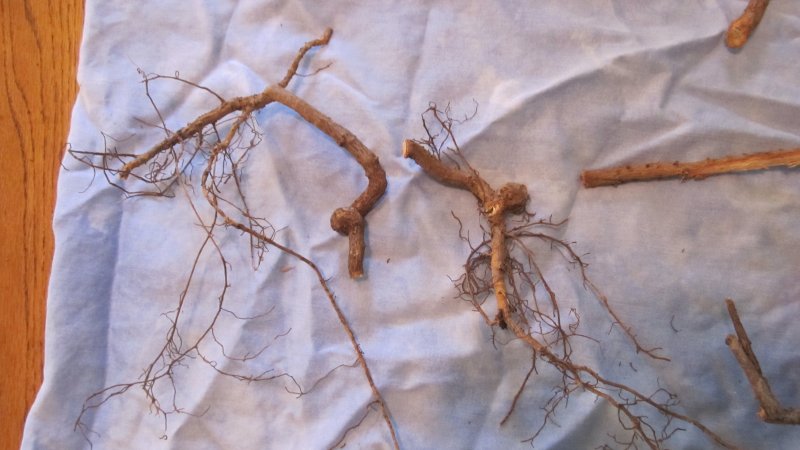
At this point your roots can be placed in an open, airy location to dry or can be used immediately for tea.

A few things that I would like to mention at this juncture:

One – I was originally taught to boil the roots once and discard the first round of tea, probably due to the aforementioned toxicity associated with the oil, safrole.  However, by doing so you lose some of the flavor and likely most of the healing attributes the plant has to offer.  If you lean to the side of caution and are just after a flavorful, natural and native tea then this is the best mode of practice.  Personally I am of the opinion that in small portions, used as a medicine should be, the first boil is perfectly safe for consumption.  Regardless, your roots can and should be used more than once.

Two – Before storing your roots in any form of sealed container make sure they are dry, dry, dry.  I have enjoyed collecting and using old glass canning jars to store my herbs and thought nothing of putting my ‘dried’ sassafras in one.  But I have to tell you, there is nothing more disheartening than returning to find your sassafras was not as dry as you thought and is now covered in mold.  So sad, and such a waste!  Paper sacks and colanders are your friends.  When in doubt, leave them out and let them dry longer.

TEA TIME

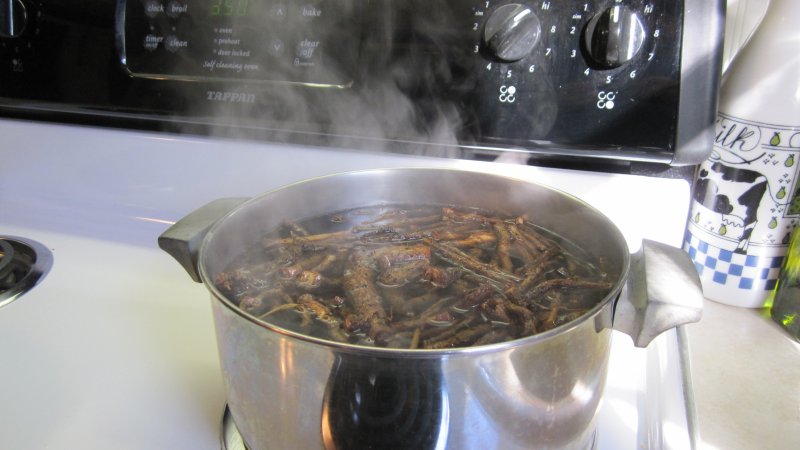
Place the roots in a pan and cover with water.  Bring to boil for approximately 15-20 minutes.
Sassafras tea can be bitter, especially on the first boil.  A little honey will sweeten it up quite nicely…of course we never miss an opportunity to use honey from our apiary.
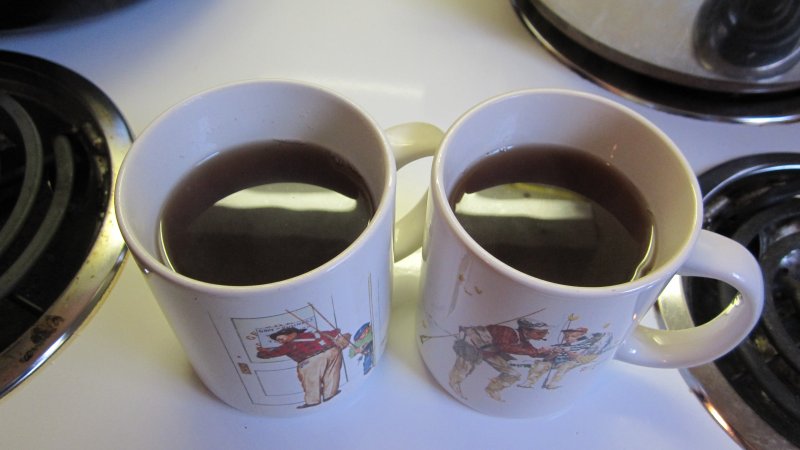
Cheers!


Leave them bee!

As we approach December of 2012, I wanted to remind folks that if temperatures are lower than about 75 degrees outside, then try not to open up your hives at ALL.

The only exception that I can think of at the moment would be to add fondant for feeding – and then it needs to be a FAST open, set it in, and close.  See my post from back on November 18th for a recipe and directions for making bee-candy – or fondant.  ( recipe HERE )

When doing this – you can either set the candy directly on top of the frames, or on top of an inner-cover that has a hole in the top of it to allow the bees to come and go at-will.  Either way – you may need to set a reduced-size spacer on top of your current setup in order to allow room for the candy.  Note, though, that you don’t want too much space, as this adds to the volume of airspace that the bees will have to overcome when generating heat to keep their cluster warm.  My suggestion would be to use an inner cover – that way their heat is maintained in a more consistent manner. – and any propolizing that is done to seal up cracks does not have to be broken.  Then place a spacer board on top of the inner cover.  The spacer can be 1x lumber (which is really 3/4″ in thickness) – and possibly 2 to 3 inches in height to offer space for the candy.  You may want to add soy flour or pollen substitute to the candy.  If they don’t  want or need it, then they won’t take it.  It’s better to have it available for them, though.

One of my hives has propolized their entrance down to about a 3/8″ hole.  If you don’t already have entrance reducers in place – depending upon your temperatures – it’s probably past time to reduce them down.  This is also an effective method of retaining their heat.  If you use a screened bottom board, then you can slide in a thin sheet of plywood, or a sheet of appropriately sized (cut) coroplast sign.  These are the material that the coroplast signs are made of.  Check right after an election with someone who ran for office for extra signs to use.  Otherwise, maybe a sign shop has misprints or culls that they could donate for your cause.

A jar of honey can go a long way in bartering for materials.  😉

In all – remember these things:

Bees try to maintain about 95 deg. F inside their hive.  If you open up their hive unnecessarily, or when it’s too cold, they may freeze to death.

Condensation can form inside the hive if there is not a little ventilation to allow it’s exit.  This condensation can freeze, and make your winter cluster of bees a frozen clump of bees.

If you can prepare for the worst, and offer your bees the environment that best suits their needs for survival, then you should have bees in the coming spring.

November Swarm

Late swarms sometimes happen.

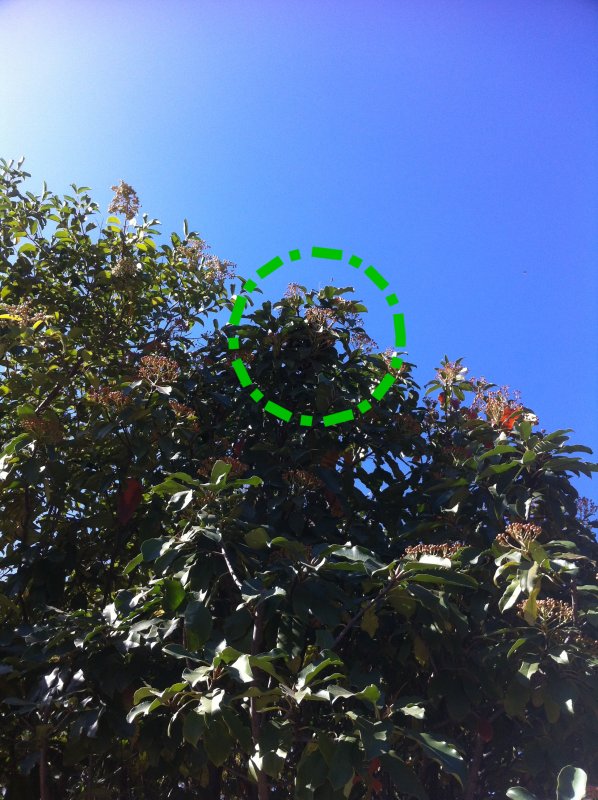
I received a call Friday morning about a swarm that occurred – most likely from another beekeeper who was out of town for the day.   A neighbor contacted him about a swarm that had been found in her yard – behind his home.   They found them while their tree-trimmers were working – and wanted them to be removed so that the tree workers would return.

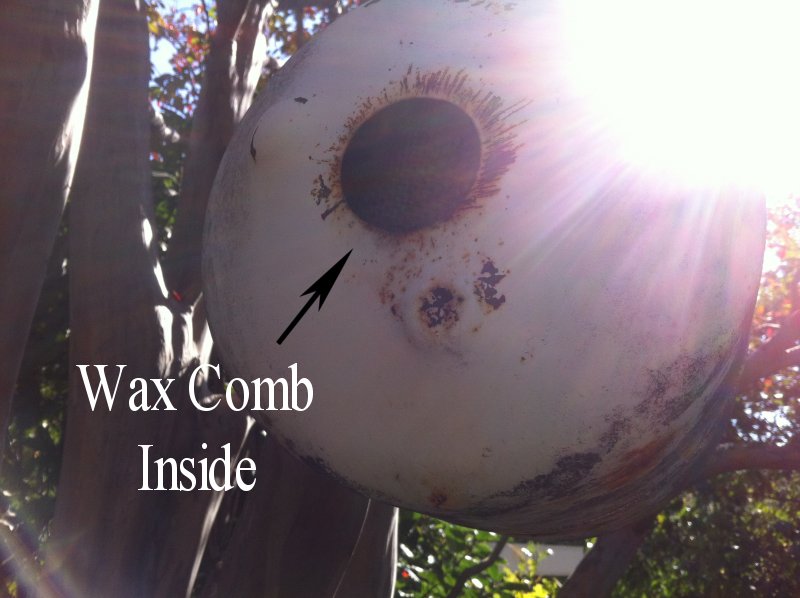
Note the propane cylinder in the yard. That is/was a bird-house. Note also that there’s wax comb in the bird-house. It’s not a bird-house any more. (There were no bees occupying it either, BTW)  I suspect a swarm may have left the original hive in the neighborhood.  Taken up residence in the propane cylinder, and then vacated when they realized that they were in a home too small.

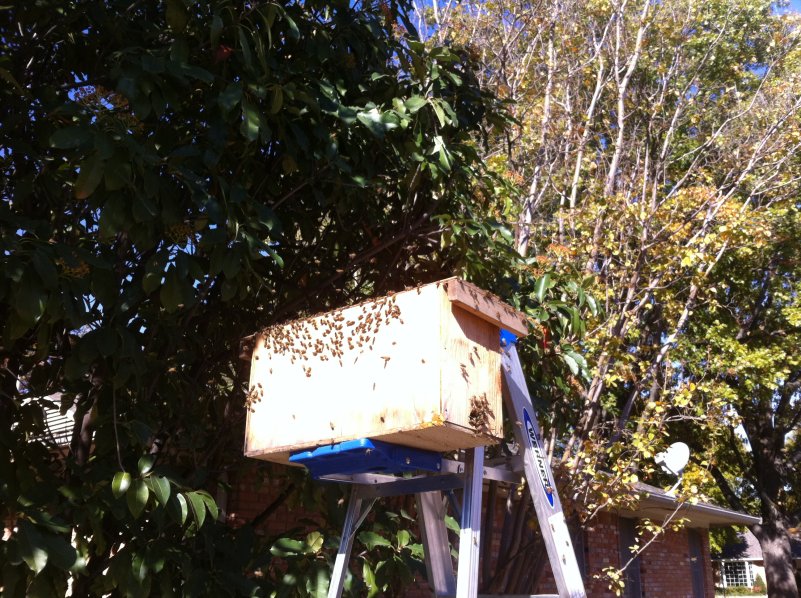
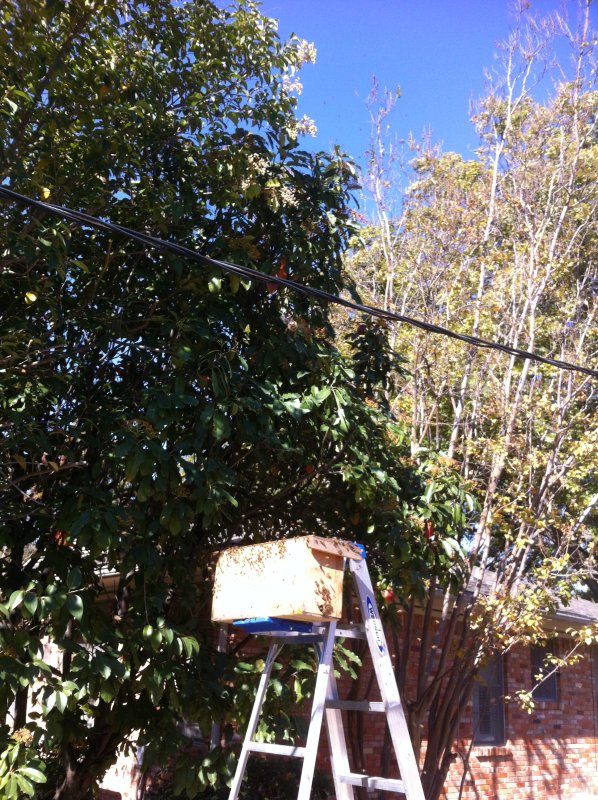
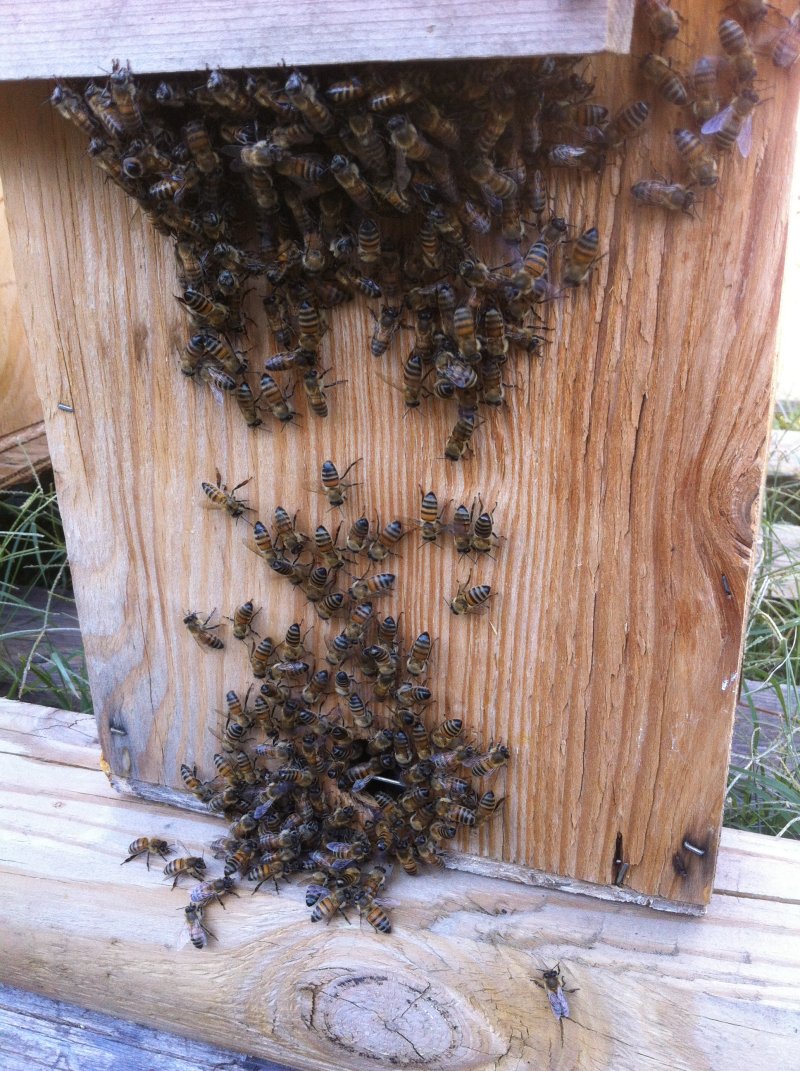
I shook the swarm that was in a crape myrtle tree – into a 5-frame box, and let them orient to the box.

Once I got them back to my city bee-yard, I added in 3 combs of old comb from other removals I’d performed. The bees immediately swarmed again – and I thought I’d lost them. They re-clustered on my box, though – and marched back inside. I now have a queen excluder over the entrance for a few days – and I’ll feed the bees for a few days as well.


Winter Removals – Why *not* to do them

I’m often asked by a homeowner to perform a honeybee removal in the winter.  My removals are “live” removals – and I do not kill the honeybees to remove them.

Education about aspects of the honeybee’s lives is essential to let homeowners know why I generally choose to NOT remove bees from someone’s home, tree, or utility box when the “timing is not right”.

Honeybees try to maintain a temperature within their hive at approximately 95 degrees Fahrenheit.  During the summer, they will bring water into the cells of their hive and fan their wings to create a natural method of evaporative cooling.

During the winter, the honeybees consume their stored honey as a carbohydrate that allows them to shiver, and this generates heat from their cluster – to also maintain about 95 degrees Fahrenheit within the cluster of bees.  Early in the fall/winter this cluster of bees also happens to be keeping the eggs and larvae warm.  These last eggs and developing larvae are the bees that will get the colony through the winter – so their survival is essential to the success of a honeybee colony.

Imagine if you will – if your home was set at a comfortable heated temperature for us humans.  Say about 70 degrees in the winter.  But then, a natural disaster may hit and remove the roof of your home.  Suddenly, you can no longer maintain 70 degrees outside, and you are subject to exposure to the elements and temperature of the outside.  If it happens to be 40 degrees F. outside, then you may be subject to hypothermia.  The same applies for the bees.  The eggs and larvae must stay at 95 degrees in order to survive in their honeycomb cell long enough to hatch and join their colony.

When a hive is opened up, this allows the bees’ generated heat to escape. The honeycomb is exposed to the air temperatures that are present, and the brood can experience what’s called “chilled brood” – and they may die.

That, my friends, is why we don’t perform live honeybee removals in cold weather.  Night time temperatures need to be well above 50 degrees F., and it’s preferable to have daytime temps above 75-80 deg. F.

Winter Feeding

The bees need to be able to maintain their warmth throughout the winter to survive.  That means that they need to have a ready supply of carbohydrates available to them – without my having to open their brood boxes, and allowing their heat to escape from the hive.   These “candies” are placed directly above the frames or above an inner-cover that has a hole to allow bee access to the area above the inner cover.  A 2″-3″ tall box is added, with the outer cover going on top of that.

Here’s a recipe – provided to the BeeMaster’s Facebook group by Emil Kaluza – a beekeeper in South Texas.

Add 2 qts water to a 5 gallon stainless pot and 1 qt chamomile tea, steeped and cooled.Bring to boil.

When boiling add parts of 25lb bag of plain sugar, mixing as you do. Monitor heat, keeping as close to 230 degrees as possible, adding sugar as able. When all the sugar is added, stir constantly and boil at 230 degrees.

After a 10 minute boil at that temp, ad 1 teaspoon of Cream of Tartar. Remove from heat and let cool (this will take hours) to below 200 degrees.

Whisk or stir rapidly until it begins to whiten. Can be down to 150 degrees.

Pour into forms and let sit all night. They will harden, dry out, and whiten to a rock candy consistency and the bees will moisten and munch. Very easy and clean method of Winter feeding.

There are hundreds of fondant and bee candy recipes out there, but I’ve reduced mine to the basics, though you can add a pinch of salt with water(I do), or add a quarter cup of lemon juice (I don’t), or replace cream of tarter with 1 tsp of vinegar per pound of sugar ( I don’t, never had a problem with cream of tartar).   You can add 5 lb of Soy Flour for protein if you don’t have much pollen in your hive.  You can feed now as I do, but ants will be a problem until Winter, when its feed, close, forget, not having to open and lose heat from your hives until Feb.

Winding down the season

It’s starting to cool off – and the beekeeping season is starting to wind down.

That does NOT imply, though, that we are done with the hive or honeybee work for the year.  What’s there still to do, you may be asking yourself?

There’s lots! How about:

  • Feeding for strong brood through the winter
  • Manage the hives and combine any that are too weak to survive the winter with stronger hives
  • Melting down and cleaning old wax into ingots
  • Building and repairing swarm traps
  • Making bottom-boards and hive covers
  • Making new hive boxes for next years’ growth
  • Making more honey supers for next years’ crop
  • Making nuc boxes for spring 2013 splits/growth
  • Assembling frames… assembling frames… assembling frames…
  • Making wax foundation for the frames/hives
  • Building pollen-catchers to harvest incoming local pollen
  • Making hive-stands

The unfortunate truth, is that this growth and activity is paid for by the profits from the spring and summer honey flows.  Please remember that when you buy local honey from your local beekeepers.  Sometimes honey may seem expensive – but it’s really not when you consider all the work, equipment, labor, and education that is indeed part of the process to bring it to your table.

So – in addition to this work – I’m also still very active with performing honeybee removals from peoples’ homes.  The spring and summer is really the best time to do this – however sometimes people need the bees to be re-homed NOW.   I’ll perform that service for you – just call me for pricing and scheduling.

A few leftover bees…

Hah!  I received a call today from a gentleman that was referred to me by another beekeeper.  He said that he had a lot of bees on the outside eve of his house – and that he’d had bees removed from a wall of his home about 3 weeks ago.  I thought to myself – there may have been enough stragglers to cluster for a few weeks…  I’ll go scoop  ”em up and be on my way… No biggie.

When I arrived and evaluated the situation – It was a “holy crap” moment.  The “cluster” was under the 2nd floor eve, and was about 2 feet long by about 8-10″ deep, and as wide as the eve (about 12″ at that spot).  With that many bees – I knew they had drawn comb.

Whoever had performed the work before – assured them that he had removed the queen and all the bees.  The homeowner’s family told me that the comb and bees had been “bagged up”.  Eh?  Bagged up?  Really?  Okay – so someone came and exterminated the bees.

Whatever the case – there was now 4  sizeable exterior combs built by the bees, and pollen and nectar had been stored in them.  After removing a comb or two, I also saw that there were FRESHLY laid eggs.  Less then 3 days old.  There was a queen present.

I was going to bring a 5-frame nuc to put the bees in – but I felt a little tug of instinct telling me “bring a box or two”.  I did.  I brought 2 mediums – which wound up being perfect for this amount of bees.  I was VERY happy that I’d brought the right boxes.

They are gentle bees – no sting attempts or bumping – and they now sit in the Richardson apiary.  I’ll probably combine my “cluster” that was left from when I removed my other hives from the city, as they are already building comb.  It would be good to combine them with the huge rescue from today.

The City Bee and the Country Bee

In a land – not so far away, there lived a hive (or 8) of honeybees.  These honeybees were known as “city bees”.

They were well-versed in finding the flowers, pollen and nectar that were planted around humans’ homes and parks.  They visited trees, flower gardens, vegetable gardens and all sorts of city-places to find the nutrients that they needed to live healthy lives.

One day, a group of city politicians decided that they wanted to spray the entire city with poison to kill one specific kind of insect.  (for those of you who are wondering – it was mosquitoes that were being sprayed for).  The poison that they chose to use was one that really didn’t care whether it landed on a mosquito, a honeybee hive, or on flowers and plants that all pollinators and insects need to live healthy lives.

The keeper of the bees decided that the group of politicians were dangerous to a healthy and diverse environment – and that it was time to move the “city bees” out to meet and live with their cousins in the country.

The beekeeper waited til night-time, when most of the foragers had returned to their bee-hive homes, and closed the hive doors, and loaded the bee hives onto a trailer.  That night the city bees took a trip to the country!  This was a very exciting trip.  At first they heard all their familiar city sounds of cars, planes, and regular city noises.  Then as they drove away from the city – it got quieter.  And quieter.  And quieter.

Finally the truck and trailer stopped.  It was still night time – but the headlights from the bee-keepers’ truck lit the new field in which the bees would live.  The beekeeper put his beekeeping suit on, and started unloading and placing pallets for the honeybees’ homes to sit upon.

Finally – at about midnight, the honeybees homes were in their new locations, and the beekeeper opened up their doors.

The next morning, the honeybees had new smells to get used to.  The smell of wildflowers, pine trees, mimosa trees, wild crape myrtle bushes, and HUGE gardens with all sorts of lovely flowers!  Not to mention the little flowers that humans never notice on the rattan vines and the wild grapes and blackberries growing on the country fence-rows.  I’m sure that the city-bees had never dreamed that such a place existed.  Their cousins, the country bees had been here since earlier this spring – so they were able to show the newcomers where the best places were to get water, and for the best flowers from which to get pollen and nectar.

Here is a picture of the city-bees homes – all lined up in a row – at Harmony Hollow Apiaries – where they are joining their cousins to be “Country bees.”

Cutout by the Lake

I received a call for honeybees that were located in a home – near a local lake in a gated community.  The home is about 25+ years old.  Upon inspection – I determined that the bees were (luckily) located above the fascia board near the roof line.  the variable being – how high into the attic-space did they continue to go?

These bees were very gentle.  The only stings that I took were of my own account (accidentally squashing a bee, etc).  My helper, though, took her first sting on this cutout.  She’s helped me on several calls – but this one was the “magic one”.    Here’s a few pics of the hive.

There were a LOT of bees pulled with this colony – but only about 4-5 combs of brood.  The rest was capped and uncapped honey.   This took approximately 8 hours total from start of inspection – til I buttoned up the home, added insulation to the void in the fascia space, and caulked with silicone to seal the entrances to the home.

West Nile Virus – Aerial Spraying

As if insult was not bad enough when they started spraying for West Nile Virus infected mosquitoes.  Now Dallas County plans to move forward with aerial spraying of Dallas.  That’s definitely adding injury to insult! (Yes – I know it’s backwards – but it’s how it is)

WNV is reported to give the same symptoms as the flu or a “summer cold”  including fever.  There are 9 (so far) reported “confirmed deaths” from WNV in Dallas county.  In EACH of those cases – they have refused to give basic information about the deaths.  What was the victim’s age?  What other health issues did they have?

Well – What health issues are the “powers that be” going to spray onto us?  they DON’T KNOW.  They say “Bring your pets in, Stay Inside” and in the same sentence they proclaim that it’s “Safe”.  Huh? Do you really think that we believe this line of dialogue?

Even the EPA recommends using spot control to eliminate mosquito larvae at the “local levels”. (See document here: http://www.epa.gov/pesticides/health/mosquitoes/mosquito.htm )

The EPA lists steps as:

  • Surveilance
  • Measures to Control Mosquitoes –
  • The first method listed by the EPA is:Controlling mosquitoes at the larval stageLarvicides target larvae in the breeding habitat before they can mature into adult mosquitoes and disperse. Larvicides include:

    Bacterial Insecticides

    • Bacillus thuringiensis israelensis
    • Bacillus sphaericus


Folks,  please… Contact your local city representative and OPPOSE the blanket aerial spraying of YOUR city for West Nile Virus.  It is my position that the people that do unfortunately succumb to the symptoms of the WNV – *really* have other underlying health issues that make them susceptible to an additional stress upon their body.  We saw it with H1N1 (Swine Flu).  The people that died and were confirmed as having been tested positive for H1N1 – ALREADY HAD MAJOR MEDICAL ISSUES THAT THEY WERE DEALING WITH.    I have a close friend that had H1N1 at the time of his death.  He also suffered from stage 3 emphysema.  Who got the blame for the death, though?  Piggie Flu.

What can YOU do to help?

  • Be an EDUCATED resident.  Ask pertinent questions (like: “WHAT is the chemical that will be sprayed?”, “What time of day will it be sprayed?”
  • Research the active ingredient.  See what it’s history is for human contamination.  Does it cause birth defects or in ANY other way disable the human nervous system or body?
  • Take action after you learn the answers.  Contact your city rep.  Contact your State Rep. – and voice your opinion.  I highly recommend that it be an opposition to blanket spraying of a city.  Also available are petitions that can be submitted to your city.  Here’s one:  http://www.change.org/petitions/dallas-stop-the-spray-combat-mosquitoes-the-intelligent-way

Folks – PLEASE – be an educated resident of your locale.  CARE for your family and neighbors.  Don’t let your city become a gas-chamber for a slow-release cancer than may not show up for years – or it may show up in the upcoming fetal generations.