
September 2025 – Newsletter:
(Laura Winters – Birds and the Bees Apiary)
Rex and I are still making 1st and 2nd rounds of Apiguard to our north-western clients (Denton county and western Collin County). While making our rounds to the colonies that have already been treated, we are removing shims and noticing increased laying pattern from the queens. Populations are increasing and getting geared up for Winter.
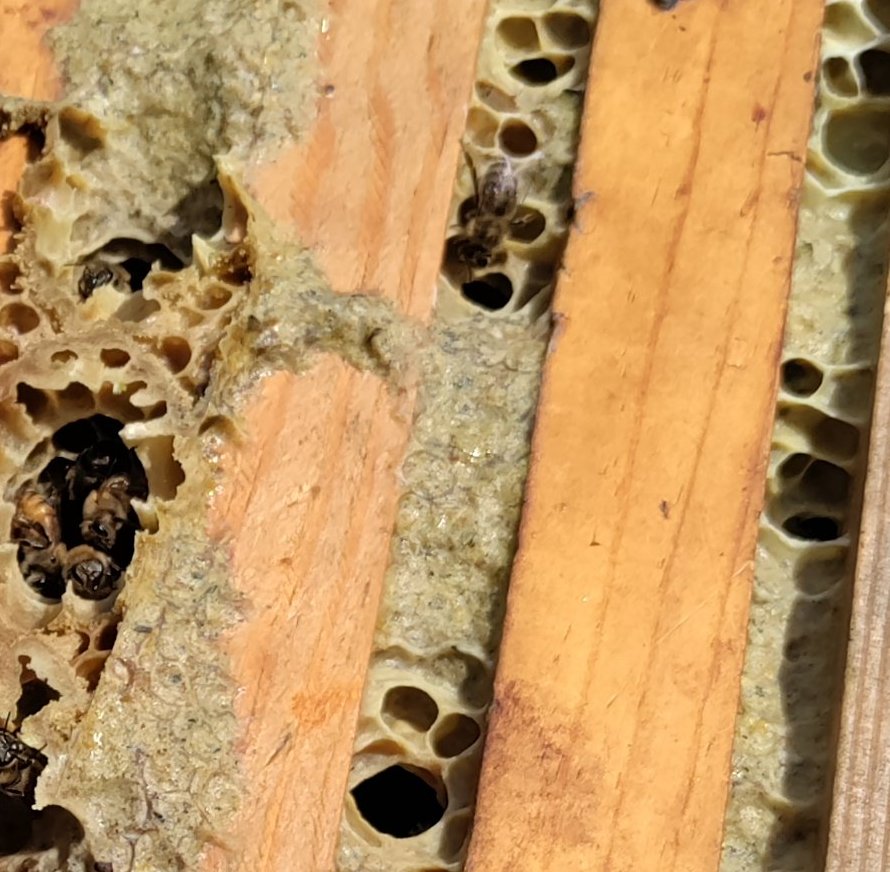
Propolis – Close up
We are also noticing an abundance of propolis being produced by the honeybees. Propolis is a “bee glue” that the bees produce from sap, resin, and other organic compounds. It is known as the hive’s immune system. This antimicrobial coating is spread throughout the entire colony but is especially noticeable at entrances and gaps and cracks to seal everything before cooler temperatures. As some beekeepers like to harvest this substance and produce medicinal tinctures from it, we are mindful to leave it for the honeybees for a healthy colony. The minimal amounts that we do harvest, we typically take small quantities in the spring time for human consumption and medicinal practices.
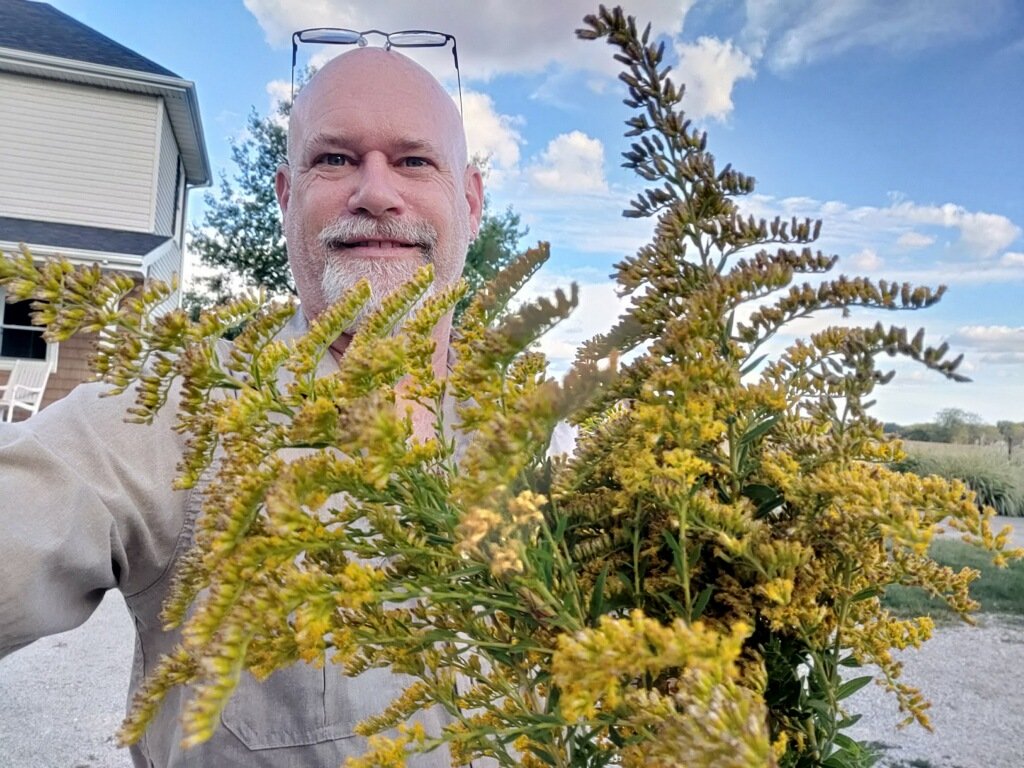
Goldenrod Flowers
While making rounds to colonies who have already been treated, we are giving supplemental feed to the ones that have little to no food from Summer dearth. Surprisingly, we have also been adding extra space to colonies who are bringing in extra nectar from the Fall flow. What is a Fall flow? A Fall flow is the late season period where strong nectar and pollen sourced flowers provide extra forage for honeybees and other pollinators. These flowers include goldenrod, asters, snow on the prairie, and more! The Fall flow isn’t in full swing yet, but we are noticing the stronger nectar sourced flowers blooming from early unexpected rainfalls. Depending on the duration of the flow and how heavy it is will depend on if we have a fall honey harvest. The darker Fall honey is typically a more robust flavored honey with more antioxidants than the typical Spring honey. However, our number one priority is leaving an abundance of honey for the colonies to have a successful Winter.
As the shift in season and temperatures occur more and more you’ll notice some changes if you’re watching your colonies from the outside. You’ll be noticing a bit less bearding and more foraging. It’ll look more “busy” and if you look closely you’ll see honeybee foragers flying home with pollen. . . And lots of it!! You’ll also notice one of the beautiful wonders of orientation flights. As the colony’s populations start increasing and picking up from dearth, you’ll see more and more orientation flights as it were Spring time. Orientation flights consist of female honeybees emerging from their colony for the first time. As they come out they fly in figure 8 patterns right outside the colony to familiarize and memorize what “home” looks like. Once the orientation flight is completed, they can begin their adventures of foraging!!
Leave a Reply
You must be logged in to post a comment.