
Probably one of the widest talked-about topics in beekeeping is that of Varroa mites.
It is now the end of August of 2025, and it seems that we as an industry are both (a) nowhere close to where we WANT to be in regards to varroa and their destruction of colonies of bees – and we (b) are making headway in several directions for managing and mitigating the problems associated with Varroa.
In my looking at our industry – there are at least 2 schools of thought. One school says that natural selection is the best method, and that bees resistant to (or hygienic to) varroa are the only way. The other school of thought – is that we need to focus on killing (or managing) the mites that are killing our bees.
The quandary, to me, is that both schools of thought are correct. And for a time – need to exist parallel to each other – to satisfy our current agricultural needs – as well as the long term solution of having a variety of genetic lines of bees that handle the problems varroa present.
There is no question at all that for long-term… better genetics is the answer. Several initiatives worldwide are working on breeding and cross breeding queens with genetics that have measured and known levels of mite management.
This article will address the hive management for Harmony Hollow – and the bees Laura and I manage for clients.
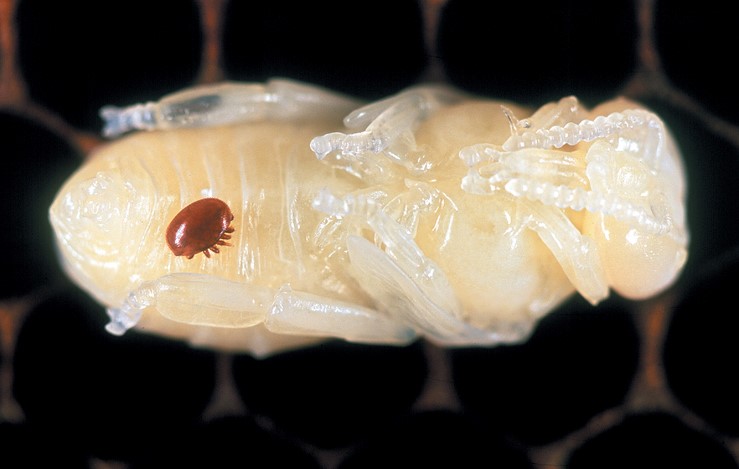
Varroa Mite Reproduction – Adult varroa on developing pupa. Photo credit: Dennis Anderson
I have a few other articles that I will link to – that explain some of the diseases carried, and remedies unfortunate to other continents that have just begun to deal with varroa.
July 2022 – Varroa and Mite Management – More important than ever
July 2018 – Varroa Mite Management with your hives
One consensus by those in the industry that are doing research and putting their bees to the tests in the field ( such as Randy Oliver of Scientific Beekeeping and Bob Binnie of Blue Ridge Honey, and so many others!) is that at least 2 methods of dealing with mites – are showing best results for dealing with the mites. An impactful method that knocks the mites back.. and a 2nd method that is a long release to help maintain the low levels of mites.
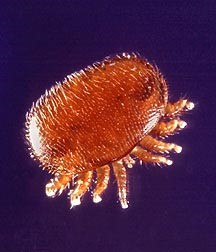
Varroa Mite
In other parts of the world, we have learned to deal with varroa with several methods. Chemical, Environmental, and Genetic shifts are currently being employed. Of these – so far – there is no “Magic Bullet” that eradicates the mite completely…
When we are managing and inspecting the hives – Laura and I take note of population, brood patterns, overall behavior of the bees, food stores, eggs and pupae, whether brood appears to be in active uncapping mode (where workers may uncap brood that had been capped – presumably to deal with brood that may have an off-scent to it – and possibly have varroa or varroa frass in the cells with the pupae. When observing bee behavior – I have occasionally seen colonies of bees that seem unable to move on the frames – and sit on the frames – just shaking. Likely a symptom of acute bee paralysis. Occasionally – we will also observe more readily seen symptoms – such as deformed wing virus – where the wings on the bees are shriveled, and keep the bee from ever flying. Both are single-strand RNA viruses that quickly cause the downfall of a hive that weeks prior, may have appeared strong and healthy.
Chemical treatments may include: (but no limited to) Apivar , ApiGuard, Formic Acid (Formic Pro, etc) , Oxalic Acid in various forms (liquid drizzle, vaporized gas, blended with glycerine onto sheets, etc. Laura and I are employing the use of Apiguard for our hives in 2025. In August and September of 2025, we are applying a Microdose at a rate of 12.5g of Apiguard per hive dose – administered 2 times – after a 10-14 day waiting period. Apiguard is a Thymol-based product -which is in a gel-like carrier, and has a smell not unlike menthol.
After the Apiguard carrier pads are removed from the hives when the 2nd round of Apiguard treatment is complete – I am administering a second method – a long-release Oxalic Acid (OS) strip that has 10g of OA in a food-grade glycerine carrier on the strips added to the hives. This method does not necessarily knock back the populations of mites – however, it has been proven to hold populations steady ( best when applied when mite populations are at lowest levels)
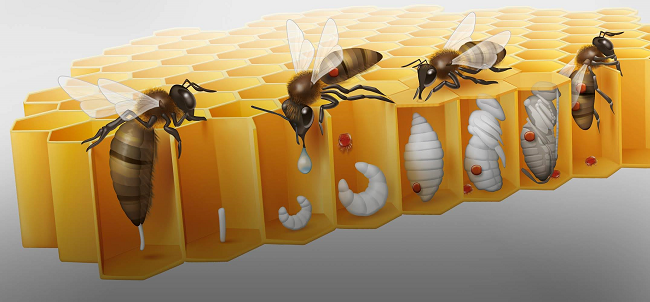
Varroa Life Cycle – photo credit Bayer @ researchbayer.com
Genetic Shifts include the raising and reproduction of queens and colonies that have true Varroa Sensitive Hygiene (VSH). VSH was first described as being behavior in which the bees groomed the mites off of each other. This, while nice, doesn’t necessarily mean the bees are performing significant changes to their internal health & hive cleanliness. True VSH behavior has since been found in colonies that sense a difference in the developing honeybee pupae. They can sense (by smell) a cell that has varroa inside – and will uncap the pupating larvae – remove it (and the attached mite(s) feeding and reproducing on the body of that developing bee, and throw it out of the hive. Hygienic Behavior at it’s finest. While this does not kill the mite immediately – it allows the bees to deal with the mites that exist in their natural environment, and toss them out the front door to die outside of the hive with the discarded pupae.
Laura and I keep a keen eye out for bee colonies that seem to do well with the impact of mites – and use those queens to supply eggs for raising queens that seems to have better predispositions to varroa hygiene.
Queen breeders and researchers around the world have been working on developing lines of genetics that have this behavior. Arista Bee Research – based in the Netherlands works with and provides scientific methods and metrics for queen breeders and beekeepers internationally to report findings from their queens, then produce queens from those lines, and continue to take metrics, and provide a supply of queens from various producers that can handle existing with varroa and managing the colony because of that varroa.
Breeders toughen up bees to resist deadly mites
I urge beekeepers to know the status of their hives and varroa level – or if you are NOT taking mite counts – keep a keen eye on the health of your bees. When varroa increase their population – we see it’s effect in the hive in the form of changed behavior, absconds, expression of disease symptoms (i.e. Deformed Wing Virus ‘DWV’). In our own personal experience – we have witnessed hives with LARGE populations that we were proud of – disappear altogether. Food consumed (not necessarily robbed) – and the bees absconded – for no apparent reason. Occasional mite counts time may give an insight to what happened.
Use a method to see what your mite-load is in your hives. Randy Oliver of Scientific Beekeeping has articles on performing mite counts. See here: Mite Wash Counts and Refining the Mite Wash
For me – the immediate use of Apiguard, as well as the OA glycerine strips – as well as a shift in queen genetics (and my own rearing of those genetics) will be my long-term plan. We would LOVE to get away from needing to chemically treat – and when the genetics offers a solution – we will make that shift.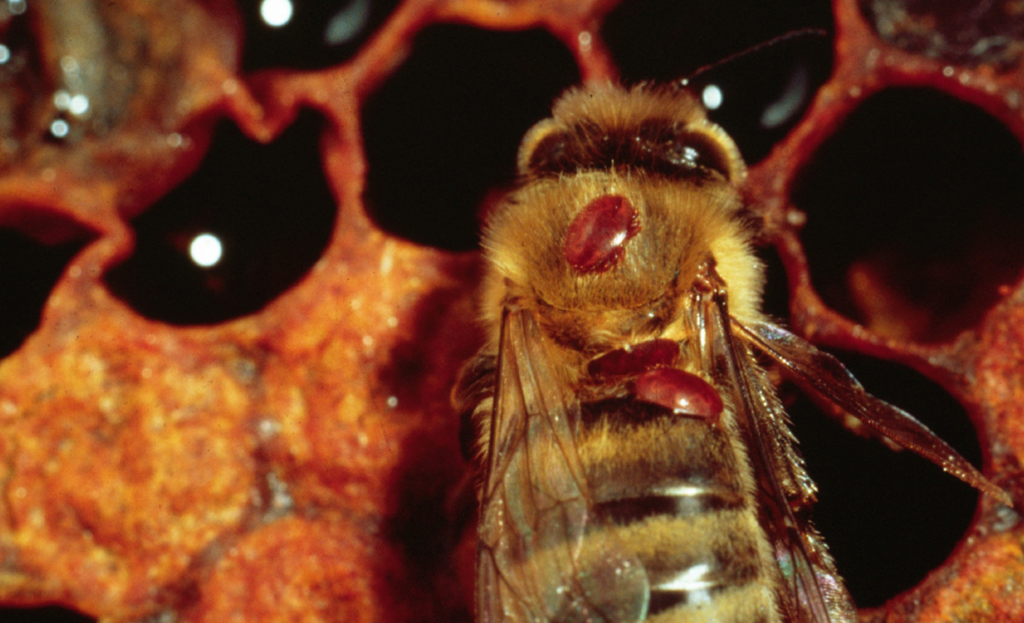
29 Aug-2025
Leave a Reply
You must be logged in to post a comment.