- In the field
- Plant Talk
- Intro to Beekeeping Classes
- Beekeeping Class Series – A Deeper Dive
- Creamed Honey
- Liquid Honey
- Upcoming Events
In August – Laura and Rex are making rounds to check bees – and to make sure they have ample stores available to get then through the drought we are in. Most of North Texas has had triple-digit temperatures for about 6 weeks – so any forage available to the bees is not necessarily easy to find.
NPR reported this morning (Aug 20 2026) that North Texas is currently in our 9th hottest summer ever recorded, and the 7th hottest August in recorded history. Work days try to start EARLY and be done daily by 11am when possible.
You may notice honey bees gathering water from the edges of your swimming pool, water features, or stock ponds. The forager bees will bring in water to the hives, fan their wings over the cells where they have put the water, and use it as evaporative cooling to try to keep the hive temperature DOWN to 95 deg. F.
Along with checks for food (nectar and pollen) in the hives – we are also starting our mite treatments in the hives. We apply a product called Apiguard into the hives. Apiguard is a thymol-based (from the Thyme herb) mitacide, and we apply it twice in summer time.
Plant Spotlight – Laura Winters
A Peculiar Year for Honeybee Plant Resources
This has certainly been a peculiar year for plant resources for our honeybees! The timing and availability of several important nectar and pollen sources have been quite different from what we typically see.
Trumpet vine, an important nectar source, is still in bloom—when normally it would have been long past its prime by now.
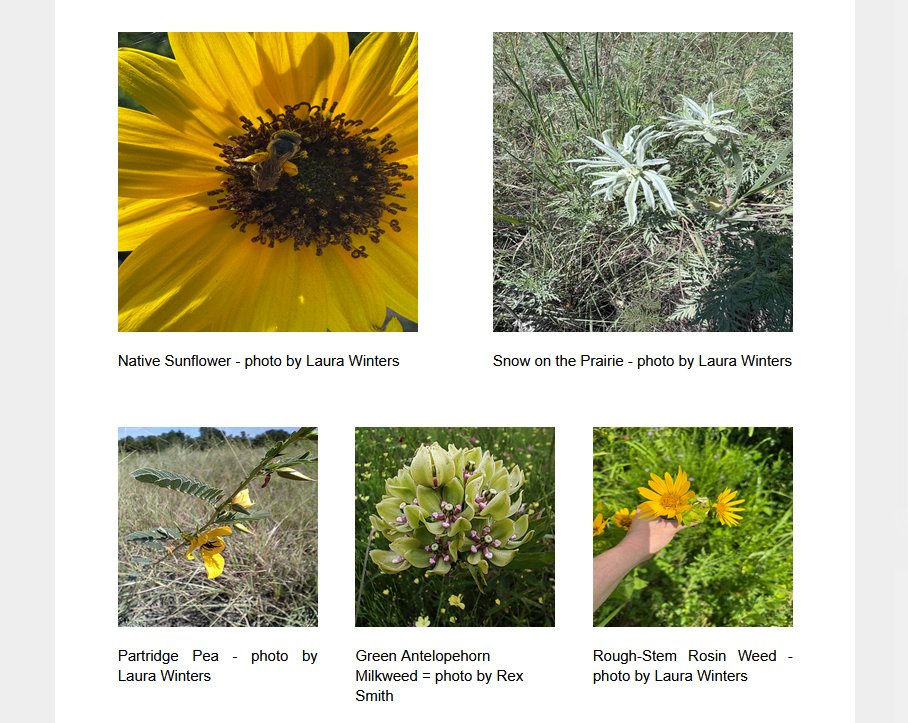
Roughstem rosinweed has only just begun opening a few blossoms here and there, even though it was already in full bloom by late June last year.
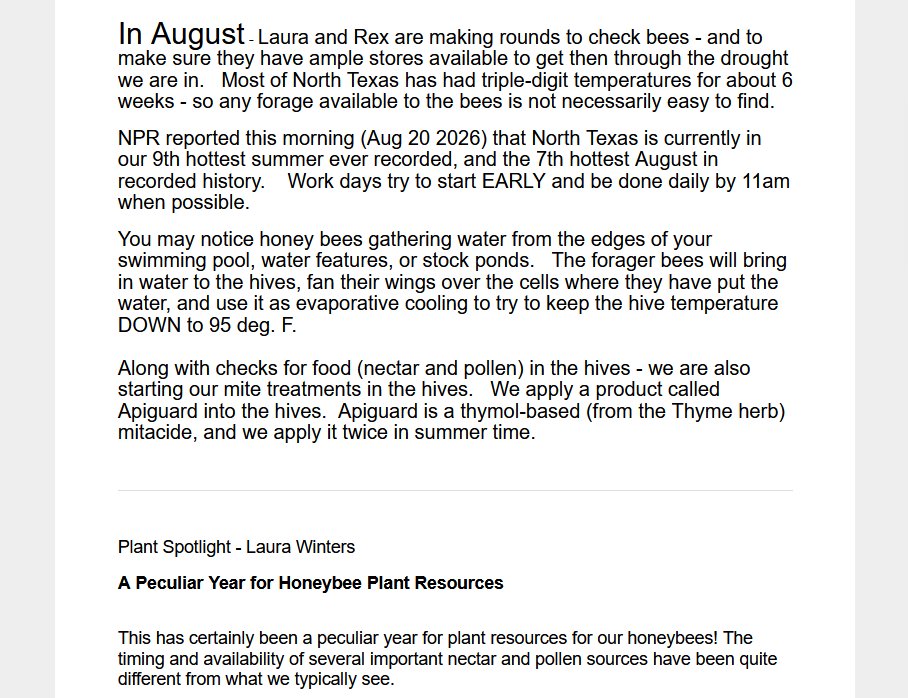
Thankfully, sunflowers have come to the rescue! They got an early start this year and continue to push through, providing tremendous amounts of both pollen and nectar. Sunflowers are especially important because they help keep our colonies well supplied with the resources needed to encourage our queens to continue laying plenty of eggs.
Partridge pea, although considered a lower-quality nectar source, is also showing up with surprising regularity across the counties where we care for bees. Interestingly, we didn’t see this plant at all last year, so its return is a welcome sight.
To our surprise, we’ve also noticed a great deal of milkweed beginning to bloom. Native milkweed flowering this late in the year is unusual, but we’ll gladly take the win! Hooray for the honeybees, bumblebees, monarch butterflies, and all the other pollinators benefiting from these blooms!
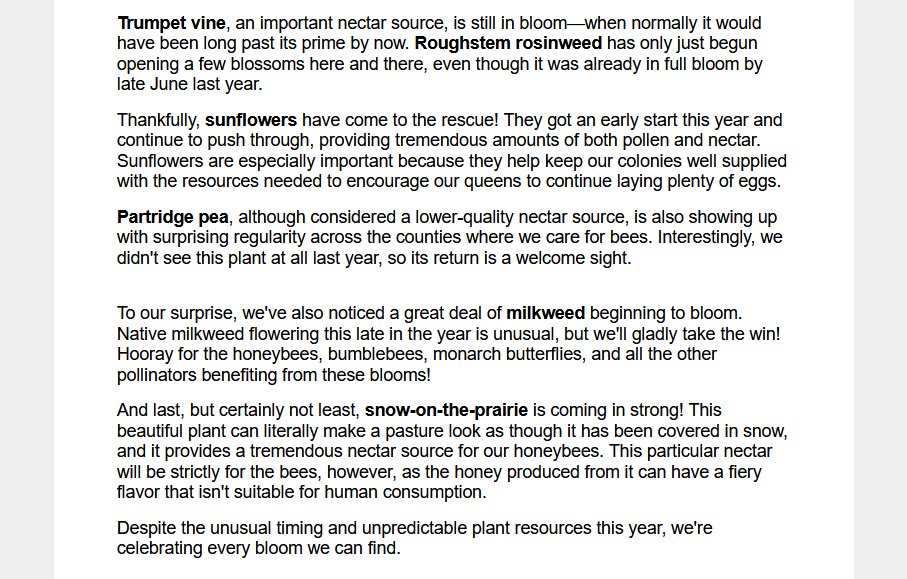
And last, but certainly not least, snow-on-the-prairie is coming in strong! This beautiful plant can literally make a pasture look as though it has been covered in snow, and it provides a tremendous nectar source for our honeybees. This particular nectar will be strictly for the bees, however, as the honey produced from it can have a fiery flavor that isn’t suitable for human consumption.
Despite the unusual timing and unpredictable plant resources this year, we’re celebrating every bloom we can find.
Laura and Rex are now offering several in-person beekeeping classes.
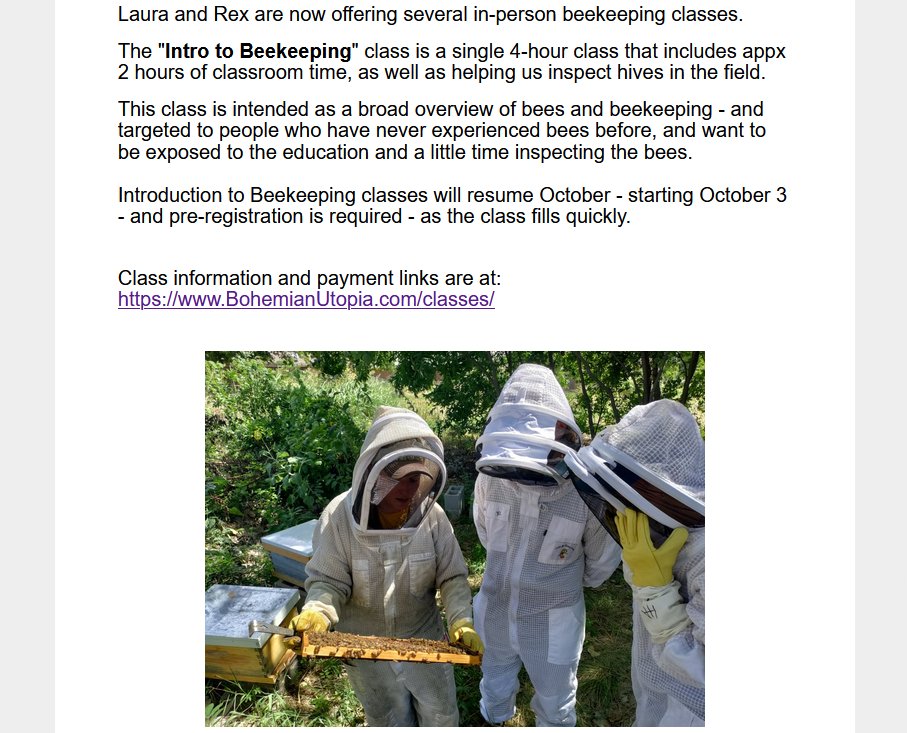
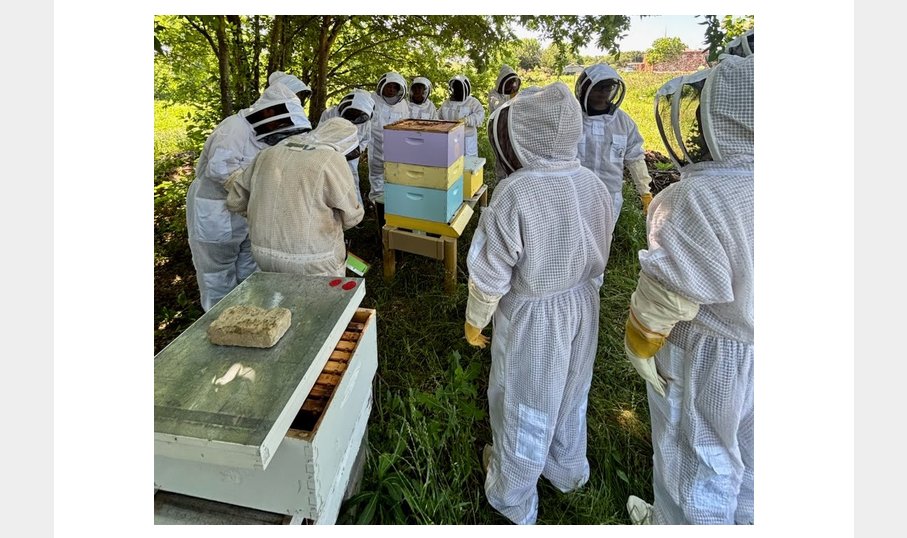
The “Intro to Beekeeping” class is a single 4-hour class that includes appx 2 hours of classroom time, as well as helping us inspect hives in the field.
This class is intended as a broad overview of bees and beekeeping – and targeted to people who have never experienced bees before, and want to be exposed to the education and a little time inspecting the bees.
Introduction to Beekeeping classes will resume October – starting October 3 – and pre-registration is required – as the class fills quickly.
Class information and payment links are at:
https://www.BohemianUtopia.com/classes/
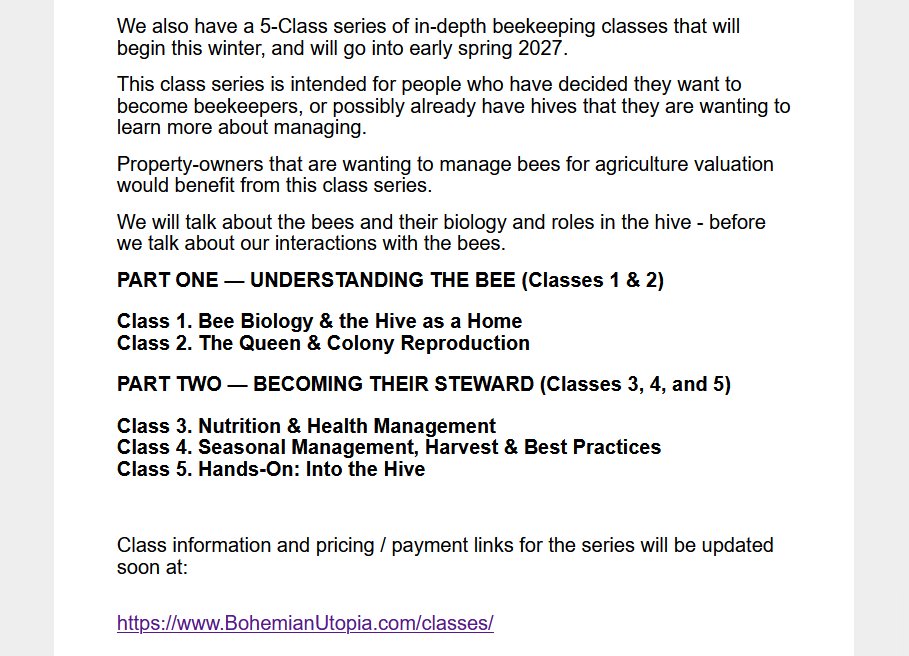
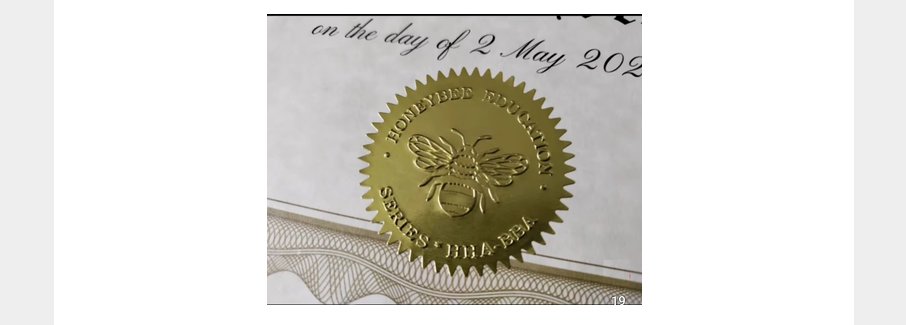
We also have a 5-Class series of in-depth beekeeping classes that will begin this winter, and will go into early spring 2027.
This class series is intended for people who have decided they want to become beekeepers, or possibly already have hives that they are wanting to learn more about managing.
Property-owners that are wanting to manage bees for agriculture valuation would benefit from this class series.
We will talk about the bees and their biology and roles in the hive – before we talk about our interactions with the bees.
PART ONE — UNDERSTANDING THE BEE (Classes 1 & 2)
Class 1. Bee Biology & the Hive as a Home
Class 2. The Queen & Colony Reproduction
PART TWO — BECOMING THEIR STEWARD (Classes 3, 4, and 5)
Class 3. Nutrition & Health Management
Class 4. Seasonal Management, Harvest & Best Practices
Class 5. Hands-On: Into the Hive
Class information and pricing / payment links for the series will be updated soon at:
https://www.BohemianUtopia.com/classes/
|
Rex Smith
Harmony Hollow Apiary
HarmonyHollowBees@gmail.com
469-251-2BEE (2233)
|
|
Laura Winters
Birds & the Bees Apiary
BirdsAndTheBeesApiary@gmail.com
214-729-0726
|
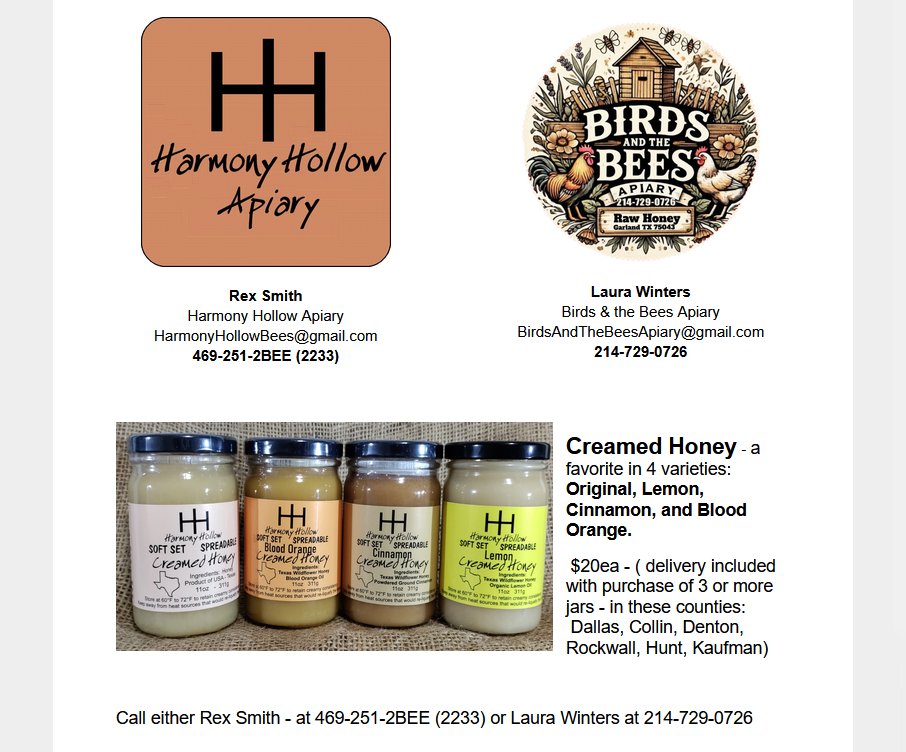
Creamed Honey – a favorite in 4 varieties:
Original, Lemon, Cinnamon, and Blood Orange.
$20ea – ( delivery included with purchase of 3 or more jars – in these counties: Dallas, Collin, Denton, Rockwall, Hunt, Kaufman)
Call either Rex Smith – at 469-251-2BEE (2233) or Laura Winters at 214-729-0726
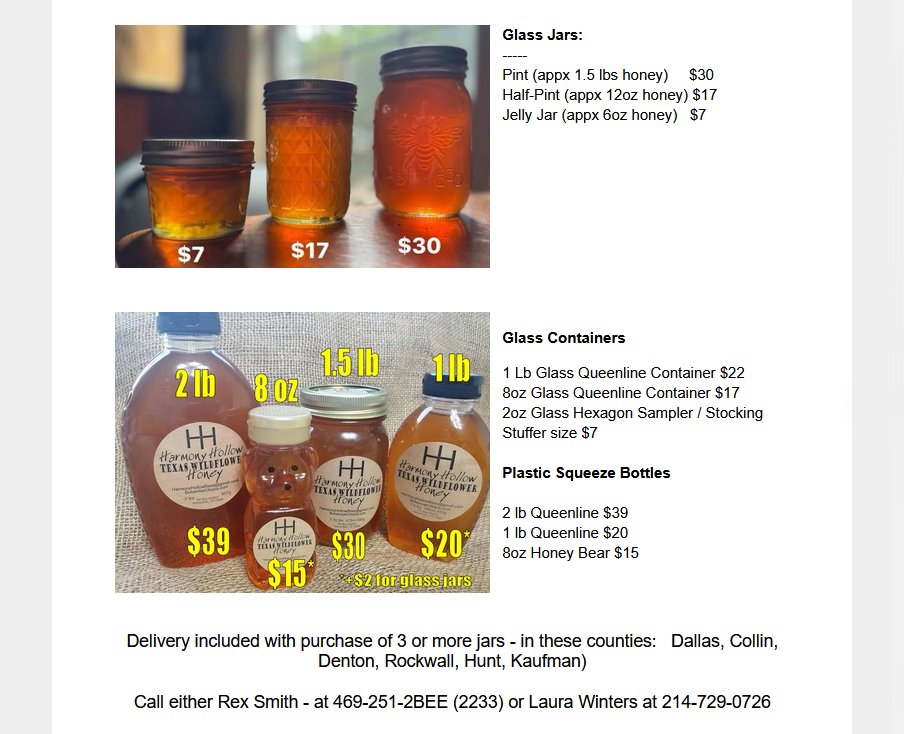
Glass Jars:
—–
Pint (appx 1.5 lbs honey) $30
Half-Pint (appx 12oz honey) $17
Jelly Jar (appx 6oz honey) $7
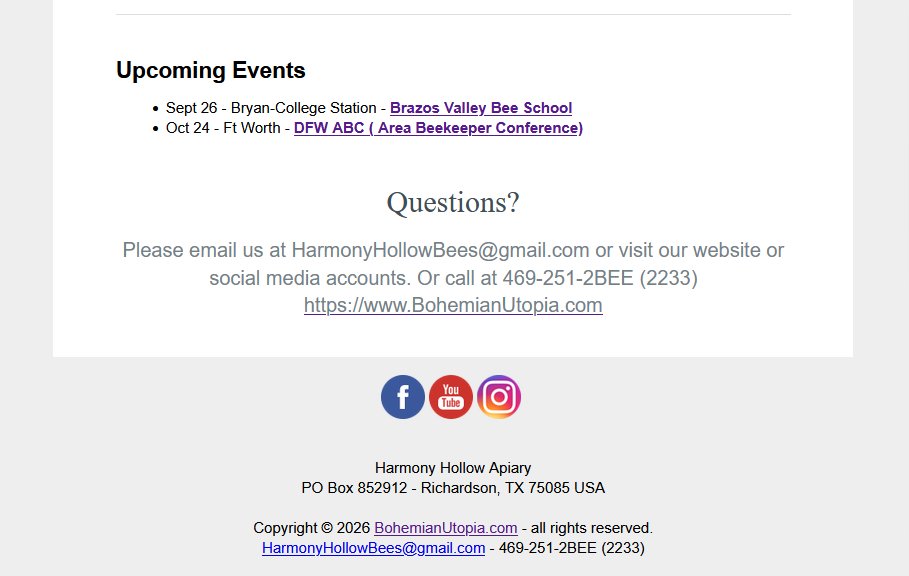
1 Lb Glass Queenline Container $22
8oz Glass Queenline Container $17
2oz Glass Hexagon Sampler / Stocking Stuffer size $7
Plastic Squeeze Bottles
2 lb Queenline $39
1 lb Queenline $20
8oz Honey Bear $15
Delivery included with purchase of 3 or more jars – in these counties: Dallas, Collin, Denton, Rockwall, Hunt, Kaufman)
|
Upcoming Events
|
|
Questions?
Please email us at HarmonyHollowBees@gmail.com or visit our website or social media accounts. Or call at 469-251-2BEE (2233)
|
|
Harmony Hollow Apiary
PO Box 852912 – Richardson, TX 75085 USA
Copyright © 2026 BohemianUtopia.com – all rights reserved.
HarmonyHollowBees@gmail.com – 469-251-2BEE (2233)
|


Leave a Reply
You must be logged in to post a comment.