1 tablespoon plus 1 teaspoon – Harmony Hollow Honey
½ cup plus 3 tablespoons – oat flour , packed
¼ cup – almond flour, packed
Filling – .
2 tablespoons – coconut oil
1 tablespoon – dark brown sugar
1 tablespoon – Harmony Hollow Honey
½ tablespoon – cinnamon
Frosting – .
½ cup – plain Greek yogurt
2 tablespoons – Harmony Hollow Honey
Directions
Cinnamon Roll Dough: In a microwave-safe bowl, combine water, almond milk and coconut oil and microwave on high until everything is melted, about 20 seconds. Allow to cool for about 10 minutes or until lukewarm. Add in yeast and brown sugar, stir for 1 minute until yeast and sugar are completely dissolved. Allow to sit for 5 minutes until foamy and bubbly. In a separate large bowl, combine egg white, honey and foamy yeast mixture. Add in oat flour and almond flour. Mix until a sticky dough has formed (you should be able to form a ball with it that holds its shape. If dough is too sticky or thin, add 1 to 3 tablespoons oat flour). Grease a separate bowl with coconut oil. Roll dough into a ball and place it into the greased bowl. Turn the ball once to coat with oil. Cover tightly with plastic wrap and store in a warm, draft-free place for 1 hour, or until dough has doubled in size.
Filling: While dough is rising, combine coconut oil, brown sugar, honey and cinnamon in a microwave-safe bowl. Microwave on high for 10 seconds, or until honey is thinned. Stir until brown sugar dissolves. Cover and place in the fridge until dough has risen.
Coat a flat surface with oat flour and dump out the risen dough. Allow the dough to rest for a minute while you remove the filling from the fridge. The filling should have hardened on the top and have a gel-like consistency on the bottom. Using a knife, cut the hardened filling into squares.
On the prepared floured surface, roll out the dough into a long rectangle. Evenly spread the filling squares around the rectangle. Sprinkle dough with an additional ½ to1 teaspoons cinnamon. Roll up dough from the long end or the short end of the rectangle. Slice off the jagged edges. Cut dough into 4 or 6 rolls. Place rolls, touching, in a parchment paper–lined baking dish. Cover and refrigerate the rolls overnight. In the morning, allow rolls to sit outside the fridge for 30 minutes before baking at 350°F for 30 minutes. Or immediately bake the cinnamon rolls at 350°F for 30 minutes.
Frosting: In a bowl, combine Greek yogurt and honey. Spread on top of warm cinnamon rolls. Serve.
Place all ingredients in large mixing bowl. Blend well. Pat into greased 8-inch square baking dish. Bake at 350°F 18 to 20 minutes or until lightly browned. Cool and cut into 16 bars.
Wash and cut the avocado in half. Remove the seed and roughly chop the pulp. Set aside ½ the pulp. Wash the parsley and chop finely. Place 1 tablespoon of honey, lime juice, ½ the avocado pulp, parsley and water in a blender and blend on high for 20 seconds, or until thoroughly combined. Pour into a glass and enjoy.
1 cup (8 oz.) – strawberry or other fruit-flavored yogurt
Directions
In blender or food processor container, combine pears and honey; process until smooth. Add milk and yogurt; process until blended.
Tip
Fruit & Honey Pops – Prepare Smoothie recipe as directed, reducing milk to 3/4 cup. Pour into eight 3-ounce popsicle molds or paper drinking cups. (If using cups, insert craft stick in center of each pop.) For fun pops, experiment with alternating layers of smoothie mixture and sprinkles or chocolate chips. Freeze until firm, approximately 3-4 hours.
Bring water to a boil in a medium saucepan. Add tea bags, cinnamon, and cloves ; let simmer for 5 minutes. Remove cinnamon and cloves and stir in honey and lemon juice. Place in refrigerator until chilled (approx. 1 hour). Pour over ice and garnish with fresh lemon slices. *May substitute chamomile tea for the Echinacea tea.
Yield – (4) Servings
Tip
Variations: Add 1 Tablespoon orange juice to each glass. Add 2 Tablespoons rum or whisky to each glass for a “spiked” version.
In large bowl, cream honey with butter until light and fluffy. Stir in pumpkin. Beat in eggs, one at a time, until thoroughly incorporated. Sift together remaining ingredients. Stir into pumpkin mixture. Divide batter equally between two well-greased 9 x5 x 3-inch loaf pans. Bake at 350°F for 1 hour or until a wooden pick inserted in center comes out clean. Let loaves cool in pans for 10 minutes; invert pans to remove loaves and allow to finish cooling on racks.
Makes (2) Loaves.
¼ cup – peeled, sliced ginger , or ½ teaspoon of ground ginger
1 cup – water
1 cup – Harmony Hollow Honey
½ cup – lemon juice
Directions
In a small saucepan, combine lemon zest, sliced ginger and 1 cup of water. Bring mixture to a boil, simmer for 5 minutes, then strain through into a heat-proof measuring cup. Rinse the saucepan out and pour in 1 cup of honey. On low heat, warm the honey, but do not allow it to boil. Add the strained lemon ginger water and the lemon juice. Stir the mixture until it combines to form a thick syrup. Pour into a clean jar with a lid. Note: This can be refrigerated for up to 2 months.
For children ages 1 to 5, use ½ to 1 teaspoon every 2 hours. For children ages 5 to 12, use 1 to 2 teaspoon every 2 hours. For children 12 and older and adults, use 1 to 2 tablespoons every 4 hours.*
* Remember, honey is recommended for children after the age of one.
Recipe courtesy of Nurse Practitioner Barbara Dehn, RN, MS, NP.
No – Not directly “beekeeping” related – however, when I perform a bee removal in a location too far from electricity – I need my generator(s) to be able to do their job. Since we are about to enter the cooler part of the year when generators are likely to be used more for other purposes – I thought it would be a great time to do a little maintenance on my generators.
Mine have sat for over a year without being used. That means that any moisture in the gas system may have rusted and caused debris to form in the gas tank and/or carburetor bowl.
Sure enough – neither of my generators would start when I tried to fire them up. I sprayed a little starter fluid into the carburetor of each – and they would run for a few seconds. This means that my most likely culprit is fuel delivery. Something is clogged somewhere.
Unfortunately – I took no photos while I was working. My hands were covered in gasoline, oil, grease, and starter fluid. I was not about to touch my phone or camera for the purpose.
My small generator is a 6.5A generator. Yes – a Harbor Freight small portable 2-cycle engine generator. At 6.5 Amps – it will not run my vacuum for doing bee removals – but it will run small hand tools. Since it is 2-cycle, oil is added to the gasoline. This means that any gas that sits in the system (carb bowl) is prone to clogging up small orifices like the carburetor jets. I carefully took the bowl off of the carburetor on the generator, and sure enough – the brass jet was clogged with a gel-like coagulation of oily mess. I quickly ran a small wire gauge through the jet, and used some spray carburetor cleaner to clear the jet – and re-installed it. After putting it all back together, and turning the fuel back on – the generator started on the first pull of the rope. Success!
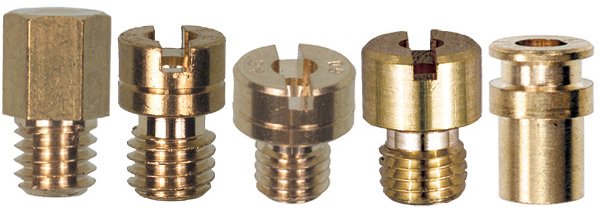
Here is a sample photo of what some carburetor jets look like if you have never seen them. There is a tiny hole going through the brass – that lets a metered amount of fuel to enter the engine as it is mixed with air for combustion.
My larger generator (3600 watts @ 120v – and WILL run my bee-vac – and is *NOT* from HF) has a 4-cycle engine on it – so no oily gas… The carb bowl was rusted, though – and again – there was debris clogging the fuel delivery jet. More cleaner, a bit of air blown through the system… put it back together – and again – started on the FIRST pull. Success again!
Maintain your motorized equipment – especially when it’s seldom used. A lawn mower is (or should be) used pretty regularly – so there’s less opportunity for the carburetor to clog the jets. However, when a generator or pressure washer sits for a long season – expect to do a little maintenance to keep things running smoothly.
These honeybees had never stung anyone living around the hive. The hive was 19′ in the air – externally built on a limb of a magnolia tree. The homeowner called around to get information on having them removed… and another “removal company” (that is really an exterminator with a “beekeeping related” company name) diagnosed these bees as being Africanized – while on the phone with her – and told her that they would show her that they were Africanized by waving a teddy bear in front of the bees – and when the bees attack it – that they would be *confirmed* as Africanized. I’ve heard this line of BS from other clients who have dealt with that company as well. The teddy bear has probably got a TON of alarm pheromone on it from other hives – making ANY bees want to attack it.
They KNEW that the bees were not aggressive, and yet gave a diagnosis of Africanized. Some companies try to sell FEAR to customers to get them to make rash and irresponsible quick decisions.
Luckily, this homeowner called around for a 2nd opinion. The situation (and the bees) were evaluated, and in the video you can see how atrocious their demeanor is towards me. lol…. This short video clip was taken just before removing the comb and transferring it and the bees to a 5-frame nuc box.