Archives

Condo Bees

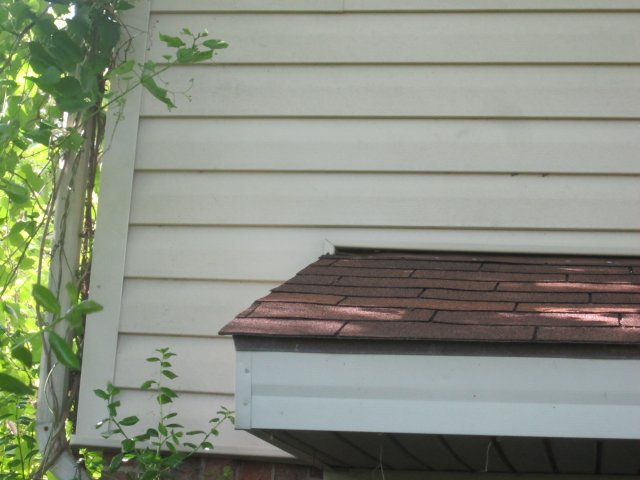
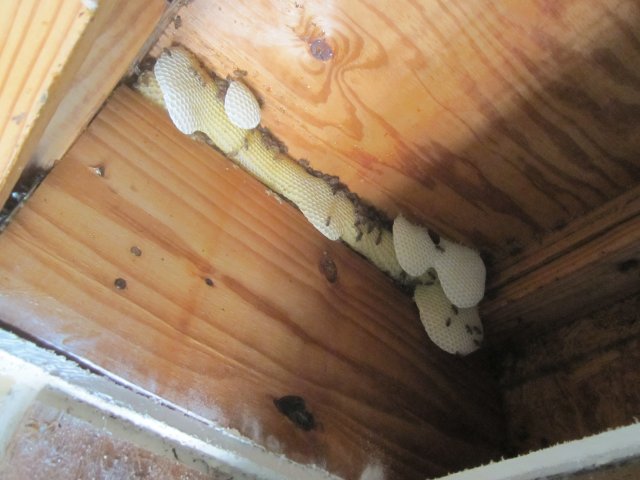
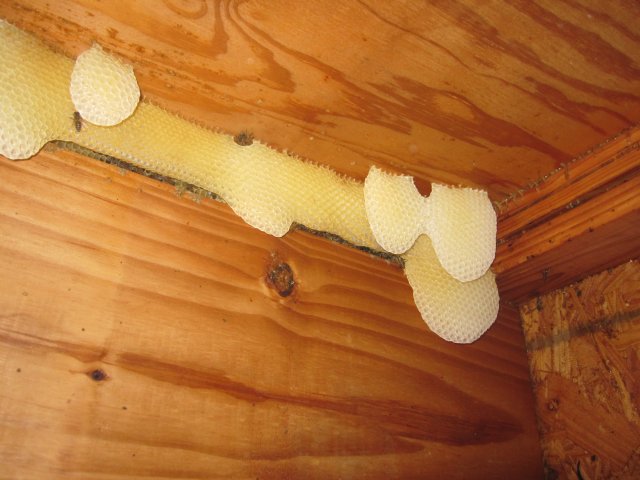
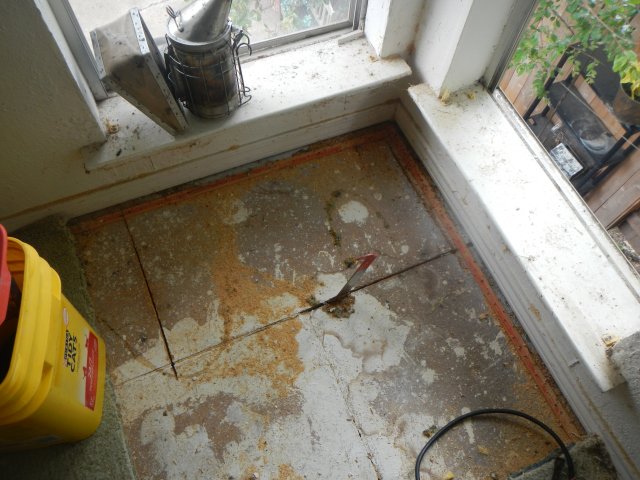
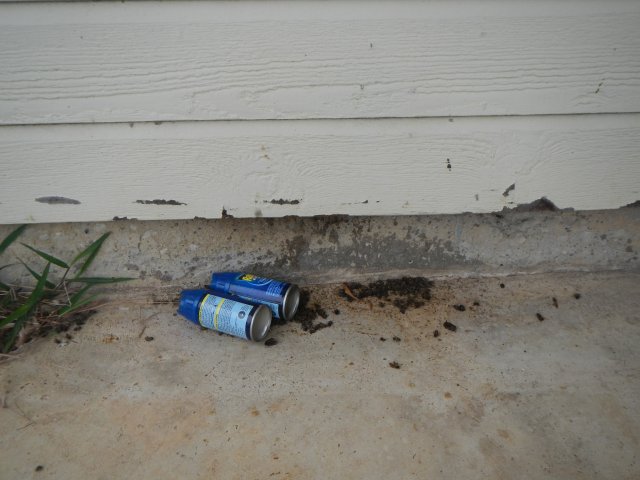
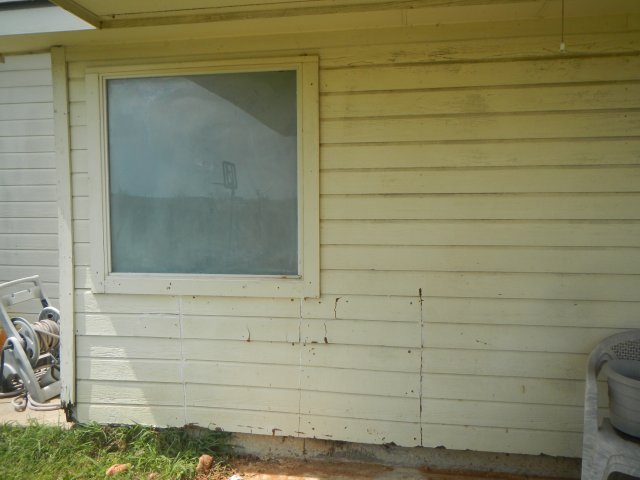
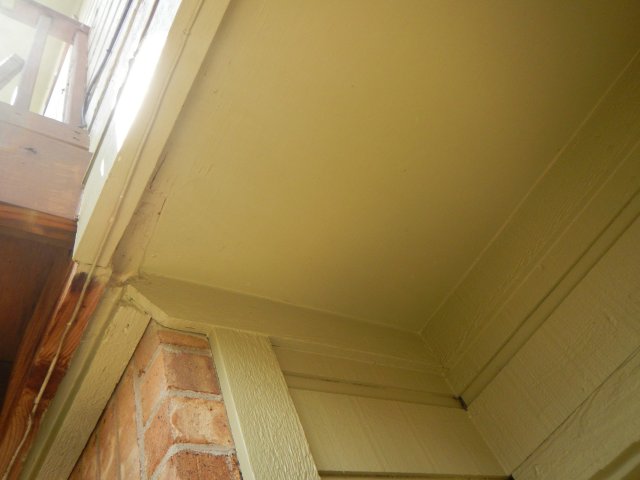
The tenant in this condo has seen bee activity since he moved in last November.  Given the number of holes in the side of the building – I am not surprised at all.  He had a sticky spot on the upstairs wall of his home – which alerted him to the possibility of honeybees in that wall.  The spot on the wall, though – was NO WHERE near the entrance the bees were using.  My laser thermometer could not verify presence of bees in the wall at all…  However, it DID show that warmth was transmitting through the floor – in the joist space between the 1st and 2nd floors – above the entryway of the back porch.
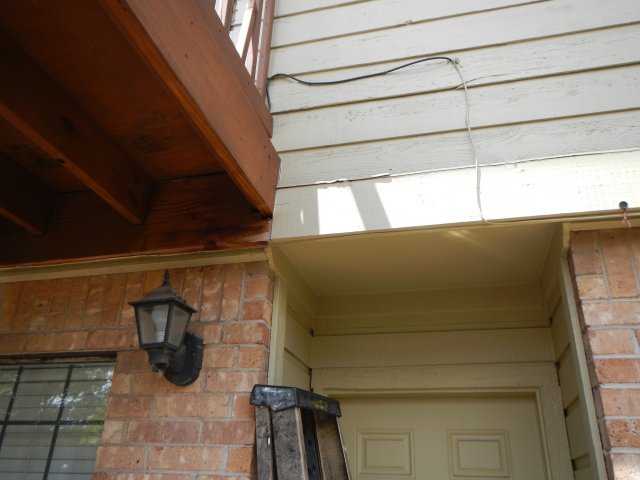
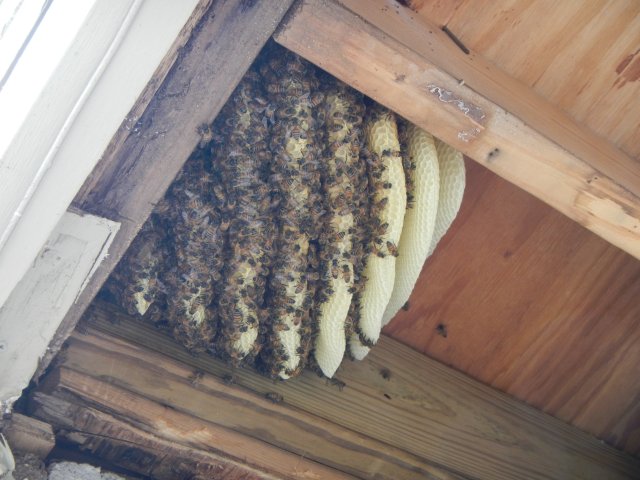
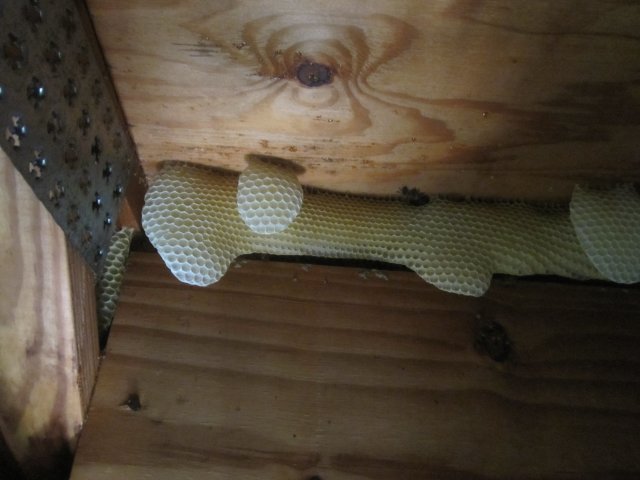
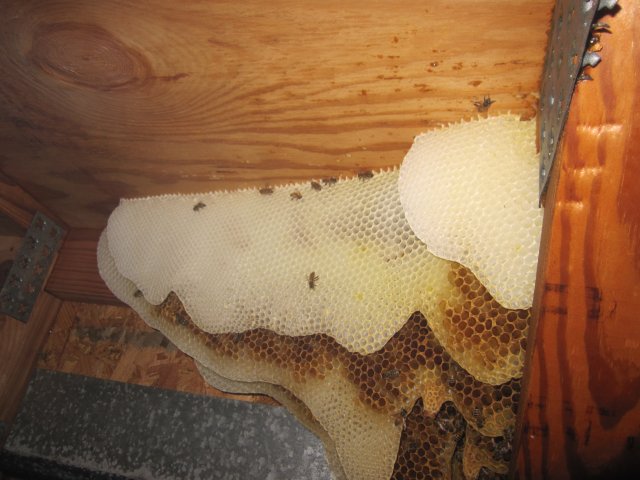
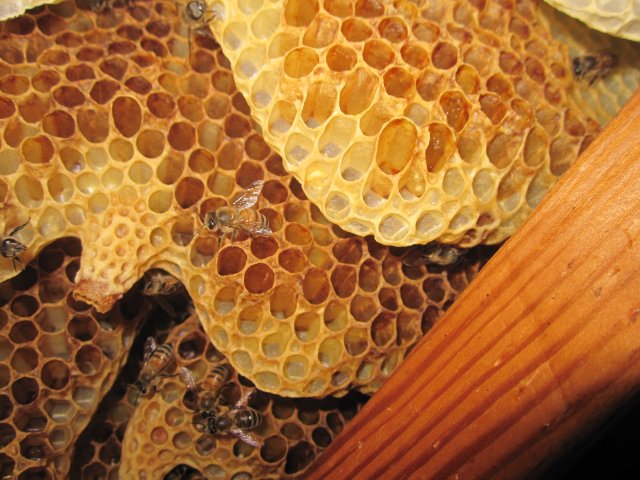
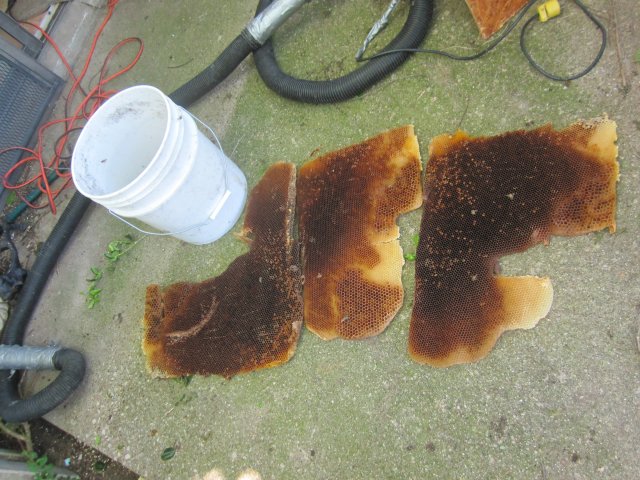
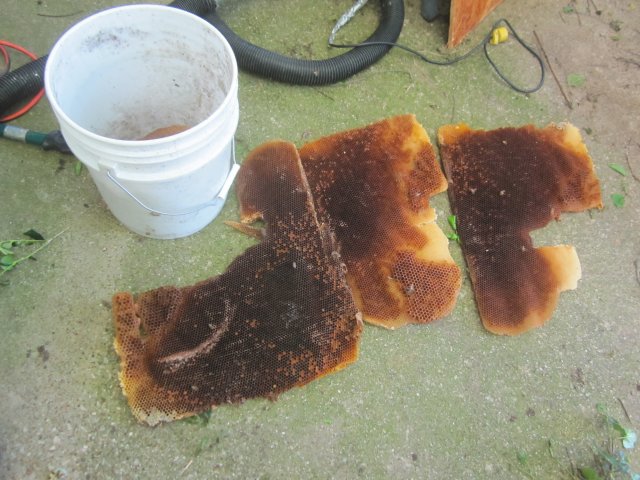
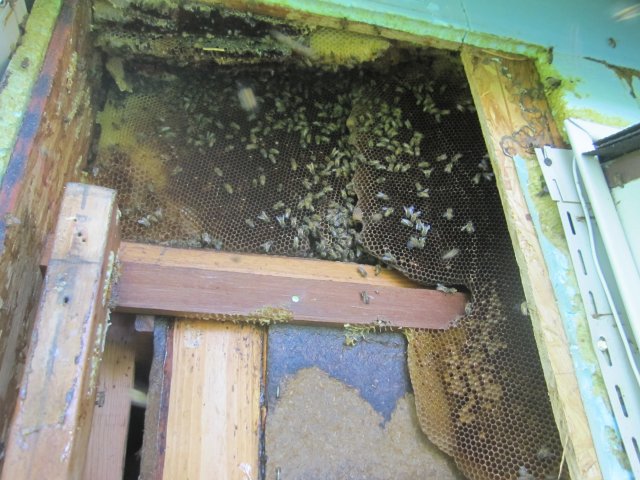
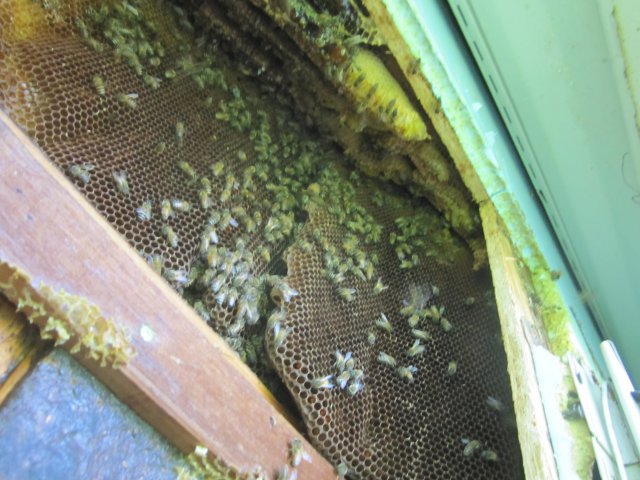
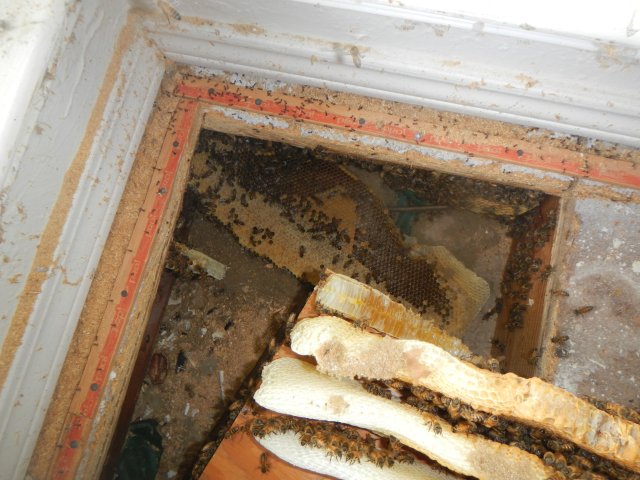
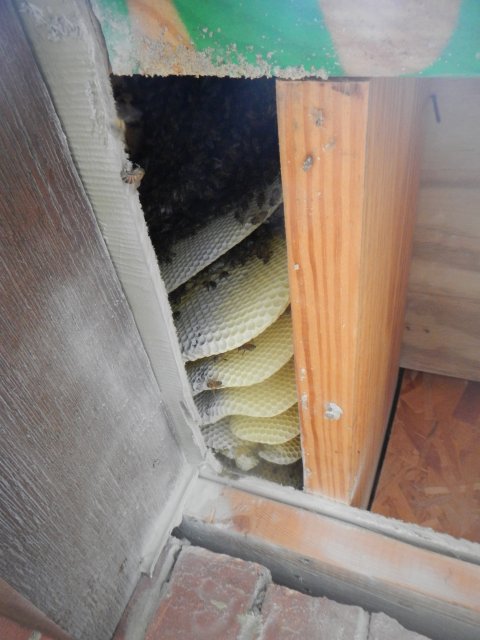
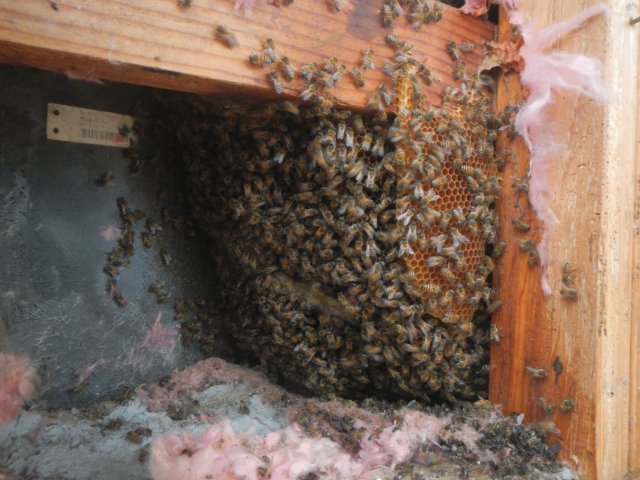
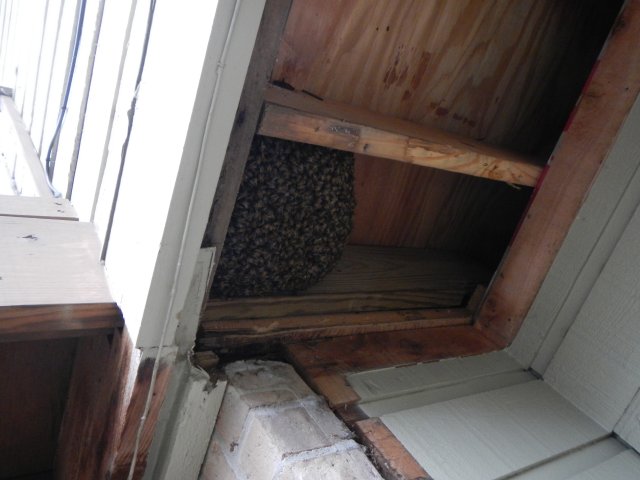
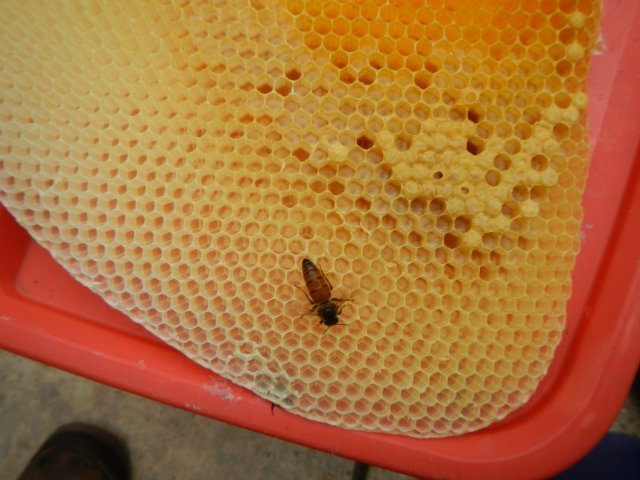
Dscn3007 Dscn3008These bees in the space I opened had only been here for a about a month.  the comb was nice and fresh, pure white, and had a fantastic brood pattern.
Dscn3012 Dscn3014

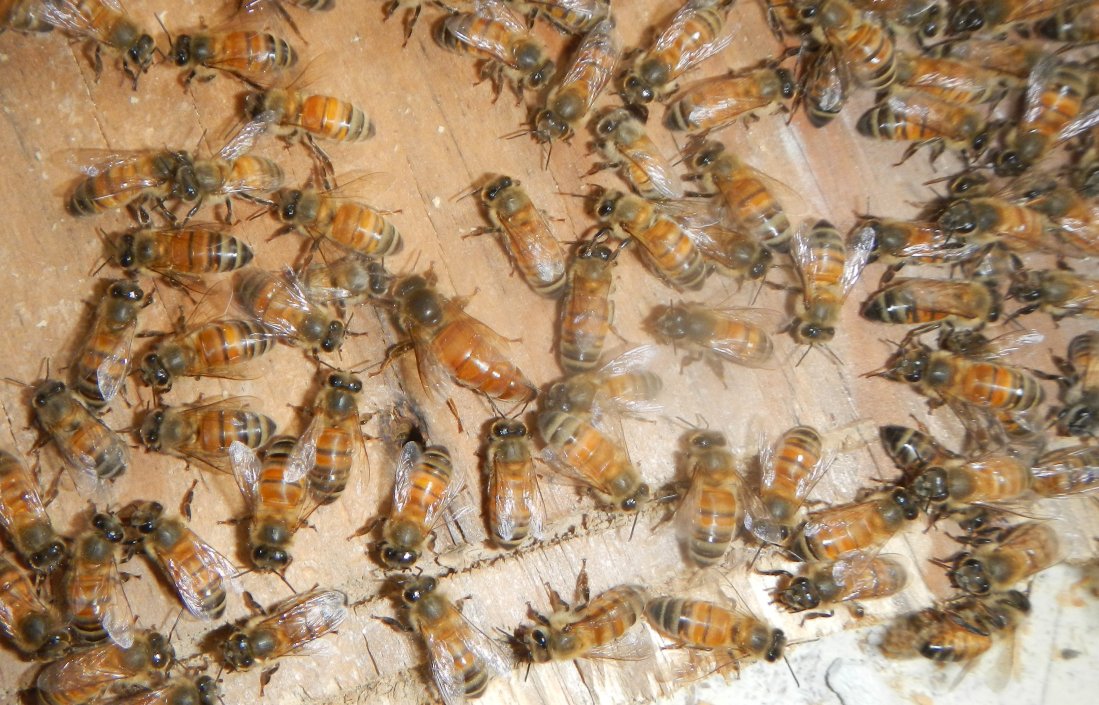
I found the queen on the 2nd piece of comb that was removed, and she posed nicely for the camera.  😉
Dscn3015


Joist Space Removal – Plano Tx 4-28-2016

Bees have been entering this unoccupied home for an unknown amount of time.  (After viewing and examining the comb – I believe the space had been occupied for at least 2 years).  Click on each photo for a larger version of each one – and there are 4 videos linked in this post.

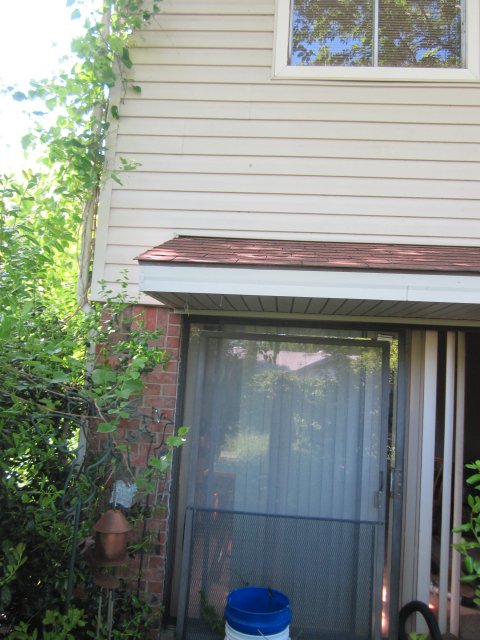
Img_1952 Img_1953Initial view of the home.

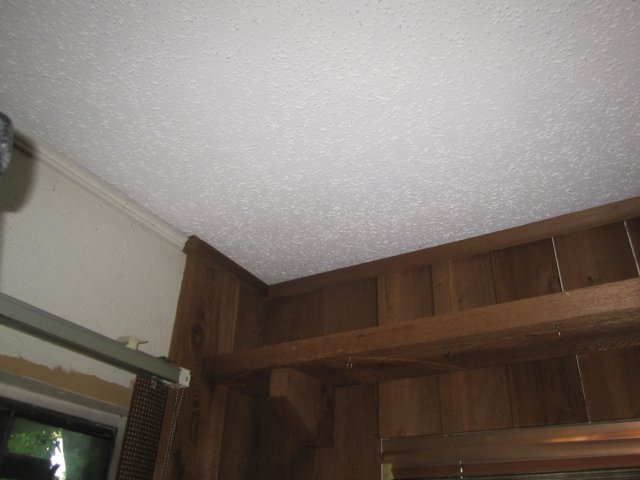
And of the kitchen corner:

Img_1954


Img_1955 Img_1956 Img_1957 Img_1958Comb seen from the opening in the dining area.  First 3 photos are straight up – last photo is to the next joist space to the left.

Initial opening view – Video  Able to see that comb is behind the 2×12, and access would have to be made from the outside as well for the hive to be removed.

Img_1959

More comb…

Img_1961

The patio cover has no comb inside of it.

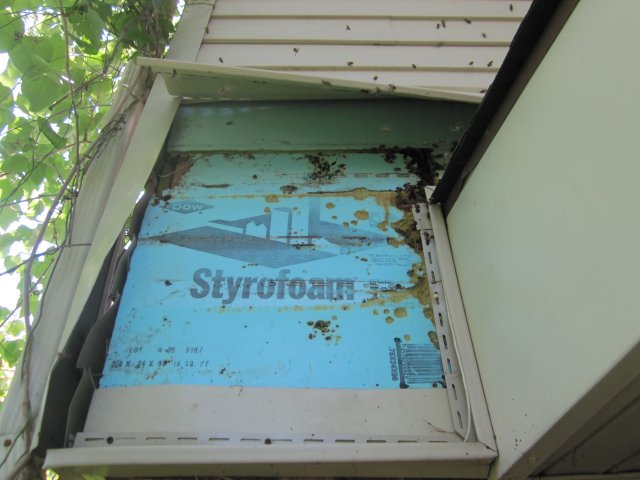
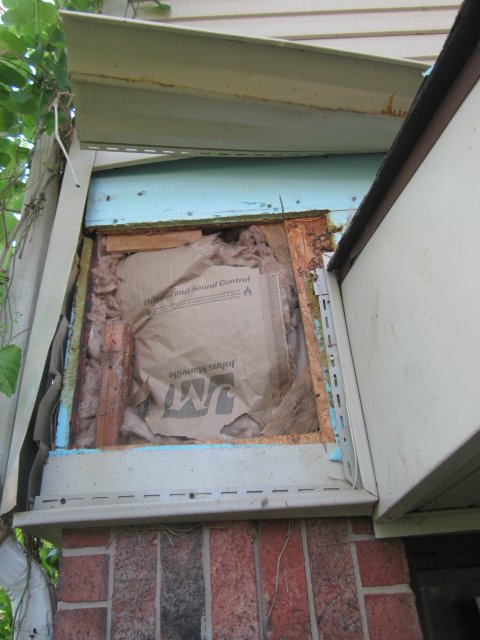
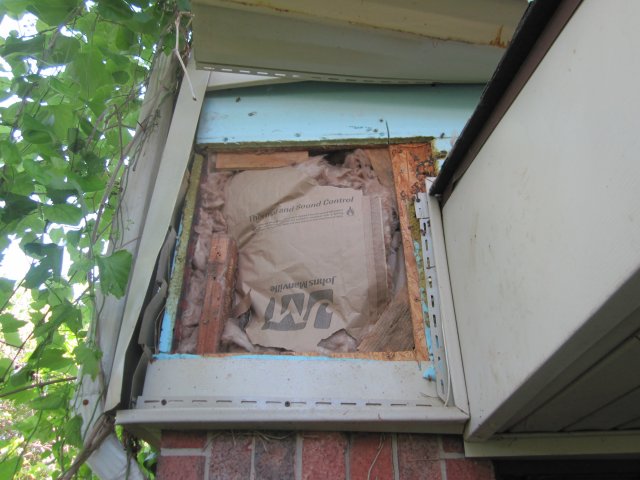
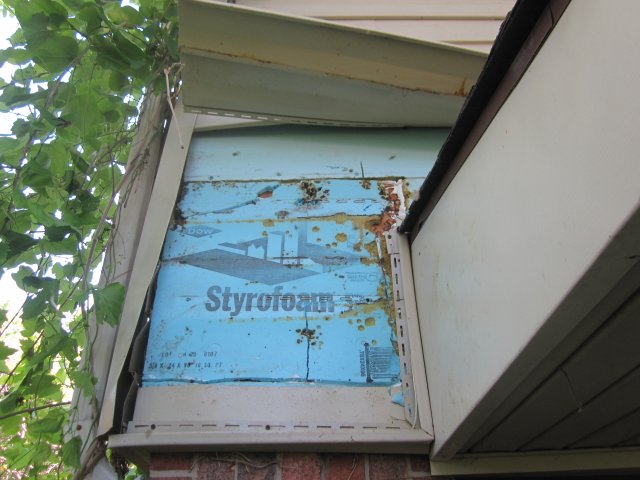
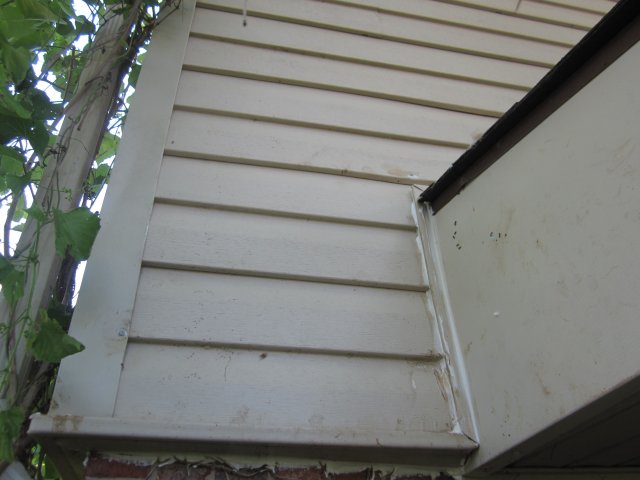
Img_1963 Img_1964Siding off – And insulation panel exposed

https://youtu.be/Dkrp9PXVELo

Wood panel opened

Comb was LARGE.  Right at 2′ tall.

Img_1971 Img_1973 Img_1974 Img_1975

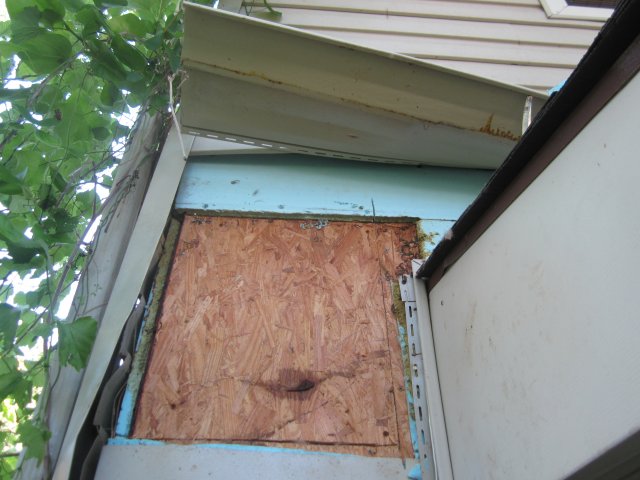
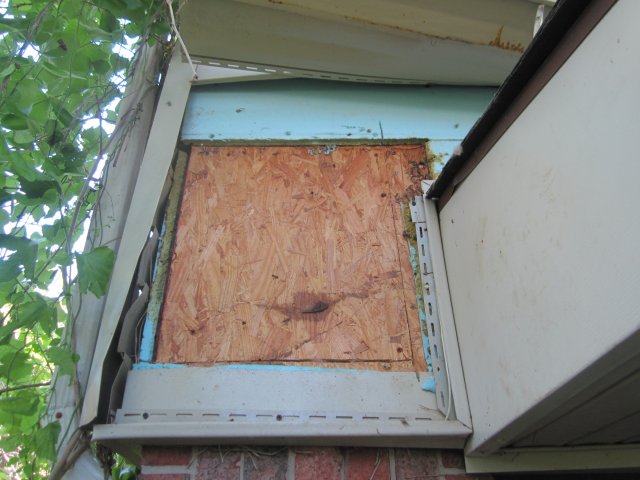
Bees removed, comb removed, and filling the void with insulation, then replacing the wood panel, insulation panel, and vinyl siding.

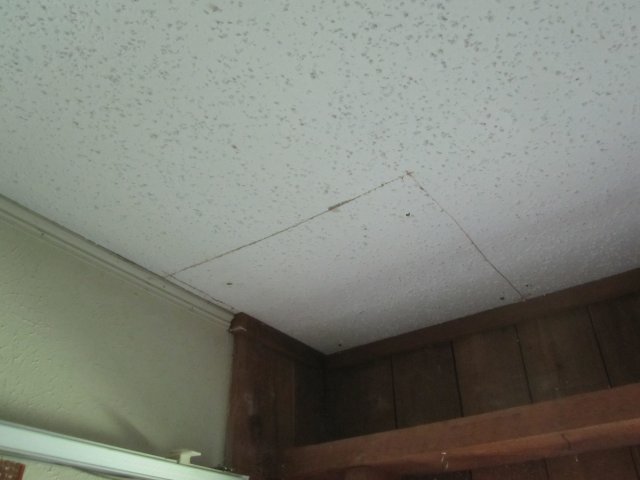
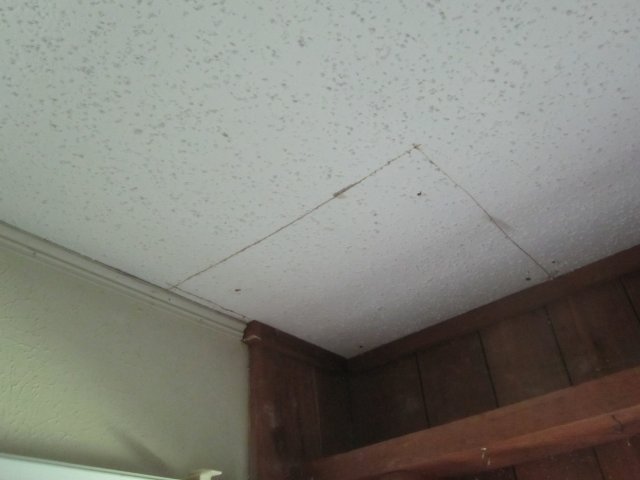
Also the drywall inside was replaced into its’ position.

Img_1979 Img_1980 Img_1981 Img_1982 Img_1983 Img_1984

Inside:

Img_1978 Img_1977

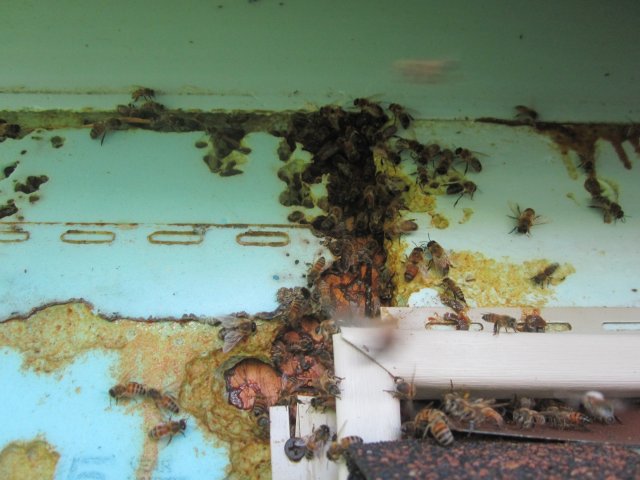
And for fun – a view of what I dealt with during the removal.  This was a feeding frenzy of neighborhood bees cleaning up the honey while I was working.


Garage Apartment Bees

Several weeks ago, an attentive homeowner watched as a swarm moved into the joist space between floors of a backyard “garage apartment”.   On eviction day – access to the comb was through the flooring above the bees.  A laser thermometer showed that there was a hot-spot in the corner – marking the space where the brood and bees would be.

Garage_Apt_a

Once opened, the bees were very docile.  The queen was quickly found in a cluster of bees

Garage_Apt_c

She was a runner!

QueenShot_a


Gazebo Bees

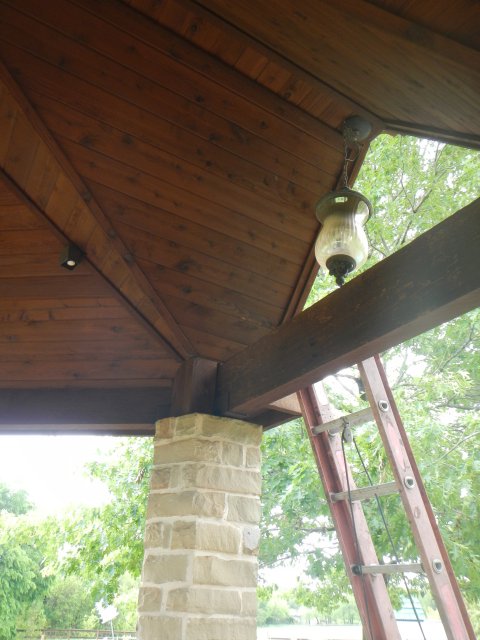
This colony set up shop in the ceiling void space of a gazebo.  That portion of the roof line is shaded – so does not get hot enough for there to be a problem with the wax melting.

Dscn2886_smDscn2892_sm

These bees have a very fertile queen with a great egg-laying pattern!

Dscn2893_sm

Balcony Bees

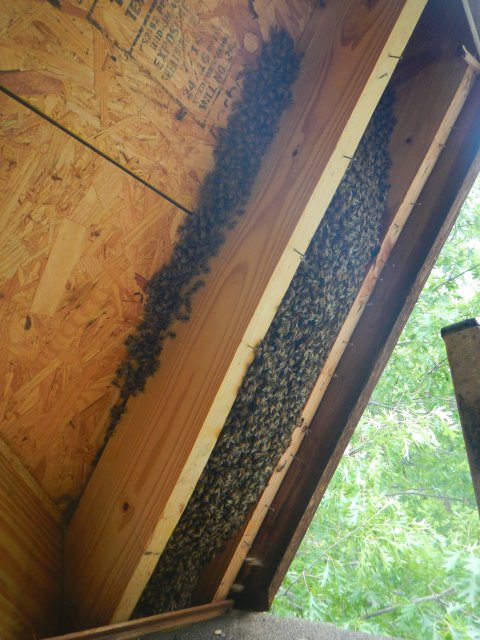
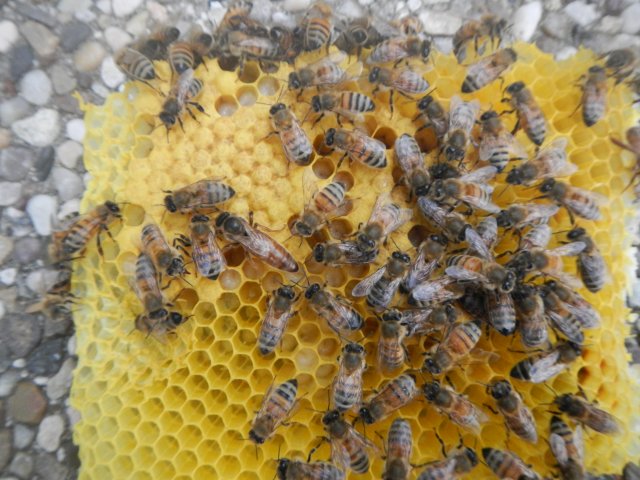
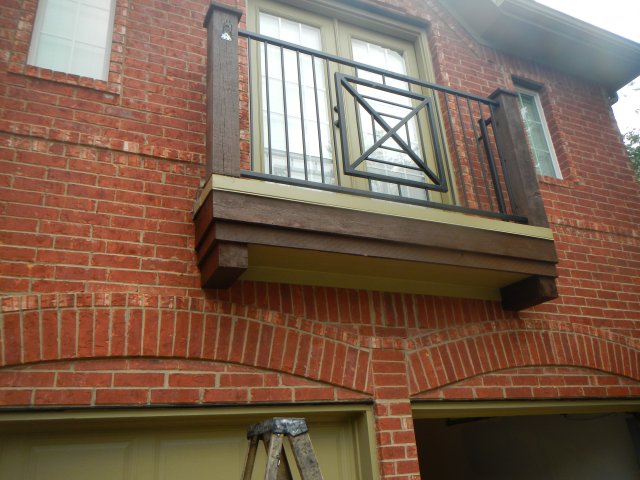
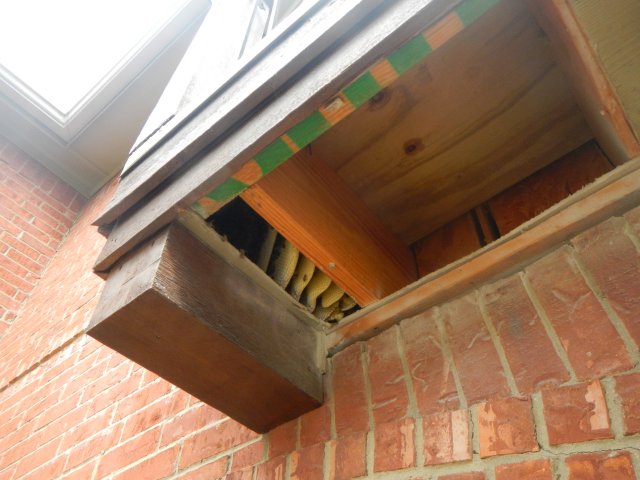
Honeybees moved into the space below the balcony about a month ago.  The queen was found after all the comb was removed, and was captured – and reunited with the workers and comb today.  Though the comb was new and soft – a good portion of the brood comb was salvageable.

Dscn2936_sm

Dscn2940_sm

Dscn2942_sm

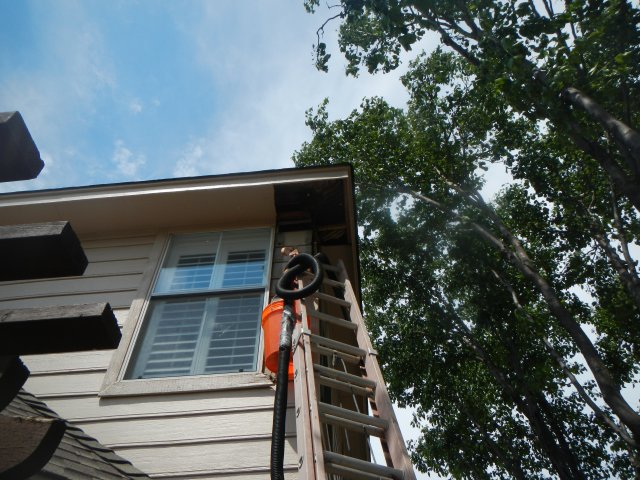
Way up there!

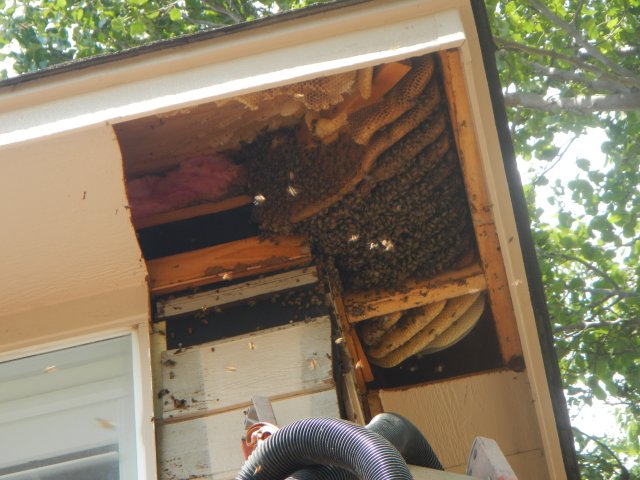
The homeowner had only noticed these bees over the last few weeks – up near the 2nd floor soffit.  At first, we thought they were in the wall – as that portion of the roof DOES get sunshine – but upon checking – the bees were, indeed, in the soffit (as usual!).  The comb was actually several years old in the center of the cluster.  The queen was found and captured, then reunited with her colony and comb.

Dscn2931_smHere is a close-up (from the ground).  Once the bees and comb had been removed, the space was filled with insulation, and the soffit board was replaced.

Dscn2933_sm


Double Trouble

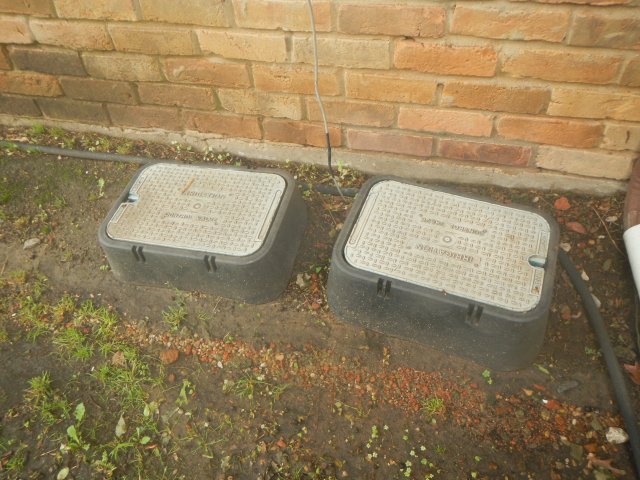
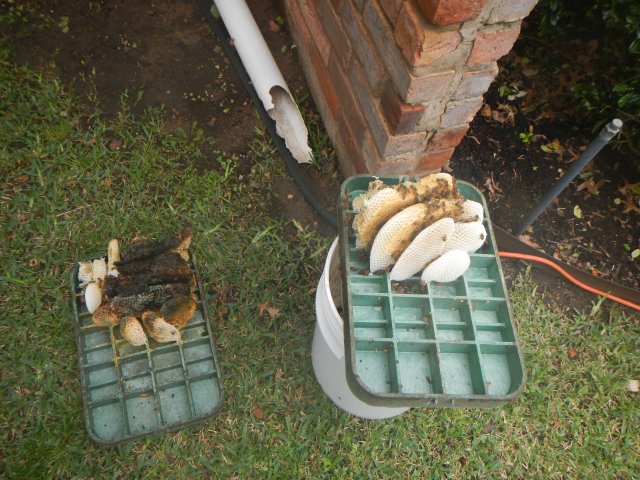
These bees were occupying space in 2 irrigation control valve boxes.

Lawn maintenance crews would not go near the boxes with bees, so I was called in to perform the honeybee removals.

Dscn2880_sm

Each hive was very small, and had queens that looked to be well mated (from the eggs and larvae pattern in the comb).  There were also quite a few drones.   Unfortunately, this is a group of SEVERAL characteristics of the more aggressively defensive Africanized hybrid bees.  Smaller hive clusters, lots of drones, prone to swarm and abscond/leave on an instant’s notice.

Dscn2881_sm

One hive had comb that had gotten wet – so had mold/mildew growing on the comb.  The other was healthy looking comb.


Great Grandma’s Bees

This is an OLD house in the country – that off-and-on – has had bees in some space or another over the last 25 years.  Previously (15 years ago) they had bees exterminated.  This time, they called a beekeeper to do the job.

Dscn2908_smThe house has a broken window – so the bees were entering into the great grandmother’s bedroom.  She had to move to another part of the house over the last month to avoid getting buzzed (by the bees! lol)

Dscn2912_smThe old panel siding was removed, and the ship-lap siding was removed.  The bees occupied a space approximately 8-feet tall by 2-feet wide (2-foot joist spaces).  These bees at first had me thinking they were of questionable genetics… as they were ALL OVER ME during the removal.  However, as I progressed, I remembered that the homeowner had not had any problems at all with doing yard work.  These bees were HUNGRY!  Hungry bees are pissy bees.  There was not a single drop of capped honey or open nectar.  There was, however, a LOT of brood.  I think the queen’s ability to lay eggs was taking up the resources of the hive to feed the larvae & pupae.  They just could not save any honey at this time.

Dscn2923_sm

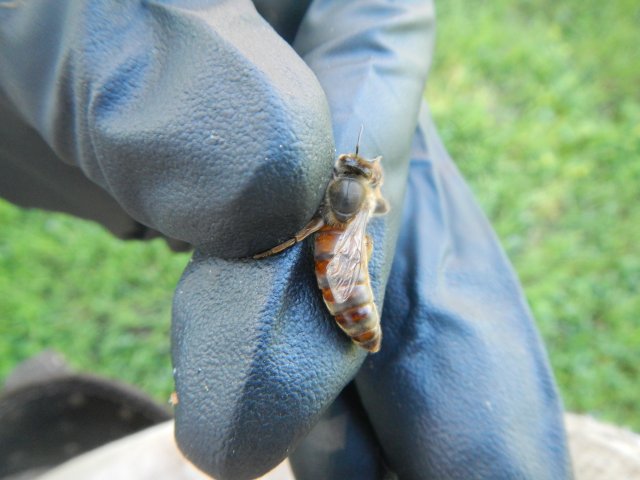
Here is the queen!  Very much a fertile queen!!


Who’s Your Wingman?

Bees have been in the wing of this garage for about 2-3 years.  The homeowner had no problems with the bees… however, the neighbor did – so the city asked him to “take care of the problem”.

Luckily, he called around and called me for the live removal of the bees.

Dscn2855_smThe garage wing – out to the right of the house.

Dscn2861_smBees hanging out at their entrance spot (after I removed the board covering it)

Dscn2871_smJust a few bees inside.  😉
Dscn2878_smThe bees and comb all taken out.  The brood comb (5 frames) was placed into a small 5-frame hive, along with the queen – and the bees were all combined with their comb and the rest of the worker bees later that evening.


Bathtub Bees

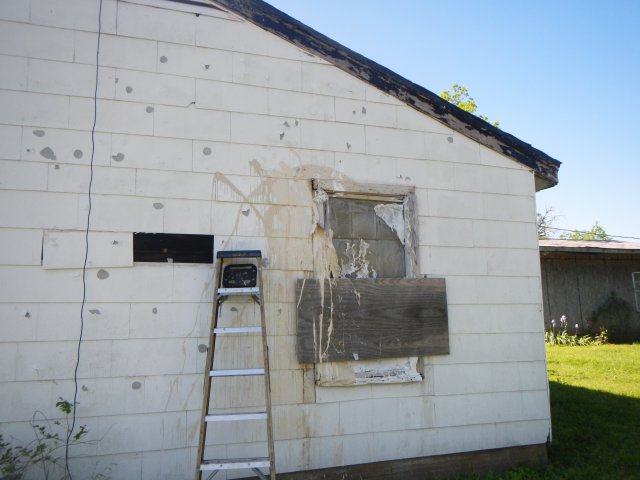
The homeowners had been unable to enjoy their back yard, as honeybees had taken up residence in a wall facing their back yard.Dscn2817

When evaluating the honeybees, I noticed that the wall had a bathroom on the inside – with the tub located to the inside of where the bees were entering.  When I put my ear to the bathtub, and tapped my knuckles on the tub – sure enough – the bees’ buzz was LOUD.Dscn2818

Unfortunately, about a month ago – the homeowner used some sprays on the bees – greatly knocking down their population, and making the survivors even more defensive of their flight paths.

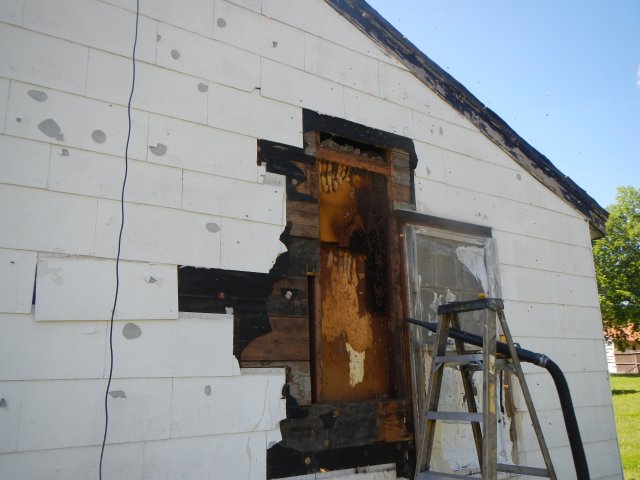
The siding and inner sheathing was removed – to reveal that the home-builder had not insulated around the tub and associated plumbing.  Bees found their way in, and called it “home”.

Dscn2824

After removing the comb and bees, I stuffed the open void with fiberglass insulation, then replaced the wood and siding.

Dscn2834