|
|
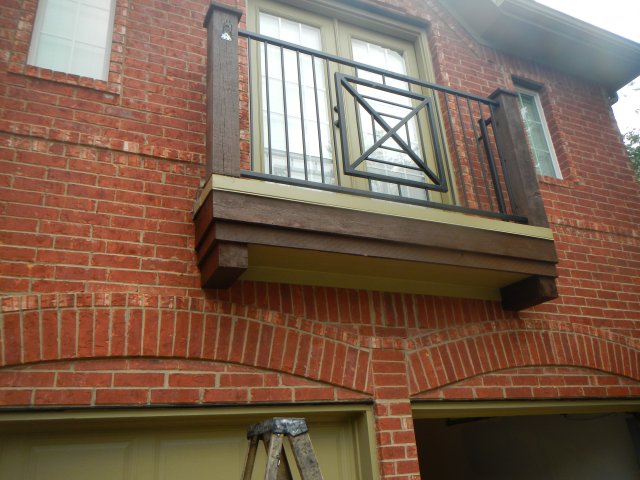
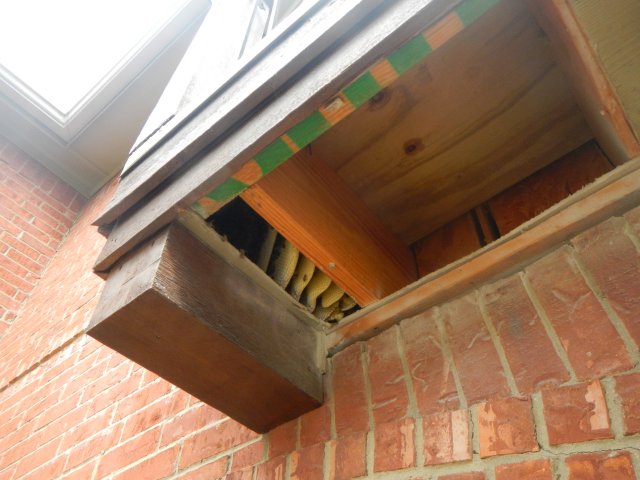
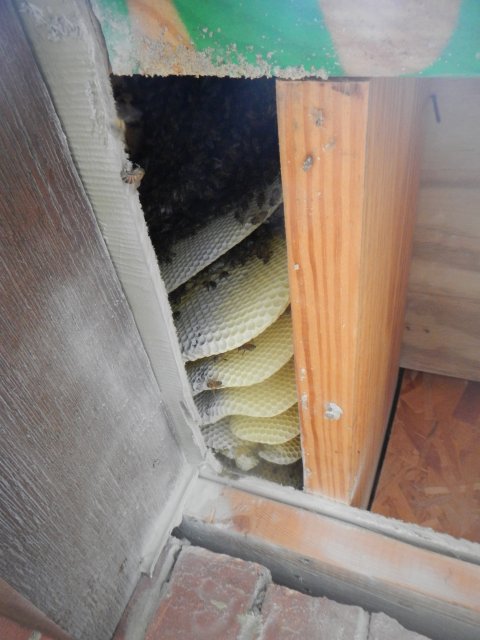
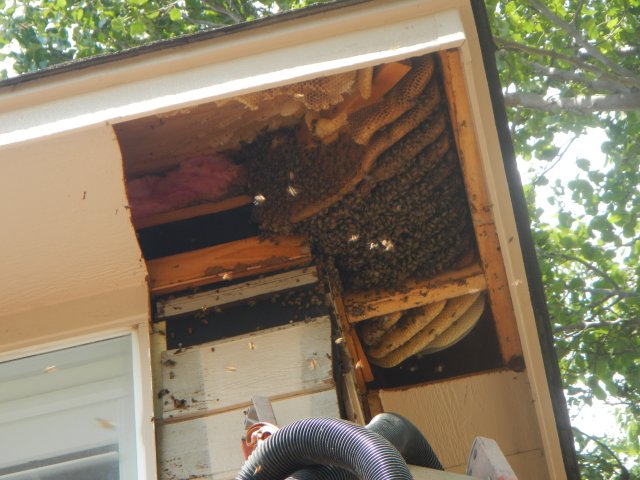
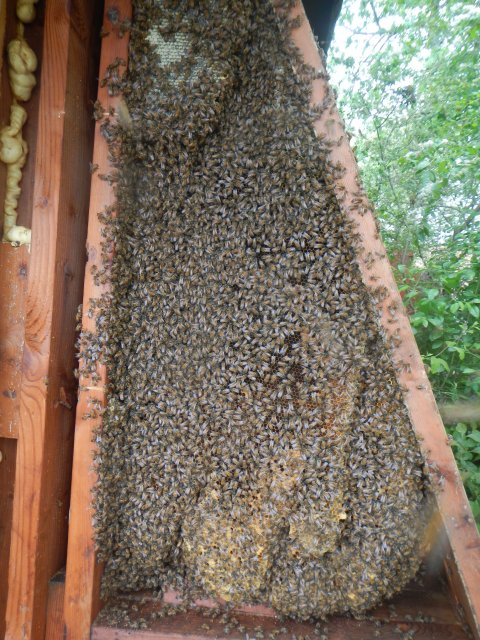
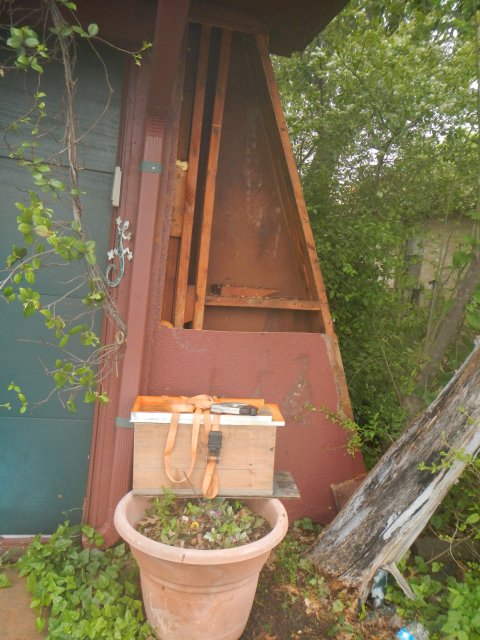
Honeybees moved into the space below the balcony about a month ago. The queen was found after all the comb was removed, and was captured – and reunited with the workers and comb today. Though the comb was new and soft – a good portion of the brood comb was salvageable.


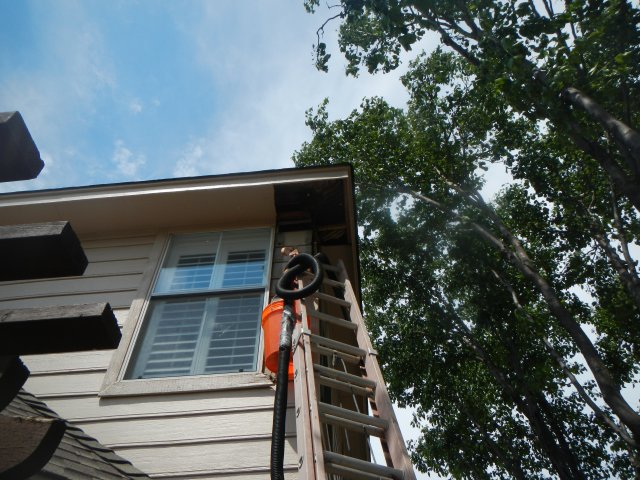
The homeowner had only noticed these bees over the last few weeks – up near the 2nd floor soffit. At first, we thought they were in the wall – as that portion of the roof DOES get sunshine – but upon checking – the bees were, indeed, in the soffit (as usual!). The comb was actually several years old in the center of the cluster. The queen was found and captured, then reunited with her colony and comb.
 Here is a close-up (from the ground). Once the bees and comb had been removed, the space was filled with insulation, and the soffit board was replaced. Here is a close-up (from the ground). Once the bees and comb had been removed, the space was filled with insulation, and the soffit board was replaced.

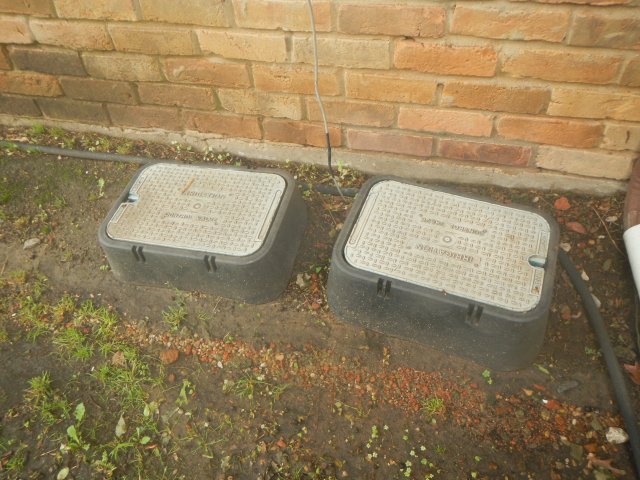
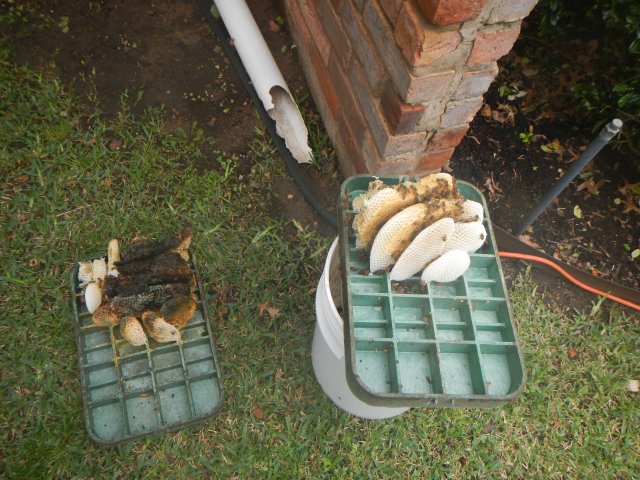
These bees were occupying space in 2 irrigation control valve boxes.
Lawn maintenance crews would not go near the boxes with bees, so I was called in to perform the honeybee removals.

Each hive was very small, and had queens that looked to be well mated (from the eggs and larvae pattern in the comb). There were also quite a few drones. Unfortunately, this is a group of SEVERAL characteristics of the more aggressively defensive Africanized hybrid bees. Smaller hive clusters, lots of drones, prone to swarm and abscond/leave on an instant’s notice.

One hive had comb that had gotten wet – so had mold/mildew growing on the comb. The other was healthy looking comb.
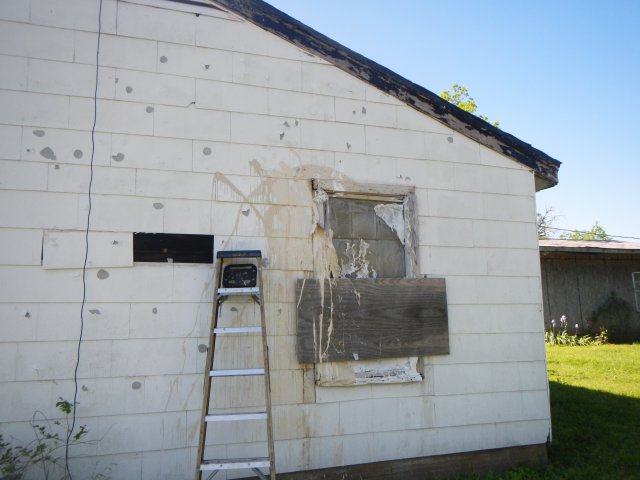
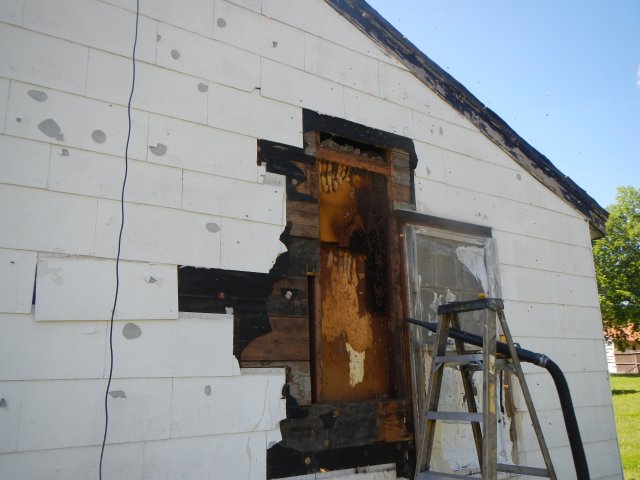
This is an OLD house in the country – that off-and-on – has had bees in some space or another over the last 25 years. Previously (15 years ago) they had bees exterminated. This time, they called a beekeeper to do the job.
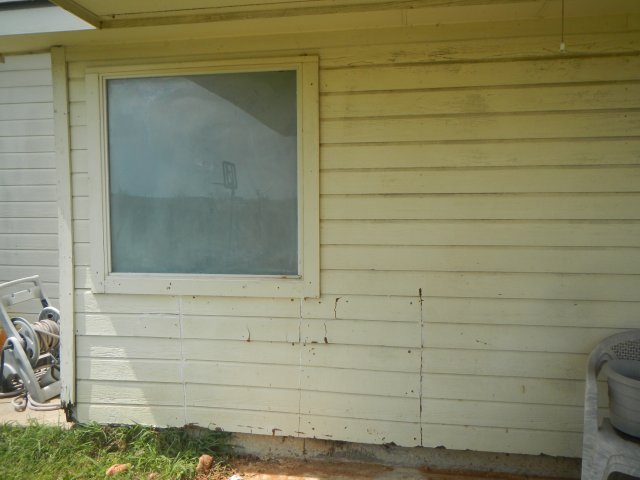
 The house has a broken window – so the bees were entering into the great grandmother’s bedroom. She had to move to another part of the house over the last month to avoid getting buzzed (by the bees! lol) The house has a broken window – so the bees were entering into the great grandmother’s bedroom. She had to move to another part of the house over the last month to avoid getting buzzed (by the bees! lol)
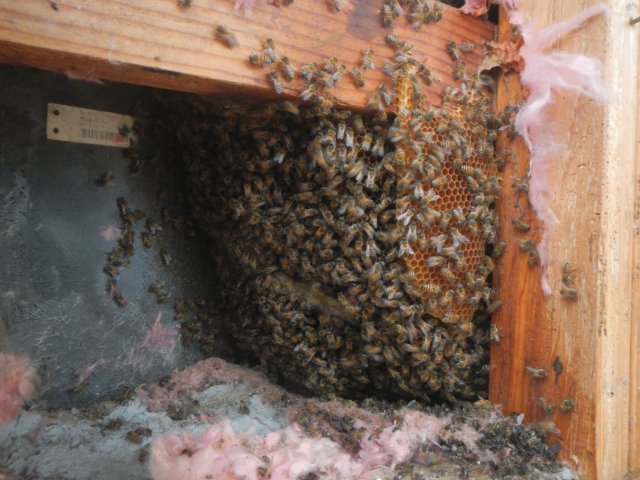
 The old panel siding was removed, and the ship-lap siding was removed. The bees occupied a space approximately 8-feet tall by 2-feet wide (2-foot joist spaces). These bees at first had me thinking they were of questionable genetics… as they were ALL OVER ME during the removal. However, as I progressed, I remembered that the homeowner had not had any problems at all with doing yard work. These bees were HUNGRY! Hungry bees are pissy bees. There was not a single drop of capped honey or open nectar. There was, however, a LOT of brood. I think the queen’s ability to lay eggs was taking up the resources of the hive to feed the larvae & pupae. They just could not save any honey at this time. The old panel siding was removed, and the ship-lap siding was removed. The bees occupied a space approximately 8-feet tall by 2-feet wide (2-foot joist spaces). These bees at first had me thinking they were of questionable genetics… as they were ALL OVER ME during the removal. However, as I progressed, I remembered that the homeowner had not had any problems at all with doing yard work. These bees were HUNGRY! Hungry bees are pissy bees. There was not a single drop of capped honey or open nectar. There was, however, a LOT of brood. I think the queen’s ability to lay eggs was taking up the resources of the hive to feed the larvae & pupae. They just could not save any honey at this time.

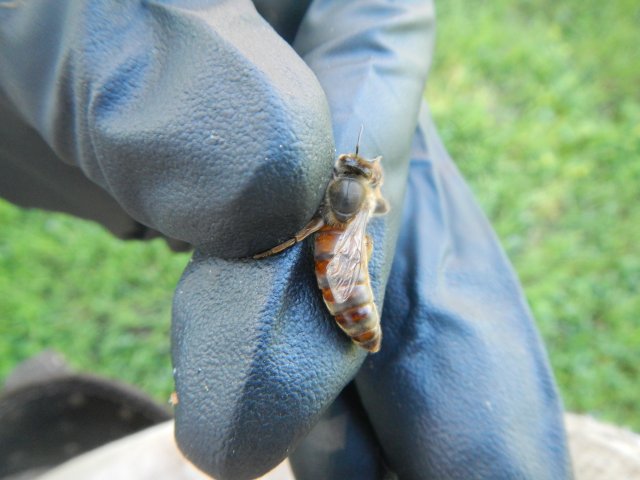
Here is the queen! Very much a fertile queen!!
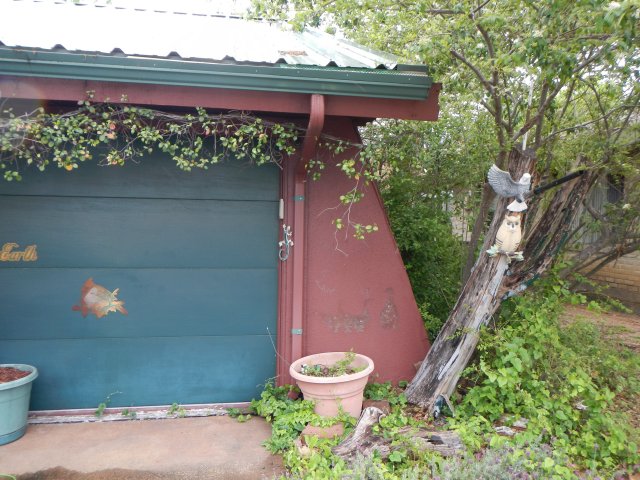
Bees have been in the wing of this garage for about 2-3 years. The homeowner had no problems with the bees… however, the neighbor did – so the city asked him to “take care of the problem”.
Luckily, he called around and called me for the live removal of the bees.
 The garage wing – out to the right of the house. The garage wing – out to the right of the house.
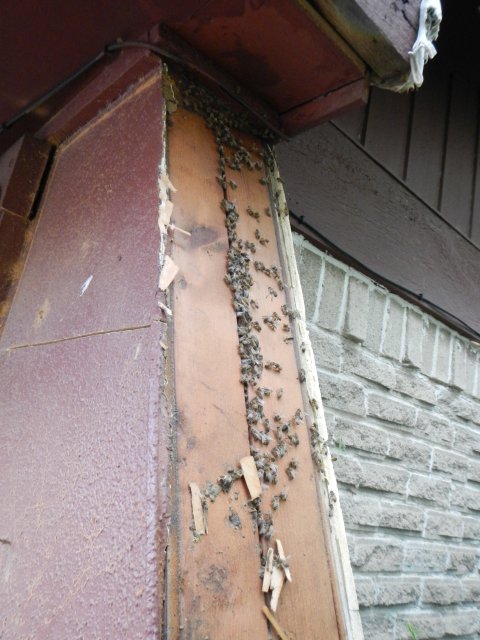
 Bees hanging out at their entrance spot (after I removed the board covering it) Bees hanging out at their entrance spot (after I removed the board covering it)
 Just a few bees inside. 😉 Just a few bees inside. 😉
 The bees and comb all taken out. The brood comb (5 frames) was placed into a small 5-frame hive, along with the queen – and the bees were all combined with their comb and the rest of the worker bees later that evening. The bees and comb all taken out. The brood comb (5 frames) was placed into a small 5-frame hive, along with the queen – and the bees were all combined with their comb and the rest of the worker bees later that evening.
The homeowners had been unable to enjoy their back yard, as honeybees had taken up residence in a wall facing their back yard.
When evaluating the honeybees, I noticed that the wall had a bathroom on the inside – with the tub located to the inside of where the bees were entering. When I put my ear to the bathtub, and tapped my knuckles on the tub – sure enough – the bees’ buzz was LOUD.
Unfortunately, about a month ago – the homeowner used some sprays on the bees – greatly knocking down their population, and making the survivors even more defensive of their flight paths.
The siding and inner sheathing was removed – to reveal that the home-builder had not insulated around the tub and associated plumbing. Bees found their way in, and called it “home”.

After removing the comb and bees, I stuffed the open void with fiberglass insulation, then replaced the wood and siding.

I received a call about honeybees in a tree – (a swarm) that had emerged from a known colony in a chimney.  I arrived and got the swarm settled into a box – then evaluated the cause of the problem… The chimney bees…. I arrived and got the swarm settled into a box – then evaluated the cause of the problem… The chimney bees….

Thie chimney was capped with cement. The plywood backer underneath had rotted and sagged over the years – creating a gap for the bees to enter the space between the flue and the outer chimney bricks. (for size reference, the chimney bricks are 6 feet wide)
 I carefully removed a 3-foot wide by 2 foot section of the cement chimney cap, and slowly cut the plywood to reveal the hive within. I carefully removed a 3-foot wide by 2 foot section of the cement chimney cap, and slowly cut the plywood to reveal the hive within.

This colony had an initial HUGE population. The supporting worker bees created comb in this chimney space that was 4 feet wide, by 4 feet tall (the largest piece that I pulled out).
 The comb in this picture is NOT the largest. This comb measured in at 3 feet tall. The largest was 4 feet tall, and 4 feet wide. (I cut them into manageable sizes to remove from the chimney and carry down the ladder). The comb in this picture is NOT the largest. This comb measured in at 3 feet tall. The largest was 4 feet tall, and 4 feet wide. (I cut them into manageable sizes to remove from the chimney and carry down the ladder).

Once the removal of the bees was complete, I repaired the chimney cap by placing several rods of re-bar across the width of the chimney – to support a cement backer-board (instead of the original plywood) – then I used a support grid of 6″ square metal mesh (thin re-bar) as a reinforcement for the cement. In all – (3) 60-lb backs of cement were mixed, then carried to the top of the chimney to finish the job.

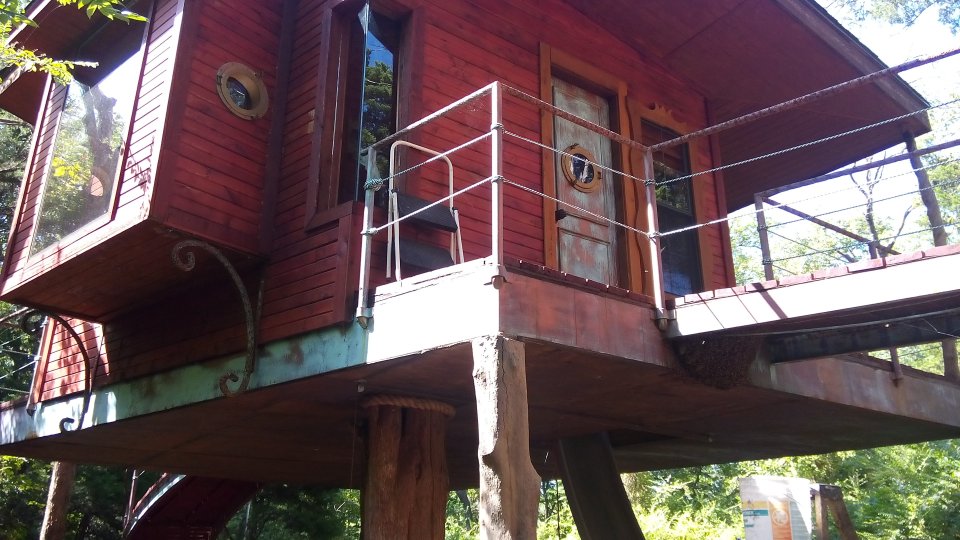
A year ago, I posted a story about 2 hives that were removed from a tree-house. This spring, a fresh swarm from the property found its’ way to the tree-house again – and moved into the joist space under the decking. The pic does not do the removal justice…
 These bees were EXTREMELY polite (maybe they were Canadian bees?) and though there were about 10 combs formed, and eggs, brood, and nectar in the comb – they willingly moved into the new box I provided. These bees were EXTREMELY polite (maybe they were Canadian bees?) and though there were about 10 combs formed, and eggs, brood, and nectar in the comb – they willingly moved into the new box I provided.

This client called me to look at the bees last summer. She was not ready at the time to have them removed – so called me recently with the green-light to proceed.
In the past, someone had sprayed expanding foam into the entrance of the beehive. Unfortunately, honeybees can chew their way through the cured foam. The expanding foam also did damage to the home. It raised the shingles so that the entrance hole was actually larger, and it also allowed rain and moisture to wick in underneath the shingles – and kept the original wooden shingles wet so that they have been rotting over the years.
  There were 3 layers of regular modern shingles, and 1 layer of original wooden shingles (that were rotting and had ants living in them) There were 3 layers of regular modern shingles, and 1 layer of original wooden shingles (that were rotting and had ants living in them)
These bees seemed to be having a bad day, so I wore my suit until almost the end of the removal. The colony had been there for a few years.
Here is what I saw after removing the shingles: 
And after removing the wood shingles, and hive was exposed for removal:
  This particular removal was completed fairly easily – and ready for her roofing contractor to step in for proper roof repairs. This particular removal was completed fairly easily – and ready for her roofing contractor to step in for proper roof repairs.
Last week, I received a call from a customer who had been referred to me by the 911 dispatcher on the other end of his frantic phone call about a swarm of bees in his tree. I removed the swarm fairly quickly – and as I was about to leave he says “My neighbor has bees, too – up in their eve.”
This swarm – and another – had indeed originated from the 2nd floor soffit of his next door neighbor. I spoke with the neighbor, and arranged a time to come remove the bees from their home. Here was the view.
 And this is what was opened up: And this is what was opened up: 
These bees had a very good demeanor. There was 1 just-emerged queen, as well as an unopened queen cell. Both were saved, along with all of the bees (2 swarms on a neighbor’s tree, as well as the established colony). After removing the bees and the wax/comb – the void space was filled with insulation, then the soffit board was replaced, and new trim was installed, then caulked.

|
|